Herd Improvement company LIC is paying out over $2 million this week, as compensation for supplying some dairy farmers bad sire semen.
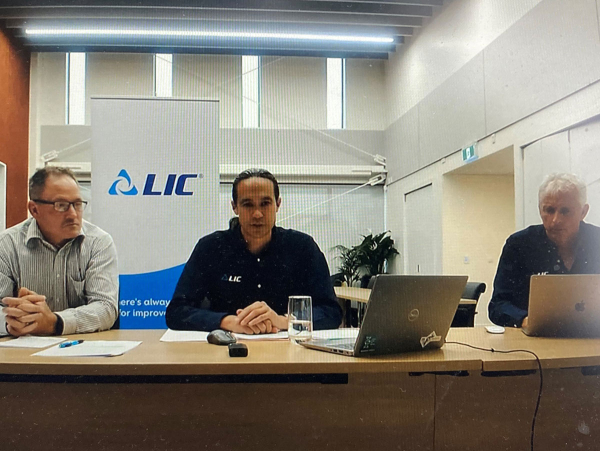
LIC chief executive David Chin apologised to farmers during a webinar this evening, adding that the farmer-owned co-operative had not lived up to the high standards expected by shareholders.
Chin says an independent internal investigation is underway to ascertain how two batches of bad semen were delivered to 1127 farms around the country - semen collected, processed and packed into straws and then sent to farms on October 15th and October 21st failed to pass quality control tests on day three. The straws were used over three days to mate herds and resulted in lower pregnancy rates. 15 of the 39 straws collected on October 16th and five of 31 straws collected on October 21st were affected.
Chin says LIC is still no closer to finding out how the batches were impacted.
“We are having a thorough investigation and looking at the processes,” he told farmers.
The report will be presented to LIC board and its shareholder reference group.
Chin says the report will help the co-op to improve its operations.
LIC board chair Corrigan Sowman told farmers that the board takes the incident very seriously.
“On behalf of the board, we are disappointed that we have let you down as farmers,” says Sowman, who took over as LIC chair last month.
Chin, Sowman and LIC general manager NZ markets Malcolm Ellis fielded questions from farmers. Some questioned why it took LIC until October 26th to contact affected farmers and until November 14th to contact all shareholders.
Chin responded that it contacted affected farmers on October 26th to inform them “that we had a concern about the day three straws”. The 18-24 day returns of day three straws came back to LIC on November 12th. The next day LIC decided to refund farmers and a letter went out to all shareholders a day later.
LIC is offering affected farmers a compensation package that has two categories and payments will be made on Thursday.
LIC says all affected inseminations across all 6 days will be credited to the value of the original product used.
In addition:
- All CIDR inseminations across all 6 days will be credited a goodwill payment of $30 per insemination.
- All affected inseminations on 18, 19, 24 and 25 October will be credited a goodwill payment of an additional $30 per insemination. This recognises the greater impact identified on these days.
- Any herd where more than or equal to 10% of the herd size were inseminated on 18, 19, 24 and 25 October, a further $30 credit per insemination will be credited.