LIC: Faster Bull Team Change Reflects Genetic Progress
In the past, a bull could sit comfortably in a breeding team for several years with little change, but today, that’s no longer the case.
The result of two probes into the supply of bad sire semen to over 1100 LIC farmer customers will be made public next month.
Following the semen quality issue LIC experienced in October last year, a thorough investigation was done, looking at all operational processes and possible improvements. An independent review was also carried out to look into LIC's response to the issue.
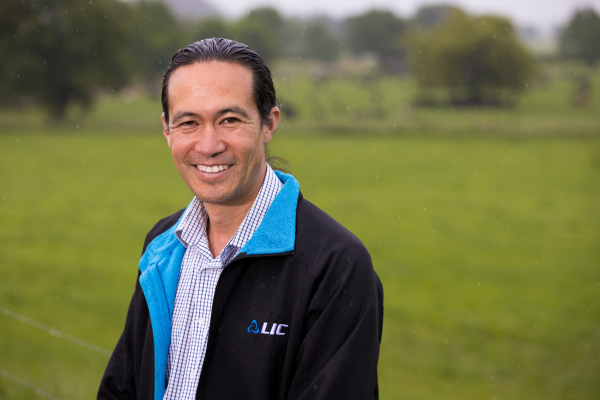
LIC chief executive David Chin says the outcomes of the investigation and independent review are being finalised and will be presented to the board next month.
Following that meeting, all farmer shareholders will be informed of the outcomes and any improvements that will be made to our business as a result, Chin says.
“We thank farmers for their patience and understanding while we work through this.
“We are disappointed as a co-op that we didn't deliver to the high standard farmers expect of us, and we continue to take this situation very seriously,” he says.
The farmer-owned co-operative has already paid out over $2 million to farmers as compensation for supplying some dairy farmers bad sire semen.
Two batches of bad semen were delivered to 1127 farms around the country; semen collected, processed and packed into straws and then sent to farms on October 15th and October 21st failed to pass quality control tests on day three. The straws were used over three days to mate herds and resulted in lower pregnancy rates. Fifteen of the 39 straws collected on October 16th and five of 31 straws collected on October 21st were affected.
New Zealand dairy farmers are set to be the first in the world to receive access to a new digital physical milk pricing tool that enables them to fix the price for their physical milk.
State farmer Pāmu is opening its farm gates this summer in an effort to give the rural sector the opportunity to see how large-scale, multi-system farming is delivering productivity and profitability across New Zealand.
A five-year study has found that the cost of reducing emissions without technology may be significant and unsustainable for Northland dairy farmers.
DairyNZ says Waikato farmers need certainty on Plan Change 1, but they say that certainty must be matched with practical, workable rules and a clear transition that doesn't get ahead of the new resource management system currently under review.
While the Government has moved quickly to make commercial hauliers' lot easier during the current fuel crisis, they appear to be stuck in the creep box when it comes to the agricultural industry.
Waikato farmers have been told that the Government’s new planning system legislation and the region’s Plan Change 1 (PC1) “won’t mesh together very well”.

OPINION: Central Hawke's Bay farmer Mark Warren recently told the Hawke's Bay Times it's time for a conversation about allowing…
OPINION: A nation that relies as heavily as NZ does on functional global shipping lanes will have to do its…