Positive changes please kiwifruit growers
New Zealand Kiwifruit Growers Incorporation (NZKGI) says there is a need to get a range of government policy settings right for the sector to expand.




 increase font size
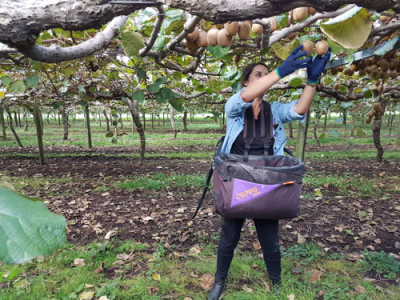 Kiwifruit harvesting is now underway.
Kiwifruit harvesting is underway and orchards have been cleared to be harvested from the top of the North Island to the top of the South Island.
Over 2,500 growers will be harvesting some 13,500 hectares of kiwifruit.
2018 is forecasted to be a good harvest with SunGold (Gold) and Hayward (Green) volumes for this season expected to be more than last year.
New Zealand Kiwifruit Growers Inc chief executive Nikki Johnson says kiwifruit is New Zealand’s largest horticultural export and this season is projected to be no different.
“New Zealand growers can be proud to say they produce a world-leading fruit superior in quality and taste which will be marketed to over 50 countries”.
New Zealand Kiwifruit Growers Inc. chairman Doug Brown says the forecasted increase in volume this year will help to fulfill the industry’s aim of sales growth.
“With a strong future where sales are expected to double by 2025 and some of the highest returns in the primary sector, the New Zealand kiwifruit industry has an exciting future ahead of it. I would also like to take this opportunity to wish all growers a happy and safe harvest”.
The kiwifruit industry profits the regions where it is grown, for example, bringing around $1.8 billion (indirect impact) to the Bay of Plenty annually. A recent University of Waikato report has predicted that the kiwifruit industry will triple GDP contribution to over $6 billion to the economy by 2030.
New Zealand Kiwifruit Growers Incorporation (NZKGI) says there is a need to get a range of government policy settings right for the sector to expand.

Kiwifruit growers and orchardists are celebrating a decision by the Environmental Protection Authority (EPA) allowing them to continue using sprays like Hi-Cane which contains hydrogen cyanamide.
Wait and see is the watchword on the possibility of a labour shortage in the kiwifruit harvest which began last week in Gisborne and western Bay of Plenty.
Publicity on a labour shortage in the kiwifruit industry last season had an interesting side effect: it attracted people to come and work in the industry, says New Zealand Kiwifruit Growers (NZKGI) chief executive Nikki Johnson.
The kiwifruit industry has been struggling to find enough workers to keep pace with growing volumes, says New Zealand Kiwifruit Growers chief executive Nikki Johnson.


In Dacre, near Invercargill in New Zealand’s South Island, Bruce Dinnington is running a dairy operation unlike any other.

A free online platform aggregating governance vacancies across rural and regional New Zealand has been launched.
Environment Minister Nicola Grigg has announced details of a new rural plastics recycling scheme.
Agricultural drone operators say that a government decision to allow lower-risk drone work without certification won’t lower standards but drive innovation and efficiency.
OPINION: Warning bells are ringing in the arable sector.
Now in its fourth year, the 2026 Fencing Industry Awards, formed part of the proceedings of the FCANZ Conference, held in Nelson during August.



OPINION: The same mainstream media muppets that brought you Jacindamania in 2017 have been flat out pimping for the Opportunities…
OPINION: Your old mate reckons the atrocious way farmers in the UK are treated by their lords and masters in…