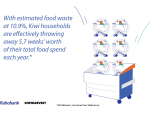
NZ household food waste falls again
Kiwis are wasting less of their food than they were two years ago, and this has been enough to push New Zealand’s total household food waste bill lower, the 2025 Rabobank KiwiHarvest Food Waste survey has found.




 increase font size
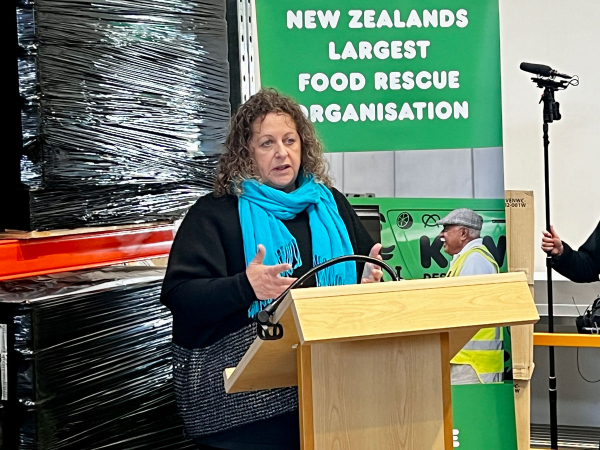 KiwiHarvest chief executive Angela Calver.
Food rescue organisation, KiwiHarvest, recently celebrated a major milestone.
The charity has rescued and redistributed 13 million kilograms of food to Kiwis in need, celebrating with a rescued lunch last week.
The 13 million kilograms of food is the equivalent of 29 million meal, bringing relief to vulnerable communities across New Zealand.
The 13 Million Thanks event saw guests receive a lunch prepared and served by KiwiHarvest Collective chefs, Michael Meredith and Brent Martin.
Attendees included KiwiHarvest donors, recipients, volunteers, and staff who came together at the organisation’s East Tamaki warehouse to hear from founder, Deborah Manning, and chief executive, Angela Calver, about KiwiHarvest’s work over the past 12 years and its growth in the past year.
Calver says the organisation delivered 34% more food to its recipient groups in the last financial year compared to the previous, equating to approximately $18 million (retail value) in food.
“This is against the odds as our funding has been significantly reduced and the demand for support in our most vulnerable has reached critical levels,” Calver says.
“We desperately need Government to recognise the social, environmental and financial value that comes from food rescue – because as a country, we can’t afford to see these food insecurity levels continue to rise,” she says.
The lunch consisted of a soup created with rescued kumara, carrots and onions; muffins created using rescued bread; and a grazing table of rescued meats, cheeses and crackers.
Meredith and Martin served the meals out of a food truck, highlighting how rescued food can be transformed into delicious and nutritious meals.
On designing the menu, Martin says the pair wanted to showcase the rescued foods by highlighting certain ingredients, including kumara, carrots, onions and bread.
“They all have a second life in these dishes and remind us of how important it is to make the most of what we have,” he says.
Meredith says that as chefs, the pair see every day the waste that accumulates in the kitchen.
“Through today’s rescued lunch, we wanted to showcase the possibilities of surplus and rescued food,” he says
“We’re really proud to work with KiwiHarvest,” says Meredith. “They contribute to a vital cause that not only addresses hunger in Aotearoa but also helps protect the environment. It’s a meaningful way to give back, and together we’re making a positive impact in the community.”
To learn how to support KiwiHarvest, visit https://www.kiwiharvest.org.nz/
Kiwis are wasting less of their food than they were two years ago, and this has been enough to push New Zealand’s total household food waste bill lower, the 2025 Rabobank KiwiHarvest Food Waste survey has found.
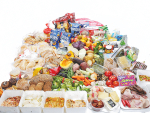
New research reveals that New Zealand households have made progress in reducing food waste over the past year, cutting the annual amount wasted by an estimated $300 million in the past year alone.
KiwiHarvest founder Deborah Manning says the food rescue charity is experiencing a significant challenge due to a lack of funding to support what she calls an essential service.
Latest research by agri banking specialist Rabobank and food rescue charity KiwiHarvest says NZ households are spending significantly more on food amid continually changing purchasing and consumption behaviours.
New Zealand generated 571,000 tonnes of food waste annually - including residential and commercial food waste.


Alliance is calling for final applications for its 2027 Graduate Programme, with applications closing on Sunday 25 October.
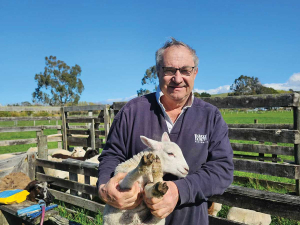
Decades piloting planes has ensured vet and farmer David Hayes is focused on safety. So, after a serious accident while welding on farm, he is sharing his experience so others can learn from it.
Canterbury milk processor, Synlait Milk has confirmed Leon Fung as its chief executive officer.
OPINION: Making it easier to collect rainwater and use it to grow crops and livestock is a no brainer.
As part of its Election 2026 coverage, Rural News asked political parties how they would help pull the arable sector out of the doldrums. Here's what they said:
Farmers are being encouraged to rethink how they manage waste on farm with the launch of ruralwastesorted.co.nz, a new website bringing together practical tips, real farmer experiences and resources.





OPINION: The same mainstream media muppets that brought you Jacindamania in 2017 have been flat out pimping for the Opportunities…
OPINION: Your old mate reckons the atrocious way farmers in the UK are treated by their lords and masters in…




