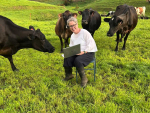
International Day of Rural Women: Two DairyNZ Farmers’ Stories
Today, 15 October, is the International Day of Rural Women, which recognises rural women’s contribution to farming, communities and the environment.




 increase font size
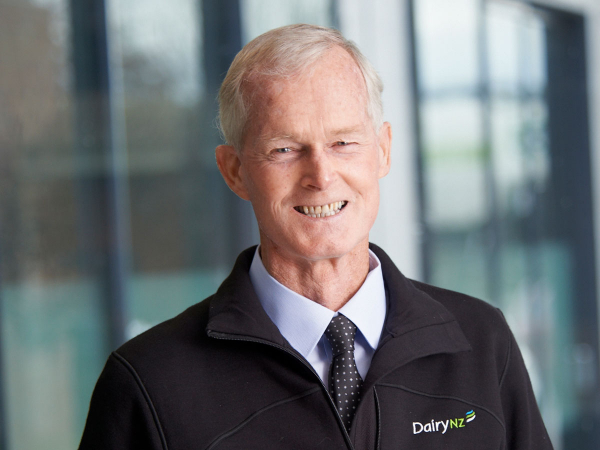 DairyNZ Chair Jim van der Poel
OPINION: We’re kicking off 2022 with a road show across the regions in February so farmers can have their say on how agricultural emissions will be priced from 2025.
DairyNZ, Beef + Lamb New Zealand and Federated Farmers will be seeking feedback on two emissions pricing options that would deliver more positive outcomes for farmers and New Zealand than the Emissions Trading Scheme (NZ ETS).
Pricing is coming and doing nothing, in our view, is not an option. If we don’t come up with a credible alternative, agriculture would go straight into the ETS and potentially sooner than 2025.
We’ve lobbied hard to prevent agriculture going into the NZ ETS and develop credible alternative options that both protect and reward farmers, and still meet environmental objectives. The Government has agreed to listen, so it’s important farmers tell us what they think.
We formed the Primary Sector Climate Action Partnership – He Waka Eke Noa in 2019 with other agri organisations after the Government legislated to put agriculture into the ETS. Our objective is to get an alternative solution that works for farmers and still achieves environmental outcomes.
The options we’re seeking farmers’ feedback on are more practical and reward positive change: a farm-level levy or a processor-level hybrid levy.
These options recognise the different warming impact of methane and the split gas approach that we fought hard for in the Zero Carbon Act. We can, for the first time, also have sequestration on farm recognised. The revenue generated under the scheme will be reinvested back into the sector to incentivise R&D and reduce emissions.
We want to build on the good work farmers are already doing, maintain a level of control over our futures, reduce greenhouse gas emissions and ensure Kiwi farmers maintain our competitive advantage on the global stage.
We have already convinced the Government of the need for a split gas target in the Zero Carbon Act, and the latest Intergovernmental Panel on Climate Change Report (AR6) continued to advance the international discussion on the use of advanced metrics for short-lived gases, like biogenic methane. The science continues to develop, and DairyNZ is working with leading scientists in this field.
Accurate measurement of warming impacts is one of the factors that needs to be considered when setting emissions targets. We will continue to argue this issue on behalf of the sector, and will also continue to advocate for a science-based approach when the Independent Climate Change Commission reviews targets in 2024.
Farmer feedback will inform the recommendations He Waka Eke Noa makes on a preferred option that will be sent to the Government in April 2022. The Government will make final decisions which is why it is so important farmers have a say now. Without He Waka Eke Noa, the Government would proceed with the NZ ETS.
We encourage farmers to come along to our February roadshow to have their say, ask questions about the emissions pricing options and help shape our sector’s future. Key information including details on how the options would work is also on our website at dairynz.co.nz/HWEN.
Today, 15 October, is the International Day of Rural Women, which recognises rural women’s contribution to farming, communities and the environment.
The first major update to the Dairy Cattle Code of Welfare in more than a decade has been released, marking what DairyNZ describes as an important step in ensuring animal welfare standards continue to evolve alongside scientific evidence and on-farm realities.
Have a plan in place for your cows and staff.
DairyNZ deputy chair Cameron Henderson has been re-appointed unopposed for another term.
OPINION: The stats speak for themselves.


Federated Farmers has welcomed new rural policies released by ACT, saying they align closely with its own election priorities.

Rural Contractors NZ says proposed changes to land transport rules for agricultural vehicles are a welcome response by the Government to out of date regulations which have seen members hit with huge fines.
Alliance is calling for final applications for its 2027 Graduate Programme, with applications closing on Sunday 25 October.
Decades piloting planes has ensured vet and farmer David Hayes is focused on safety. So, after a serious accident while welding on farm, he is sharing his experience so others can learn from it.
Canterbury milk processor, Synlait Milk has confirmed Leon Fung as its chief executive officer.
OPINION: Making it easier to collect rainwater and use it to grow crops and livestock is a no brainer.


OPINION: The same mainstream media muppets that brought you Jacindamania in 2017 have been flat out pimping for the Opportunities…
OPINION: Your old mate reckons the atrocious way farmers in the UK are treated by their lords and masters in…




