Resilient Global Dairy Industry Overcoming Volatility
Fonterra chief executive, Richard Allen says being resilient has helped the dairy industry overcome extreme volatility in recent years.




 increase font size
 Fonterra chair Peter McBride says he's confident farmers will back the latest proposal.
Fonterra's board is pulling out all stops to get farmer shareholder approval for its proposed capital structure.
The co-operative has pushed back its annual meeting to December to allow more time for farmer consultations.
Last week, board directors including chair Peter McBride attended farmer meetings throughout the country. The Auckland-based Fonterra management team couldn't attend due to Covid travel restrictions.
Speaking to Rural News before embarking on the farmer roadshow, McBride was confident farmers would back the latest proposal that includes key changes.
However, he says the board is open to tweaking the proposal.
"Let's see how the conversations evolve. We are prepared to tinker with the proposal but it is hard to accommodate everybody," McBride told Rural News.
"The key changes we've made strongly reflect on aspects we heard from farmers."
McBride, who attended farmer meetings in the lower South Island, wants to meet as many farmers as he can.
"I'm keen to look them in the eye and for them to hear the conviction of my voice - that this is in the best interests of the co-op."
Fonterra's chair says the co-op's annual meeting, normally held in November, has been pushed back to December allowing more time for farmer consultations and work on the final capital structure proposal.
While no date has been set for the AGM, McBride says it is unlikely to go past December.
The revised capital proposal was announced on the same day the co-operative released its new strategy to focus on New Zealand milk.
McBride says the capital structure and strategy go hand-in-hand.
"We are confident that this proposal would support the sustainable supply of New Zealand milk that our long-term strategy relies on.
"One enables the other, and together they give our co-operative the potential to deliver the competitive returns that will continue to support our families' livelihoods from this generation to the next."
Key changes in the revised capital structure proposal are that the new minimum shareholding requirement would be set at 33% of milk supply (around 1 share per 3kgMS), compared to the current compulsory requirement of 1 share per 1kgMS and new maximum shareholding requirement would be set at 4x milk supply, compared to the current 2x milk supply.
More types of farmers - sharemilkers, contract milkers and farm lessors - will be able to buy Fonterra shares and exit provisions would be extended and entry provisions would be eased.
The Fonterra Shareholders Fund would be capped to protect ownership and control.
Fonterra chief executive, Richard Allen says being resilient has helped the dairy industry overcome extreme volatility in recent years.

Northland farmer Greg Collins has taken over as chair of the Fonterra Co-operative Council.
Fonterra’s 2026 financial year was a year of delivery, with record volumes of milk collected, processed and shipped by the co-op.
Dairy farmers, still holding onto their Fonterra shares despite switching milk supply elsewhere or exiting the industry, now face a stricter share sell-down requirement.
Milk powder prices are continuing their merry run, firming up a potential $10/kgMS farmgate price this season.

During the nesting season, from September to December, industrious starlings can quickly build nests in the darker areas behind tractor and vehicle, usually close to hot engines, typically resulting in localised damage or in some cases complete write-offs.
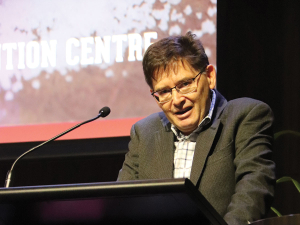
The meat processing industry is much more collegial than it was in the past and is now more focused on common goals.
With the last couple of months having seen some potential tractor purchases put on hold with the impending election and continued input cost rises, year-to-date figures, ending September, has seen deliveries up around 5% over the same period in 2025, with a total of 2026 units.
Beef+Lamb New Zealand is calling for nominations for director roles in the Northern South Island and Northern North Island electoral districts.
Fonterra chief executive, Richard Allen says being resilient has helped the dairy industry overcome extreme volatility in recent years.
The head of the Ministry for Primary Industries (MPI) trade and international relations group says New Zealand is well-positioned to secure trade access and compete internationally as the world becomes more complicated, demanding and uncertain.



OPINION: The same mainstream media muppets that brought you Jacindamania in 2017 have been flat out pimping for the Opportunities…
OPINION: Your old mate reckons the atrocious way farmers in the UK are treated by their lords and masters in…