Ah Tatua, You've Done It Again!
Waikato milk processor Tatua has again declared a record milk payout to farmer shareholders, leaving other processors in the dust.




 increase font size
 Fonterra chief executive Miles Hurrell told the annual meeting that the co-op had got its balance sheet into a healthier position and can now look more to the future.
An efficient New Zealand manufacturing base, diversified markets and a global supply chain helped Fonterra stay ahead of the game during the pandemic.
So said chief executive Miles Hurrell at the co-operative's annual general meeting in Invercargill last week. He claims that, as a result, Fonterra got its balance sheet into a healthier position and can now look more to the future.
"As an intergenerational business, that's incredibly important," says Hurrell.
"We leaned on a number of the co-op's strengths to get us to this position.
"And these strengths have been invaluable as we've faced into the challenges and flow-on effects of Covid."
Hurrell says the NZ manufacturing network and team provided a huge amount of optionality in terms of the products they can make.
"Our people are focused on driving efficiency and improving performance at each of our plants. This continuous improvement creates more value, which flows through into the farmgate milk price."
He claims another huge asset is the co-op's diversification across channels and markets.
Hurrell noted that last year, volumes and earnings were "more or less evenly split" across three regions (Asia/Pacific, Africa/Middle East and Greater China) and three channels (ingredients, food service and consumer).
"This diversification allows us to allocate milk into the products and markets that generate the best overall returns for the co-op," he explained.
In 2021, Fonterra allocated 15% more milk into Greater China and 6% less into Africa/Middle East.
"We did this because that's where demand was the strongest."
Hurrell says Fonterra's third strength is its global supply chain - including Kotahi, a joint venture with Silver Fern Farms.
"It's because of our scale that Kotahi could partner with Maersk shipping line and the Port of Tauranga. And it's because of this partnership that our co-op could continue to get product to our customers last year," he notes.
"With all the disruptions to the global supply chain, this was something our customers didn't take for granted and we saw this reflected in both milk price and earnings."
Waikato milk processor Tatua has again declared a record milk payout to farmer shareholders, leaving other processors in the dust.
Fonterra has unveiled its annual results for the 2026 financial year, posting $27 billion in revenue and close to $20 billion returned to New Zealand farmer owners and unit holders.
Fonterra Co-operative Group has confirmed the independently assessed candidates standing for election to its board in 2026.
Fonterra has revised its Farmgate Milk Price forecast for the 2026/27 season, lifting the midpoint and narrowing the range on the back of improving global dairy commodity prices.
Outgoing Fonterra Co-operative Council chair John Stevenson says that it has been a privilege to represent the co-op's farmer shareholders.


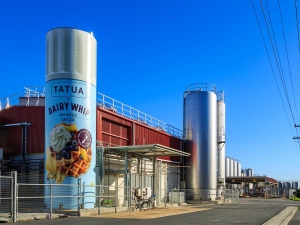
Waikato milk processor Tatua has again declared a record milk payout to farmer shareholders, leaving other processors in the dust.

A Labour-led Government won’t be bringing back the controversial freshwater rules of 2020.
National’s much-touted free trade deal with India featured in the Rural Issues Debate at Mystery Creek, Hamilton on Wednesday night.
New Zealand's 2026-27 freshwater fishing season has opened, with anglers encouraged to head to rivers and lakes over the coming days as conditions look favourable across much of the country.
Central Otago District Council (CODC) has voted against a plan to spread treated sewage sludge from Cromwell and Alexandra on farmland near Lauder, a decision Federated Farmers says reflects strong opposition from rural residents.
Pāmu has released its FY26 Integrated Annual Report, reporting a Net Operating Profit of $113 million, more than double the $49 million recorded in FY25.




OPINION: The same mainstream media muppets that brought you Jacindamania in 2017 have been flat out pimping for the Opportunities…
OPINION: Your old mate reckons the atrocious way farmers in the UK are treated by their lords and masters in…