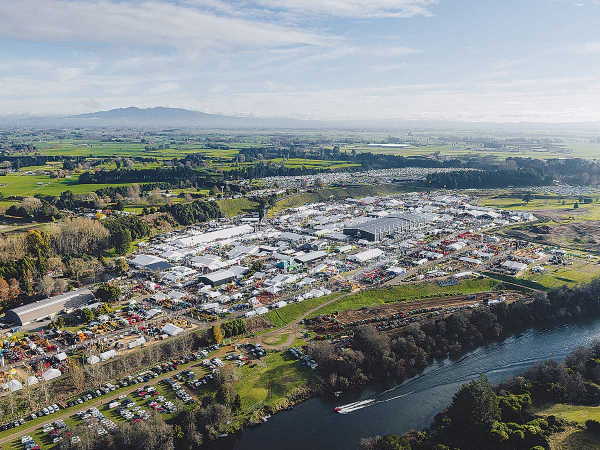
Since COVID-19 sent the country into lockdown, Fieldays has tried to re-group, but amid disquiet about its reluctance to refund deposits to cash-strapped agribusinesses, questions are being asked about its future.
Its replacement offering, ‘Fieldays Online’, is hardly an original idea. Indeed, by the time its own version goes online in mid-July, events such as the Norco Primex Fieldays in Australia and the Cereals UK exhibition will have followed the same course. Exhibitors that spoke to Rural News saw very little value in the proposition, saying they already have their own online presence. Fieldays wants them to supply content to populate its own online site, promote it to its own databases, and will charge royally to provide a listing.
A recent survey by the Tractor and Machinery Association (TAMA), who represents the majority of tractor and machinery importers, distributors and manufacturers, threw up some interesting responses: 92% of companies were not interested in a Fieldays Online, 75% would not attend a Fieldays event if it was rescheduled for later in the year and 70% wanted a full refund of their pre-paid site fees.
Fieldays is seen by many as putting its own survival ahead of that of its exhibitors and the bad blood this has created is clear to see.
This leads Rural News to wonder is there a place for Fieldays in the post-COVID-19 future. The answer is probably yes, but in a much-modified form. The rapid rise in technology and the size and scale of plant and machinery used in modern agriculture is changing daily.
Where is the commercial sense in freighting large pieces of machinery to Mystery Creek, when the reality is that potential customers want to see it performing in the field, not polished to within an inch of its life and adorned with pot plants?
Moving forwards, many of the exhibitors who intended to exhibit at the 2020 event, will realise that there is still business out there and will no doubt be developing new strategies to capture it. In doing so, they will probably realise that the $10k, $20k or $50k that they spent to attend the event, means that even at a conservative margin of 10% means that they can be $100k, $200k or even $500k down on turnover, but still be better off financially.
The fact is most hype about deals being done at Fieldays is just that – hype. For large machinery, most deals are done before the event, with a symbolic handshake on the day. Do you really believe that someone walks onto a site and buys a $250,000 tractor on a whim?
Perhaps it’s time for the good folks at Mystery Creek to start thinking about their reputation, if it’s not too late. In doing so, it needs to realise that the rural industry will survive, Fieldays or not. That’s because the loyal exhibitors, who have supported the event for many decades, live life at the sharp end, dealing in financial facts and paying taxes, rather than the myriad assumptions made in the annual Fieldays Financial Impact Report.
One can only hope that those businesses waiting for up to two months for a partial refund from Fieldays survive long enough to be able decide about whether or not to return to Fieldays in 2021 and beyond.