Federated Farmers Welcomes ACT’s New Farming Policies
Federated Farmers has welcomed new rural policies released by ACT, saying they align closely with its own election priorities.




 increase font size
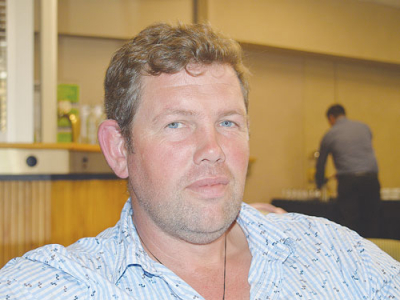 Top of the South Feds’ dairy chair Brian Dineen.
Feed will be the biggest issue in the coming months for farmers in Tasman region, says Federated Farmers Top of the South dairy chair Brian Dineen.
He says the Nelson fires have tainted pasture, making them unpalatable for stock.
Many other parts of Tasman district have suffered dry weather and grass growth has been minimal.
“Feed is the biggest issue going forward, thanks to the fires and the recent dry weather,” Dineen told Rural News.
“The good thing is that we can cope with this challenge; other parts of the country have had good rain and there’s a good amount of feed sitting around.”
Federated Farmers is coordinating feed supply through its Nelson administrator Jan Gillanders and Golden Bay provincial president Wayne Langford.
Dineen says he’s amazed by the generosity of farmers NZ-wide. Feed is now arriving in Tasman.
“The beauty of Feds and the farming community is that there are a lot of farmers willing to help out.”
The fires have affected one dairy farmer, lifestyle block owners and several sheep and beef and deer farmers.
Dairy farmer Michael Shearer, who milks 400 cows near Nelson, had flames reach the outskirts of his 160ha farm.
Dineen says a neighbouring hops grower who had recently converted a dairy farm has opened his milking parlour for Shearer to continue milking cows.
“He is very lucky; I think he may have lost only one day of milking,” says Dineen.
Dineen, who has visited Shearer, says the outpouring of support for Shearer and other farmers has been amazing.
He says many animals from affected farms are being looked after by volunteers at the Nelson showground.
The prolonged dry weather has also triggered more water restrictions.
“This is a challenging time for farmers, the horticulture and wine industries in the region and, of course, for the whole community affected by wildfire and drought,” says David Lindsay, MPI regional controller.
“We are working closely with Tasman District Council, Rural Support Trust and other agencies to ensure rural communities are supported as the drought bites and we move into the second week of the fire.”
A medium-scale adverse event (fire and drought) was recently declared for Tasman district, unlocking Government support for farmers and growers.
“We are monitoring the situation carefully and are working with other agencies as the situation develops,” Lindsay said.
Federated Farmers has welcomed new rural policies released by ACT, saying they align closely with its own election priorities.
Federated Farmers is backing Feilding High School’s call to keep Agriculture and Horticultural Science as a standalone subject in Year 11.
National’s pledge to introduce 19 new national standards shows the party is serious about getting Wellington out of farming, Federated Farmers says.
Mobile phone coverage and reliability are deteriorating in rural areas, and farming families are bearing the cost, according to a Federated Farmers survey.
Central Otago District Council (CODC) has voted against a plan to spread treated sewage sludge from Cromwell and Alexandra on farmland near Lauder, a decision Federated Farmers says reflects strong opposition from rural residents.



Federated Farmers has welcomed new rural policies released by ACT, saying they align closely with its own election priorities.

Rural Contractors NZ says proposed changes to land transport rules for agricultural vehicles are a welcome response by the Government to out of date regulations which have seen members hit with huge fines.
Alliance is calling for final applications for its 2027 Graduate Programme, with applications closing on Sunday 25 October.
Decades piloting planes has ensured vet and farmer David Hayes is focused on safety. So, after a serious accident while welding on farm, he is sharing his experience so others can learn from it.
Canterbury milk processor, Synlait Milk has confirmed Leon Fung as its chief executive officer.
OPINION: Making it easier to collect rainwater and use it to grow crops and livestock is a no brainer.




OPINION: The same mainstream media muppets that brought you Jacindamania in 2017 have been flat out pimping for the Opportunities…
OPINION: Your old mate reckons the atrocious way farmers in the UK are treated by their lords and masters in…




