
Federated Farmers Welcomes ACT’s New Farming Policies
Federated Farmers has welcomed new rural policies released by ACT, saying they align closely with its own election priorities.




 increase font size
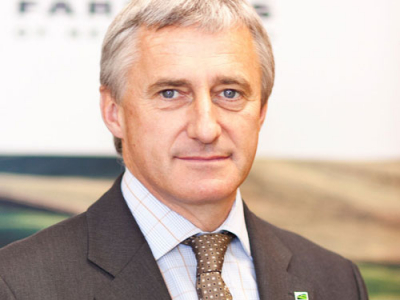 Feds president William Rolleston.
Speculation about the state of Federated Farmers’ financial position has some sources claiming it is facing a deficit of up to $700,000 this year.
However, Feds president William Rolleston has told Rural News the organisation is “close to budget”.
Contributing to the predicted deficit are a fall in subscriptions, a drop in the sale of contracts and the purchase of a new computer system.
Asked what the budgeted deficit was, Rolleston says this would not be revealed until the audited accounts are presented at the organisation’s annual meeting in June.
Rural News has sought detailed information from Feds about its finances since a significant change of personnel in 2015-16. Of the four people appointed at the time, four have left. At least one person was also made redundant.
Rolleston denies there has been a ‘restructuring’.
However, a human resource expert spoken to by Rural News about the situation at Feds says what occurred was a restructuring, though it might have been a ‘soft restructuring’. This is where people leave soon after a new chief executive or board takeover.
Rolleston won’t say what the costs of these changes have been to the organisation, insisting there never was a ‘restructuring’.
But given the cost of a consultant, staff time and other expenses, the likely cost would be $50,000 plus the cost of the four staff salaries during the time they were employed at Feds.
It’s not known if any personal grievances were taken out against the federation as a result of these changes.
Rolleston also refused to provide an ‘indirect costs’ of the changes, although he does concedes it “takes time for people to get up to speed”.
“The quality of staff we are getting now is outstanding. We are attracting high quality staff to the organisation because of the positive culture,” he says.
“We are also seeing staff who were employed under previous regimes coming back to work here and this is very encouraging.”
On the issue of membership, Rural News asked Rolleston what the current membership was and how this compares with other years. The answer: “…membership numbers include multiple levels and subscriptions”.
However, it is hard to understand what this exactly means.
Rolleston admits membership has been “tight” because of the downturn in the dairy industry and the amalgamation of farms. He says the organisation is “looking at its subscription structure to make it better reflect the scalable nature of the benefits Federated Farmers provides to farmers”.
He also claims that membership in areas where Feds has taken a stance on genetic modification, Hawkes Bay and Northland has garnered some of their best membership increases.
Federated Farmers has welcomed new rural policies released by ACT, saying they align closely with its own election priorities.

Federated Farmers is backing Feilding High School’s call to keep Agriculture and Horticultural Science as a standalone subject in Year 11.
National’s pledge to introduce 19 new national standards shows the party is serious about getting Wellington out of farming, Federated Farmers says.
Mobile phone coverage and reliability are deteriorating in rural areas, and farming families are bearing the cost, according to a Federated Farmers survey.
Central Otago District Council (CODC) has voted against a plan to spread treated sewage sludge from Cromwell and Alexandra on farmland near Lauder, a decision Federated Farmers says reflects strong opposition from rural residents.



Federated Farmers has welcomed new rural policies released by ACT, saying they align closely with its own election priorities.

Rural Contractors NZ says proposed changes to land transport rules for agricultural vehicles are a welcome response by the Government to out of date regulations which have seen members hit with huge fines.
Alliance is calling for final applications for its 2027 Graduate Programme, with applications closing on Sunday 25 October.
Decades piloting planes has ensured vet and farmer David Hayes is focused on safety. So, after a serious accident while welding on farm, he is sharing his experience so others can learn from it.
Canterbury milk processor, Synlait Milk has confirmed Leon Fung as its chief executive officer.
OPINION: Making it easier to collect rainwater and use it to grow crops and livestock is a no brainer.




OPINION: The same mainstream media muppets that brought you Jacindamania in 2017 have been flat out pimping for the Opportunities…
OPINION: Your old mate reckons the atrocious way farmers in the UK are treated by their lords and masters in…




