New Zealand Apple Industry Enjoys Second Strong Season In A Row
The chief executive of Apples and Pears New Zealand, Danielle Adsett, says fruit quality this year is phenomenal and the sector is hitting crop estimates, which is great for growers.




 increase font size
 It is estimated that of 150 pipfruit growers in the region around 80 have been affected by the cyclone.
Massive problems lie ahead for one of NZ's major apple growing regions.
Nearly half of Hawke's Bay's apple orchards have been damaged, some critically by cyclone Gabrielle.
This has prompted the Apples and Pears NZ to write to government ministers asking for special help to get one of the biggest industries and employers in the Bay back on its feet again.
Chair of Apple and Pears NZ Richard Punter told Rural News that there are 8,400 hectares planted in apples in Hawke's Bay and 47% of that land has been damaged. He says that just leaves 53% of the remaining land, or 4,400 hectares, that can be harvested in the normal way.
Punter estimates that there are 150 pipfruit growers in the region and 80 of these are affected by the cyclone.
He says the huge numbers they have come up with are very accurate because they wanted to give government ministers quality information on which to base decisions.
Punter told Rural News they used a combination of topographical and satellite imagery and verified this by sending experts onto some orchards to make sure the numbers stacked up.
"We came up with three categories," he explains.
"Category one was destroyed - nothing there - the orchard has gone and huge difficulty if at all to reinstate the land and potentially people could just walk away," Punter explains.
"Category two are those orchards that have been completely submerged and/orhave deep silt and there is significant tree death in those blocks. The general wisdom is that those category two blocks are not viable for any development as there is not crop there to harvest. These two categories may come to 25% of the 47%," he says.
Punter says the remainder of the damaged crops referred to as category three consist of orchards that are still workable but might have had water through them. He says that is a problem because apples that have been underwater won't store and will rot. He says there is also a problem with tree deaths caused by water and silt lying about the trees.
Punter told Rural News that it's still early to get an accurate estimate of what impact cyclone Gabrielle will have on apple export returns from Hakwe's Bay. This he says because they are still unsure about what actual varieties of apples are affected because some are worth more than others.
"So, as you can see there is still quite a big job ahead," he says.
The chief executive of Apples and Pears New Zealand, Danielle Adsett, says fruit quality this year is phenomenal and the sector is hitting crop estimates, which is great for growers.
New Zealand exporters are putting the blowtorch on politicians to get the free trade deal with India over the line.
Nearly three years on from Cyclone Gabrielle, Hawke's Bay apple orchardist Paul Paynter says they are still doing remedial work around their orchards and facing financial challenges.
If there was a silver lining in the tragedy that was Cyclone Gabrielle, for New Zealand Young Grower of the Year, Grace Fulford, it was the tremendous sense of community and seeing first-hand what good leadership looks like.
Listed carpet manufacturer, Bremworth is undertaking a $6 million expansion at its Napier plant more than two years after the site was heavily damaged by Cyclone Gabrielle.


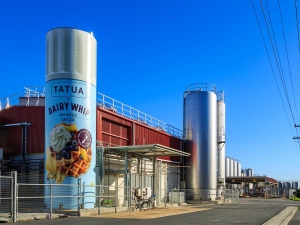
Waikato milk processor Tatua has again declared a record milk payout to farmer shareholders, leaving other processors in the dust.
A Labour-led Government won’t be bringing back the controversial freshwater rules of 2020.
National’s much-touted free trade deal with India featured in the Rural Issues Debate at Mystery Creek, Hamilton on Wednesday night.
New Zealand's 2026-27 freshwater fishing season has opened, with anglers encouraged to head to rivers and lakes over the coming days as conditions look favourable across much of the country.
Central Otago District Council (CODC) has voted against a plan to spread treated sewage sludge from Cromwell and Alexandra on farmland near Lauder, a decision Federated Farmers says reflects strong opposition from rural residents.
Pāmu has released its FY26 Integrated Annual Report, reporting a Net Operating Profit of $113 million, more than double the $49 million recorded in FY25.



OPINION: The same mainstream media muppets that brought you Jacindamania in 2017 have been flat out pimping for the Opportunities…
OPINION: Your old mate reckons the atrocious way farmers in the UK are treated by their lords and masters in…