Final call for Alliance’s 2027 Graduate Programme
Alliance is calling for final applications for its 2027 Graduate Programme, with applications closing on Sunday 25 October.




 increase font size
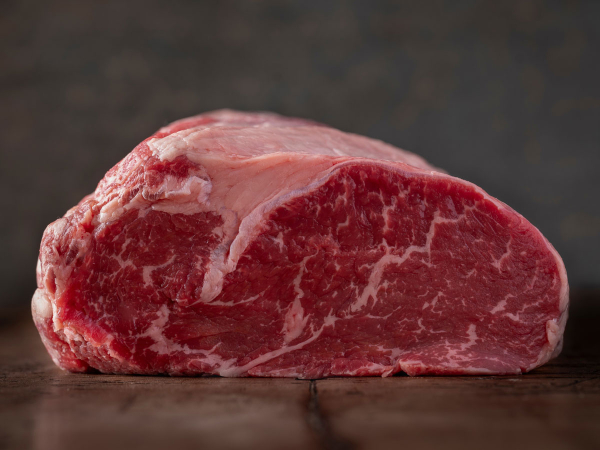 Alliance's award-winning Pure South Handpicked 55 Day Aged Beef RIbeye Steak.
Alliance Group’s Pure South Handpicked 55 Day Aged Beef has been crowned the best grass-fed steak and the best ribeye in the world.
The Pure South Handpicked grass-fed steak and ribeye triumphed over entries from across the globe at the recent World Steak Challenge in London.
Medalists from a preliminary World Steak Challenge event in the Netherlands in September went on to the ‘best of the best’ contest in the UK with the winners revealed on 13 November.
Shane Kingston, general manager sales and marketing at Alliance Group, says the award was a globally credible and recognized accolade, which is always the strongest endorsement of a product.
“It is testament to Alliance’s exceptional focus on excellence and the dedication and hard work our farmers put in day in, day out to raise the best grass-fed meat in the world,” Kingston says.
“It was already a great honour to have won gold in the World Steak Challenge where multiple gold, silver and bronze medals can be awarded in each category,” he says. “But to now have our steak judged as the best of all the ribeye and grass-fed steak gold medal winners globally is just outstanding.”
Kingston describes the award as the ‘pinnacle’ of the co-operative’s achievement for its end-to-end beef system, adding that it reflects the commitment to the high standards at every level of farmers, the company and it’s processes.
“This programme was developed specially to deliver consistently superior eating quality outcomes for the customer,” he says. “The eating quality attributes the product is assessed against during the selection process are what makes this product superior.
The ribeye has unprecedented levels of tenderness and a milder beef flavour profile, he says.
The steak has a robust, zesty, buttery, and creamy flavour that gives it a deeply satisfying savoury presence, along with caramelisation of marbling, which builds on the flavour.
Pure South Handpicked is aged craft meat as nature intended. From free range pastures in New Zealand, the animals are carefully selected and graded by internationally-accredited assessors based on a range of criteria including marbling score, fat colour, fat cover, meat colour, and pH.
Only the finest meat makes the grade. From there, the meat is aged in a vacuum bag for up to 55 days, allowing the natural enzymatic processes to enhance tenderness and develop exquisite flavours. The beef is sourced from prime cattle of any breed.
The ribeye was selected at the co-operative’s Pukeuri plant in Oamaru.
Alliance is calling for final applications for its 2027 Graduate Programme, with applications closing on Sunday 25 October.
Alliance Group has confirmed that eligible farmer-shareholders who supply and continue to back the business will receive up to $20 million later this year, following the strategic investment partnership with Dawn Meats.
Alliance Group's $16 million programme to install innovative heat pump systems at its Otago and Southland processing plants wins a New Zealand Energy Excellence Award after cutting annual emissions by more than 24,000 tonnes of CO₂e.
Alliance Group chief executive Willie Wiese is leaving the company after three years in the role.
Alliance Group has commissioned a new heat pump system at its Mataura processing plant in Southland.



Federated Farmers has welcomed new rural policies released by ACT, saying they align closely with its own election priorities.

Rural Contractors NZ says proposed changes to land transport rules for agricultural vehicles are a welcome response by the Government to out of date regulations which have seen members hit with huge fines.
Alliance is calling for final applications for its 2027 Graduate Programme, with applications closing on Sunday 25 October.
Decades piloting planes has ensured vet and farmer David Hayes is focused on safety. So, after a serious accident while welding on farm, he is sharing his experience so others can learn from it.
Canterbury milk processor, Synlait Milk has confirmed Leon Fung as its chief executive officer.
OPINION: Making it easier to collect rainwater and use it to grow crops and livestock is a no brainer.

OPINION: The same mainstream media muppets that brought you Jacindamania in 2017 have been flat out pimping for the Opportunities…
OPINION: Your old mate reckons the atrocious way farmers in the UK are treated by their lords and masters in…




