
Co-op champion eyes contest
West Otago farmer Allan Richardson will contest the South Island director for the Farmlands cooperative.




 increase font size
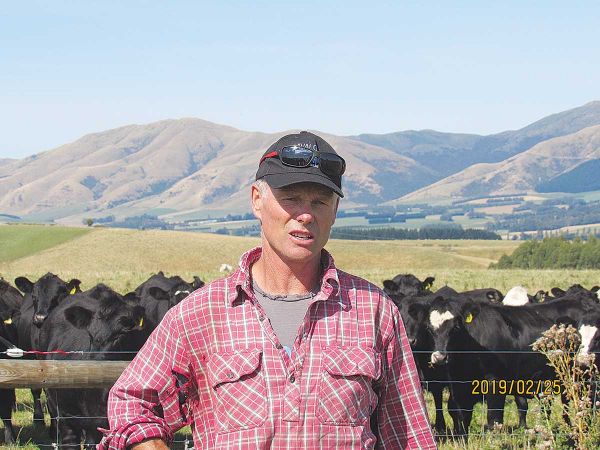 WormFEC Gold chair Allan Richardson
Sheep farmers should be investing in proven, worm resistant genetics this breeding season to future proof their businesses’ bottom lines.
That’s the claim of new WormFEC Gold chair Allan Richardson. WormFEC is a group of 15 breeders – with 18 flocks – representing all the main sheep breeds and based throughout NZ.
“The majority of farmers still continue to put all their trust in a drenching strategy to combat internal parasites,” the West Otago sheep farmer says. “Clearly that is failing at alarming rates with increasing resistance found in combination drenches (43%) and triple drenches (15%) in the latest NZ study completed by a Dunedin company Techion”.
Richardson says the rate of drench resistance increase has been dramatic, with some drench families recording over a 100% increase in resistance compared to four years ago.
“The Beef + Lamb NZ Genetics low input trial has clearly shown that WormFEC Gold rams with high performance and resistance levels still performed under high worm challenges,” he claims. “This is a big saving in time, labour and expenses.”
“We are keen to work with farmers and vets to improve on farm knowledge and get the best medium to long term solutions for internal parasite management,” Richardson adds.
His take home message to farmers is to use this time wisely, get resistant genes into your flock.
“It will future-proof your farm, cut costs and reduce your long-term reliance on regular drenching,” Richardson says.
West Otago farmer Allan Richardson will contest the South Island director for the Farmlands cooperative.


There's strong support from the horticulture sector for the Government's plans to overhaul and streamline the Recognised Seasonal Employer (RSE) scheme.
With entries now open for the Ballance Farm Environment Awards, organisers have launched a campaign to bust some of the biggest myths they think might be preventing farmers and growers from putting themselves forward.
Changes to an act of parliament seen as critical to speeding up access to overseas products to control pests and invasive species in NZ is unlikely to get passed before the November election.
Recent storm damage to roading infrastructure around New Zealand has prompted a call for the Government to change the settings for funding rural roads - with the aim of providing more money to make them more resilient to adverse events.
Organics Aotearoa New Zealand (OANZ) spent two days in Wellington last week meeting political parties and key stakeholders to press the case for a National Organic Policy and dedicated investment.
Ravensdown has reported a net profit before tax and rebate of $50.1 million for the year ended 31 May 2026.




A fair question has been raised about how member-funded organisations should conduct themselves when taking a public position on any…
OPINION: It really is getting harder to lampoon government bureaucrats when they do such a good job of it themselves.…