Beef + Lamb NZ's Lambing Kit Checklist for a Tough Season
With lambing underway in many regions, Beef + Lamb New Zealand is encouraging farmers to put together a wellequipped lambing kit to help minimise lamb losses, particularly in bad weather.




 increase font size
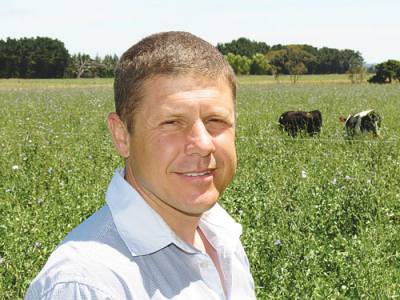 Professor Paul Kenyon.
Focus on the ewes with a lower body condition score (BCS).
That’s the message from Massey University’s professor Paul Kenyon, an internationally recognised expert in sheep fertility.
As mating time looms for sheep farmers, Kenyon says if farmers have limited feed supply they should allocate this to the ewes which need feeding the most – ewes with BCS 3.0 or lower.
“This is especially so in a year when there is not a lot of feed around. You want to be targeting whatever bit of extra good feed you have around to the animals that will respond the most and get you your best bang-for-buck,” he told Rural News.
“Feeding good condition scored ewes extra will get very little, if any, extra reproductive response, so it’s inefficient use of feed. Whereas you will get a much better response by feeding more to poor-condition ewes.”
Flushing ewes is talked about a lot on farms and much of this work was done in the 1970s and 80s. But Kenyon says flushing ewes requires a lot of feed and he questions the worth of the practice now, especially with the level of feed required and the natural fertility of many ewes.
“Some farmers think that by just opening a gate two or three weeks before breeding that is flushing, but that’s just not enough. We now know with flushing, that a ewe in good condition doesn’t need to be flushed and the response you get from flushing in terms of extra foetuses is likely very small,” he explains.
“But flushing ewes with about BCS 2.0 - 2.5 will result in a far bigger response.”
Flushing done correctly means ensuring the ewe is well fed for at least three weeks pre-mating. Ideally, Kenyon says, if farmers are going to flush the low BCS ewes, this needs to be done four-six weeks before mating.
Using supplements to flush ewes is possible but can be expensive. Kenyon says if farmers have some quality herbages around — herb clover mixes or lucerne — they can be used for the poorer condition ewes.
But he points out that farmers normally use that type of feed to finish lambs.
“Remember, finishing lambs is about your income now; whereas putting a condition score on a ewe is about what you are going to get from her later in the year and potentially next year.”
Kenyon says farmers need to be careful about the type of pasture they put stock on prior to mating. He says the phytoestrogens in red clover, for example, can reduce reproductive performance but a mixed sward is probably ok because it is diluted out. Again, with lucerne the phytoestrogens are a potential problem and stock should be taken off this crop a few weeks before breeding.
Look after the boys too!
While much of the focus is on preparing ewes for mating, Kenyon says farmers should be getting vets to check their rams to ensure they are ready for the task ahead.
Any problems with a ram may take up to six weeks to remedy, he says.
“A ram needs to have a BCS of 3.5 - 4.0 going into breeding so he can produce a large amount of quality sperm. We also know that rams don’t do a lot of eating during the breeding, so they need to be in good condition.”
Rams need to be mobile during mating so they need to have their feet in good condition. If they have foot problems they will have difficulty chasing and mounting the ewes.
“Also, if rams have an infection in their feet, their body temperatures will rise with that infection and that can negatively affect the viability of their sperm.”
Kenyon says farmers should be aiming to have high fertility in their flocks; if they do the ewes will lamb early and produce high quality lambs.
With lambing underway in many regions, Beef + Lamb New Zealand is encouraging farmers to put together a wellequipped lambing kit to help minimise lamb losses, particularly in bad weather.

Will a stronger, more coordinated voice help rebuild confidence and improve returns in the wool sector?
Body Condition Score (BCS) is a critical element in managing the health and reproduction of the dairy herd.
The transition period is the make-or-break window for your entire season. If this period is poorly managed, you don't just see a few downer cows, you see a downward spiral that affects the cow's health, production and reproduction long into the season.
Body condition scoring ewes at least six weeks out from mating can make a significant difference to conception rates and scanning percentages.



Federated Farmers has welcomed new rural policies released by ACT, saying they align closely with its own election priorities.

Rural Contractors NZ says proposed changes to land transport rules for agricultural vehicles are a welcome response by the Government to out of date regulations which have seen members hit with huge fines.
Alliance is calling for final applications for its 2027 Graduate Programme, with applications closing on Sunday 25 October.
Decades piloting planes has ensured vet and farmer David Hayes is focused on safety. So, after a serious accident while welding on farm, he is sharing his experience so others can learn from it.
Canterbury milk processor, Synlait Milk has confirmed Leon Fung as its chief executive officer.
OPINION: Making it easier to collect rainwater and use it to grow crops and livestock is a no brainer.





OPINION: The same mainstream media muppets that brought you Jacindamania in 2017 have been flat out pimping for the Opportunities…
OPINION: Your old mate reckons the atrocious way farmers in the UK are treated by their lords and masters in…




