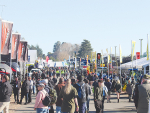
Crowd down, spending subdued
Back to its “normal” mid-June timing, it looked like all the stars were in alignment for the Fieldays at Mystery Creek.




 increase font size
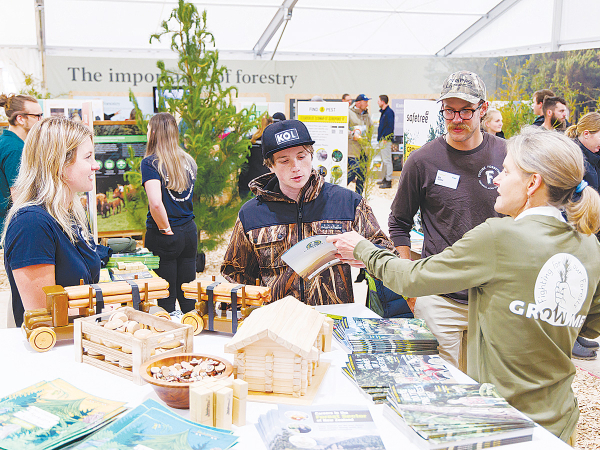 Forest owners say the Forest Hub is a valued way the industry can communicate directly with farmers and the public.
The Fieldays Forestry Hub will again feature at Mystery Creek in Waikato.
Like last year, the Fieldays Forestry Hub, located at site G80, will host about twenty sector organisations under the theme of ‘Wood our lowcarbon future’, with staff from large companies and small not-for-profit agencies on hand to provide information and answer questions.
A new series of forums and talks is planned for visitors wanting to know more about the forestry and wood processing sector. The Hub will host two forums and several ‘hot-topic’ talks that will be open to the public, with time scheduled for questions and answers.
Other attractions include a forestry simulator, so visitors can experience what it’s like to operate machinery in a forest, and a couple of large forestry machines to view close-up. Forestry Minister Peeni Henare has been invited to officially launch the Hub for 2023 on Wednesday 14 June at 11:00am. The Hub is a collaboration between Fieldays and an advisory group comprising New Zealand Forest Service, Forest Growers Levy Trust, Scion, NZ Forest Owners’ Association, Red Stag, NZ Farm Forestry Association and Future Foresters.
Hub spokesperson Alex Wilson says the sector has begun a process of transformation in partnership with the Government with, most recently, the launch of a $57 million Wood Processing Grant Fund in April and the release of the foundational Industry Transformation Plan (ITP) last November.
“The sector can expect more information on the ITP projects to be released at Fieldays.
“The wider public can anticipate an engaging experience on the possibilities of trees and wood as the sector helps to mitigate climate change and addresses the challenges of wetter and hotter weather in many parts of the country.
“The forestry and wood processing sector is New Zealand’s fourth largest primary industry exporter and a major contributor to regional economies and employment.
“Fieldays gives our sector a particular opportunity to have conversations with rural landowners about the opportunities to grow trees for timber, protect the land and to store carbon.”
New Zealand Farm Forestry Association president Neil Cullen says many farming organisations agree that an integrated tree planting approach on-farm is the best way forward to address the many environmental land use issues.
“The Farm Forestry Association will have a significant presence in the Fieldays Forestry Hub to explain how its members have practically implemented this approach, and which tree species work best and what are the costs and returns.”
New Zealand Forest Owners’ Association president Grant Dodson says the Forest Hub is a valued way the industry can communicate directly with farmers and the public.
“We’ll be there to explain the truth of some issues, such as the many things we are doing to reduce forest waste, but also just to communicate that we have a lot more in common with the rest of the primary sector than many people think.”
Scion chief executive Dr Julian Elder says Scion’s 2030 Strategy of right tree, right place, right purpose is highly relevant for rural New Zealand.
He says future rural landscapes and communities would include a mix of farming, productive forestry, trees and new manufacturing and processing activities.
Full details about the Fieldays Forestry Hub can be found at https://www.fieldays.co.nz/attendfieldays/explore/forestry.
Back to its “normal” mid-June timing, it looked like all the stars were in alignment for the Fieldays at Mystery Creek.

OPINION: The Hound was flabbergasted at the over-the-top censoring actions of the National Fieldays lackeys at this year's event.
Britain's Trade Envoy to NZ says having a free trade agreement is great, but there is no point in having it if it's not "actioned".
Back to its “normal” mid-June timing, it looked like all the stars were in alignment for the Fieldays at Mystery Creek.
Prime Minister Chris Hipkins says New Zealand has important sustainability credentials to uphold and says these hold the country in good stead when it talks trade with overseas countries.


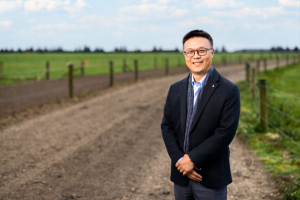
Canterbury milk processor, Synlait Milk has confirmed Leon Fung as its chief executive officer.
OPINION: Making it easier to collect rainwater and use it to grow crops and livestock is a no brainer.
As part of its Election 2026 coverage, Rural News asked political parties how they would help pull the arable sector out of the doldrums. Here's what they said:
Farmers are being encouraged to rethink how they manage waste on farm with the launch of ruralwastesorted.co.nz, a new website bringing together practical tips, real farmer experiences and resources.
New Zealand Winegrowers (NZW) is celebrating the India-New Zealand Free Trade Agreement (FTA) coming into force today, bringing New Zealand wine improved access to one of the world’s fastest-growing economies.
New Zealand’s red meat sector has welcomed the India-New Zealand Free Trade Agreement taking effect, which removes India’s 33% tariff on New Zealand sheepmeat.



OPINION: The same mainstream media muppets that brought you Jacindamania in 2017 have been flat out pimping for the Opportunities…
OPINION: Your old mate reckons the atrocious way farmers in the UK are treated by their lords and masters in…




