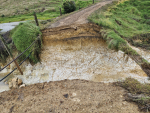
Award-winning Māori farm severely damaged by isolated Northland thunderstorm
One of the country's top Māori farms has been badly damaged by a severe isolated thunderstorm which hit parts of the east coast of Northland last week.




 increase font size
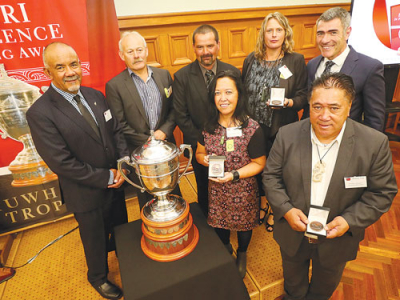 The finalists of the Ahuwhenua Trophy BNZ Maori Excellence in Farming Award at Parliament, Wellington, late last month. Photo by John Cowpland / alphapix.
Māori don't talk much about the good things they do and don’t talk themselves up enough, says the Minister of Māori Development, Te Ururoa Flavell.
He said this at a function at parliament recently to announce the finalists in the Ahuwhenua Trophy BNZ Māori Excellence in Farming Award, contested by Māori sheep and beef farmers.
At least 100 people – MPs, business people and government officials – gathered in parliament’s grand hall to hear the finalists, all North Island located: Omapere Rangihamama Trust, Kaikohe; Ron and Buzz King, Puketawa Station, Eketahuna; and Pukepoto Farm Trust, Ongarue near Taumarunui.
Flavell says the Ahuwhenua Trophy awards need to be talked up because, apart from being the premier agricultural award for Māori it carries with it a lot of mana.
“Its history helps highlight the great contribution Maori make to the economy of the country. The finalists should be proud of their achievement in making it to the finals,” he says.
Primary Industry Minister Nathan Guy, presenting the finalists with their medals, said their farms are shining examples of Māori farmers’ commitment to sustainably developing their land for future generations.
Guy expressed pride in the key role Māori play in New Zealand’s primary industries.
“The asset base of the Māori economy is worth over $42 billion, most of it focused on the primary industries. Māori collectively own 40% of forestry land, 38% of fishing quota, and 30% of lamb production, to name a few examples.
“Right across the economy, Māori are successful players and many of their companies and entities are amongst the top performing commercial operations in NZ.”
The chairman of the Ahuwhenua Trophy management committee, Kingi Smiler, says it is great to see again three top-quality sheep and beef farms selected as finalists for the prestigious trophy. All are performing well despite volatile global markets, low prices and the need to adapt to climate change.
“There is something special about our people looking for practical innovative ways to get through adversity and not retreating into their shells to do nothing. They know farming requires managing cycles -- weather or market -- and they take account of this when drawing up their business plans.
“NZ is fortunate to have Māori farmers because it is in their DNA as kaitiaki (guardians) to manage the fragile environment and invest for future generations. This spiritual closeness to the land is vital in a modern society where consumers not only want food, but also assurance that it is produced sustainably and ethically.”
Smiler says Māori agribusiness is in good shape and he believes the Ahuwhenua Trophy has been a major factor in lifting the profile of Māori agribusinesses and showcasing its contribution to the NZ economy.
One of the country's top Māori farms has been badly damaged by a severe isolated thunderstorm which hit parts of the east coast of Northland last week.

Coby Warmington, 29, a farm manager at Waima Topu Beef near Hokianga was named at the winner of the 2025 Ahuwhenua Young Maori Farmer Award for sheep and beef.
Recently two of New Zealand's top Maori sheep and beef farms held field days as part of the prestigious Ahuwhenua Trophy competition. The two are: Whangaroa Ngaiotonga Trust, northeast of Whangarei, and the proprietors of Tawapata Onenui farm on Mahia Peninsula in southern Hawke's Bay. Reporter Peter Burke attended both field days.
Farms from Northland and northern Hawke's Bay are the finalists in this year's Ahuwhenua Trophy competition for the top Māori sheep and beef farms.
The search is on to find the top Māori sheep and beef farm with entries now open for the 2025 Ahuwhenua Trophy competition.


Federated Farmers has welcomed new rural policies released by ACT, saying they align closely with its own election priorities.

Rural Contractors NZ says proposed changes to land transport rules for agricultural vehicles are a welcome response by the Government to out of date regulations which have seen members hit with huge fines.
Alliance is calling for final applications for its 2027 Graduate Programme, with applications closing on Sunday 25 October.
Decades piloting planes has ensured vet and farmer David Hayes is focused on safety. So, after a serious accident while welding on farm, he is sharing his experience so others can learn from it.
Canterbury milk processor, Synlait Milk has confirmed Leon Fung as its chief executive officer.
OPINION: Making it easier to collect rainwater and use it to grow crops and livestock is a no brainer.


OPINION: The same mainstream media muppets that brought you Jacindamania in 2017 have been flat out pimping for the Opportunities…
OPINION: Your old mate reckons the atrocious way farmers in the UK are treated by their lords and masters in…




