Ex-All Black Sam Whitelock Swaps Rugby for Dairy Farming
Returning to the family dairy farm after playing 20 years of professional rugby around the world is no easy task.




 increase font size
 In farming, if your head is not clear, the risks rise fast, says farmer Mark Gascoigne.
Cambridge dairy farmer Marc Gascoigne was at Fieldays this month talking about his journey after suffering a bout of depression and his advice to others. He tells his story:
I can still remember sitting at the kitchen table on our farm in Cambridge, staring at a to-do list and being completely unable to move.
The jobs were all there in front of me. None of them had changed. But for 30 minutes I just sat there, frozen. At the time, I didn't really understand what was happening. I just knew I couldn't think straight, couldn't make simple decisions, and couldn't seem to get myself going. Looking back now, I can see that stress, anxiety and depression had caught up with me.
When I went through depression around 11 years ago, it felt as though my brain had gone into fight-or-flight mode. It was telling my body something was seriously wrong. The result was that my ability to make even basic decisions disappeared. On a farm, that is dangerous. Farming is full of small judgement calls that have to be made every day - around stock, vehicles, machinery, timing and fatigue. If your head is not clear, the risks rise fast.
I know that from experience. One day I was herding cows when one of them bolted. Instead of taking a second to think, I chased after her on my quad bike and flipped it on its side. It was bloody dangerous, and I was lucky. The truth is I made a poor decision because I was stressed and fatigued. These days I would handle that moment very differently. I would let the cow go, stop, and take a breather.
That one incident taught me something I wish more farmers understood: When stress builds up, it doesn't just affect your mood. It affects your reactions, your judgement and your safety.
Research backs that up. An ACC-funded study for Farmstrong found that 58% of injured farmers linked their injury to stress associated with farm work, and a quarter said it was a major factor. That should stop all of us in our tracks.
New Zealand farmers work in one of the country's highest-risk industries, and too many of us are trying to push through exhaustion, poor sleep, isolation, and pressure as if they are just part of the job. They may be common, but that does not mean they are harmless. In fact, they can be a direct pathway to injury. Farmstrong exists to help farmers and growers "live well to farm well", and ACC has continued to invest in the programme because the link between wellbeing and injury is real.
For me, protecting my wellbeing now comes down to a few simple things that I try not to compromise on. The first is exercise. Getting out for a run or a cycle clears my head and gives me more energy, not less. A lot of farmers will say they do not have time for that, and I used to think the same way. But I have learnt that making time for wellbeing is not a luxury - it is part of being able to do the job properly.
The second is connection. When you are dealing with depression, the temptation is to withdraw and sit at home by yourself. In my experience, that is the worst thing you can do.
These days I make a point of connecting with people whenever I can, even in small ways. It might be chatting to someone in the supermarket, catching up with mates, or getting off the farm for a break. Those moments matter more than I used to realise. If there is one thing I would say to other farmers, it is this: do not wait until you are overwhelmed before you take your wellbeing seriously. And do not be afraid to talk about what you are going through.
I would never have shared my story 11 years ago. I would have been horrified by the idea. But speaking up lets people help, and it may also help someone else recognise what is happening in their own life. We spend our days looking after animals, land and business pressures. We need to get better at looking after ourselves as well, because a clear head is not just good for your mental health - it can keep you safe.
If you're struggling, Farmstrong shares practical tools and farmer stories about managing pressure and staying well, and the Rural Support Trust is available for rural people and farming families who need support.
Returning to the family dairy farm after playing 20 years of professional rugby around the world is no easy task.
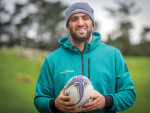
Sam Whitelock is an All Black rugby great, Farmstrong Ambassador and working dairy farmer in the Manawatu. Having stepped away from professional sport and returned to his roots on the family farm, he talks about balancing farm life with advocating for rural wellbeing.
A leading British farming politician says he's impressed with the positive attitude of New Zealand farmers that he met during his recent trip here.
A new digital assistant is now helping Ballance Agri-Nutrients farmers speed up nutrient information and ordering.
OPINION: At Fieldays this year, one theme kept surfacing across the sector: global shocks are no longer something that happens “over there”. They are now translating quickly into local, farm-level impacts through increasingly complex and connected channels.

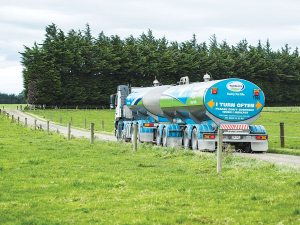
Fonterra board members are in line for a pay rise of around 3%.
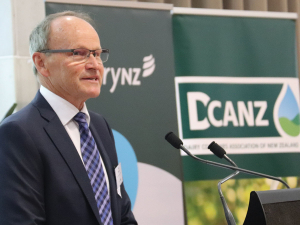
Dairy processors are ready to further boost New Zealand’s export earnings but want the incoming government to match their ambition with good policy.
Massey University is best placed to solve the “problems” facing the dairy industry, says vice chancellor, Pierre Venter.
Synlait's longest serving employee – a man who joined the Canterbury-based milk processor even before it began processing milk – is now its newest executive.
A dairy industry leader believes eradicating the common and costly disease, Bovine Viral Diarrhoea (BVD) is within reach.
A farmgate milk price of $10/kgMS this season is firming up as milk powder prices soar and the New Zealand dollar weakens.
OPINION: It seems Canterbury processor Synlait is still in the doldrums.
OPINION: Get offside with New Zealand First leader Winston Peters at your own peril.