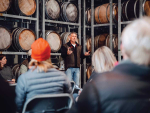
Marlborough Winery's Solar Array Targets Three-Year Payback
The three-year payback for a 60kWh solar array makes it "a bit of a no-brainer", says The Coterie's Rhyan Wardman.




 increase font size
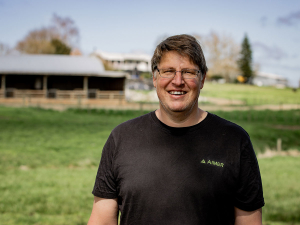
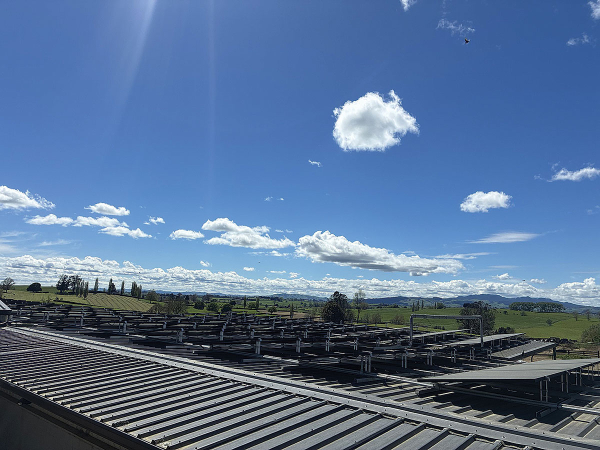 The solar system has given Dave and Alice Swney’s farm visibility over energy consumption.
Soaring electricity costs spurred Dave and Alice Swney into investigating the possibility of solar energy on their farm just out of Te Awamutu in the Waikato. Just over one year post installation they are already reaping the rewards.
Dave and Alice’s 124ha property, which they own in an equity partnership with Dave’s parents, peak milks 410 cows in a System 5 with the support of two full-time staff.
Dave discussed their solar journey with Wade Bell in an on-line SMASH event in October.
“Alice and I had always been interested in solar,” says Dave.
“We were contract milking for the farm company, paying the power bill, and watching it climbing. Solar initially seemed out of reach because of the cost and the state of battery technology. However, as we researched further, more products and companies were offering solar systems, so we started taking the idea more seriously.”
There were a number of solar options available, but after consulting with their electrician and their milk company, OFI, they came to the conclusion that the Farmlands Flex offering would best suit their needs. The ability to access a green loan from their bank, at 0% over five years, turned the dream into reality. Their initial installation included 90 solar panels most of which they set up on the north facing roof of their 40-a-side herringbone shed.
They decided to install panels alone initially, postponing battery storage until they got a handle on actual electricity generation and consumption. They chose an inverter that would allow future battery installation, providing flexibility to expand the system later.
Almost a year later they added 50 kWh of battery storage with the option of adding further storage if required. To date, the system has cost $72,000 for the panels and their installation, with the batteries costing a further $50,000.
“We decided to stick with panels at the start”, says Dave.
“You can model all the data you like about sunshine hours and what your farm’s using from your power bills.
“But we didn’t really know how it would operate. So, we went with the panels only for the first few months and learned so much through that stage.
“Once we got going, we got an app on our phone, and we could see what we’re generating and what we’re consuming. And that’s when the learning really started to happen around what was going to be possible with this sort of system.
“One frustration with our previous power bill was that we were paying around $35,000 a year without knowing where the electricity was going. Was it the cowshed, the effluent pumps or something else? We had no clear answers. The solar system has given us visibility over our energy consumption. It’s been fascinating to learn how and when the farm uses power.”
Knowing where power is being used, and when, has allowed Dave to make some significant management changes which leverage the benefits of his solar system.
“I now know that the milking machine uses around 20–25 kilowatts per hour, as does our effluent pump,” says Dave. “Running both at once creates a significant demand. We’ve introduced a few rules. The main effluent pump is switched off at the end of afternoon milking. Rather than allowing it to turn on automatically when the effluent sump fills, we wait until milking has finished and the sun is generating electricity before running the pump.”
The Swneys' solar system is more than meeting their expectations, with their management changes and the installation of batteries making a notable impact.
“Originally, the system was modelled to generate around 25–30% of our power requirements,” says Dave. “After the first year, the app showed we were closer to 47–48%.
“We’ve used more of our solar generation than Flex originally forecast, which has been significant for us. Our system was modelled to pay for itself in about five years, but we are on track to achieve that sooner.”
Any energy they generate which they can’t store goes back into the grid, earning 14 c/kWh. Installing batteries reduced the electricity exported to the grid from around 49 kW to 23 kW allowing them to use it on-farm rather than selling it.
Dave is optimistic about their future with solar and the benefits it will continue to provide to their business.
“The system helps futureproof our business and gives us more control over our costs. We already try to manage major expenses, such as feed contracts, so this is another way to improve our bottom line and drive efficiencies.”
The full recording of Dave and Wade’s discussion can be found on SMASH’s YouTube channel: https://www.youtube.com/@SMASHdairyfarmingNZ
The three-year payback for a 60kWh solar array makes it "a bit of a no-brainer", says The Coterie's Rhyan Wardman.
The managing director of a company seeking to build a solar farm in Canterbury says receiving fast-track approval is a “really positive outcome”.
Taranaki's sunshine and energy sector expertise are powering a new approach to renewable energy, with the launch of BlueGreen Frontiers.
Winegrowers interested in exploring solar and battery systems on their vineyards could tap into funding and advice through a new funding programme.
One of New Zealand's latest and largest agrivoltaics farm Te Herenga o Te Rā is delivering clean renewable energy while preserving the land's agricultural value for sheep grazing under the modules.


Hamilton-based agritech company Aimer Farming has completed a $3 million capital raise to support its next stage of growth, including a beef farming product due to launch in 2027.
When dairy manager Miriam Lauridsen learned the farm, she was joining held weekly health and safety meetings, she initially thought that was “a bit over the top”. Experiencing that culture changed her mind.
Nominations are open for the 2027 Fonterra Dairy Woman of the Year Award.
Keeping up with pasture moisture demands is likely to be the key challenge for dairy farmers during this season’s El Niño weather pattern, says Blue Skies Weather & Climate Services meteorologist Tony Trewinnard.
Farmers have until the end of this week to help shape DairyNZ’s future focus.
Wayne McNee, chief executive of AgriZeroNZ, has resigned and will leave the organisation on 15 January 2027.

OPINION: It seems Canterbury processor Synlait is still in the doldrums.
OPINION: Get offside with New Zealand First leader Winston Peters at your own peril.