How a Scholarship Helped Build a 1400-Cow Taranaki Farm
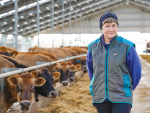
On a farm in Tikorangi, North Taranaki, Brent Stevenson is sharemilking 1,400 cows.




 increase font size
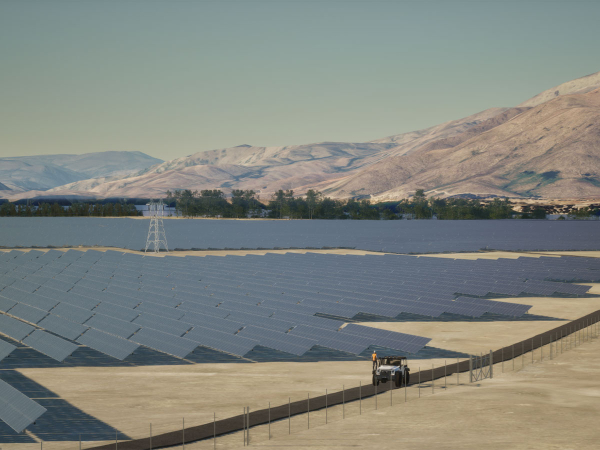 A rendering of the planned solar farm at Haldon Station.
The managing director of a company seeking to build a solar farm in Canterbury says receiving fast-track approval is a “really positive outcome”.
The decision, currently in its final draft form, will allow Lodestone to build its proposed Haldon Solar Farm in the Mackenzie District of Canterbury.
Gary Holden, managing director Lodestone, describes the decision – which follows six months of assessment from the Fast Track Approvals panel – as an important step in the development of the solar farm at Haldon Station.
“It’s exciting to see the Panel supporting new renewable and gives us the opportunity to continue to progress the other activities to get the project to shovel ready,” Holden told Dairy News.
“The robust process set an appropriately high standard for projects of this type and scale in the Mackenzie District,” he adds.
Once built, the solar farm will generate approximately 370 GWh of renewable electricity each year, which is enough to power 45,000 households.
Holden says the wider community will benefit both directly and indirectly from the project.
“During the construction of the solar farm there will be local employment opportunities from contractors working on the build to housing and feeding workers on site,” he says, adding that in the long term there will be operations and maintenance staff required to help maintain and operate the farm.
“The construction of the solar farm will also provide economic development opportunities in the region which don’t rely on water or result in any effluent being created.”
Holden describes it as a “clean, long-term sustainable option”.
Additionally, he says that having a more diverse mix of power generation options will help to moderate electricity prices in dry years.
“It can be said that utility scale solar farms provide ‘virtual rain’ which reduces New Zealand’s dry year risk,” Holden says.
“With solar generation highly correlated to hot summers, or long dry periods, this then enables water to be retained in the hydro lakes, and we use solar generated electricity instead,” he adds. “Thus, supported by and therefore supporting hydro systems.”
Paddy Boyd, Haldon Station managing director, says the project that from the outset, the owners of the station wanted to ensure that not only could renewable energy be produced on the land but that it could be done while protecting its unique landscape.
“We look forward to continuing to work alongside mana whenua, regulators and the community as the project progresses,” he says.
On a farm in Tikorangi, North Taranaki, Brent Stevenson is sharemilking 1,400 cows.
Taranaki's sunshine and energy sector expertise are powering a new approach to renewable energy, with the launch of BlueGreen Frontiers.
One of New Zealand's latest and largest agrivoltaics farm Te Herenga o Te Rā is delivering clean renewable energy while preserving the land's agricultural value for sheep grazing under the modules.
Taupo-based low-carbon dairy company Miraka has its sights set on using 100% renewable energy in the next decade.
Paddy Boyd, the new chair of Deer Industry New Zealand (DINZ), says his priority is to make sure deer farmers are engaged and provide them confidence to grow.


When Northland leather worker Vernon Suckling started making horse saddles 50 years ago, quad bikes and side-by-side vehicles were unheard of.
Alliance Group has confirmed that eligible farmer-shareholders who supply and continue to back the business will receive up to $20 million later this year, following the strategic investment partnership with Dawn Meats.
With a general election under five weeks away, Rural News is asking major political parties about their policies and positions on key issues facing the primary sector. We will run their responses to each question over the next four weeks. The ACT Party and the Greens didn't respond in time.
The red meat sector is in great heart.
Dr Scott Champion, Foundation for Arable Research chief executive, says that everyone in the supply chain had a role to play in driving the sector's long-term success.
Entries opened on Monday, 5 October 2026 for the 2027 New Zealand Dairy Industry Awards (NZDIA), which organisers describe as the nation's biggest celebration of excellence in the dairy sector.
OPINION: It seems Canterbury processor Synlait is still in the doldrums.
OPINION: Get offside with New Zealand First leader Winston Peters at your own peril.