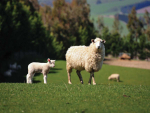
Early Weaning Lambs: What the Massey Trials Found
Farmers with high-quality feed available in late spring could consider weaning at least a proportion of their lamb crop early to benefit both lambs and ewes.




 increase font size
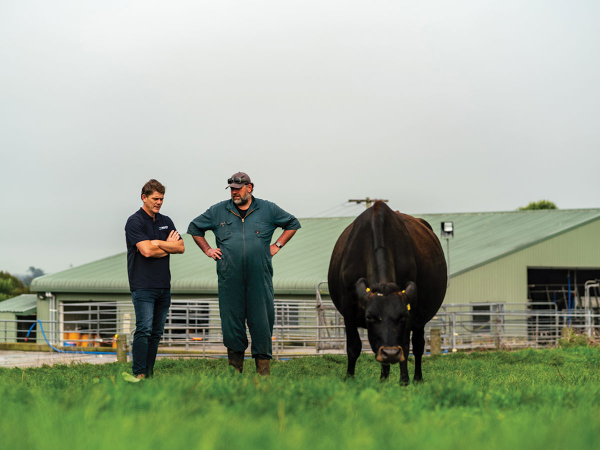 Get transition wrong, and you’ll be fighting problems all year.
The transition period is the make-or-break window for your entire season. If this period is poorly managed, you don't just see a few downer cows, you see a downward spiral that affects the cow's health, production and reproduction long into the season.
A poorly managed transition often begins with cows losing body condition before they calve, placing massive strain on the liver and triggering a landslide of post-calving weight loss. Cows that lose too much condition often suffer from clinical metabolic diseases such as milk fever and ketosis, but the hidden costs can be even greater.
Pre-calving condition loss commonly coincides with poor appetite. You may notice cows standing off feed in the days before calving, reducing intake and leaving them low on energy at calving, increasing the risk of calving difficulties.
Beyond immediate calving and appetite problems, a poor transition weakens the immune system, leading to higher rates of retained membranes, metritis, 'dirty cows', and mastitis. From a production point of view, these cows eat less, reach a lower peak milk yield, and take longer to cycle, all of which can negatively affect your six-week in-calf rates.
Think of the liver as the engine of the cow and the rumen as the fuel tank. During transition, the liver's workload doubles as it prepares to produce the glucose needed for milk. If the cow is over-conditioned, her liver can get 'choked' with mobilised fat, which kills her appetite just when she needs it most.
To get the rumen 'match-fit' for calving, we need to focus on fibre. Feeding plenty of quality fibre (like pasture hay) stretches the rumen wall, which physically increases the cow's appetite capacity after she calves. It also keeps her full, and because hunger is the biggest stressor for a cow, a full cow is a happy, more resilient cow.
Managing the transition diet is about getting the right balance:
Aim to feed about 90-110% of maintenance energy. It's all about gene expression, meaning overfeeding energy can accidentally switch on genes that upset insulin, fat mobilisation and appetite. Underfeeding energy causes her to start mobilising fat too early, so she's short on energy at calving.
Cows need at least 14% crude protein minimum, but over-conditioned cows actually need more (16-18%) in order to help their livers process energy efficiently from increased fat mobilisation.
We use DCAD management to shift the cow's internal chemistry, making her more responsive to the hormones that unlock calcium and phosphorus from her bones when she needs them for milk. Alongside DCAD and rumen buffering keep magnesium and phosphorus balanced, and don't forget the trace minerals.
To ensure your cows hit the ground running and recover within two to three days of calving, follow these essential steps:
Get the transition right, and you've set the season up to win. Get it wrong, and you'll be fighting problems all year. By following this plan, you'll cut disease, lift peak milk and protect your six-week in-calf rate.
Farmers with high-quality feed available in late spring could consider weaning at least a proportion of their lamb crop early to benefit both lambs and ewes.
The first major update to the Dairy Cattle Code of Welfare in more than a decade has been released, marking what DairyNZ describes as an important step in ensuring animal welfare standards continue to evolve alongside scientific evidence and on-farm realities.
Bovine Viral Diarrhoea (BVD) is sometimes viewed as a dairy industry issue, but the reality is that the disease can have serious consequences for beef breeding herds as well.
By September, pre-mating heat recording is underway on many spring-calving dairy farms.
Animal health company Bovonic is gearing up for its next stage of growth after increasing New Zealand sales of QuadSense by more than 50% in the last 12 months, including a record quarter for the business this year.


Federated Farmers has welcomed new rural policies released by ACT, saying they align closely with its own election priorities.

Rural Contractors NZ says proposed changes to land transport rules for agricultural vehicles are a welcome response by the Government to out of date regulations which have seen members hit with huge fines.
Alliance is calling for final applications for its 2027 Graduate Programme, with applications closing on Sunday 25 October.
Decades piloting planes has ensured vet and farmer David Hayes is focused on safety. So, after a serious accident while welding on farm, he is sharing his experience so others can learn from it.
Canterbury milk processor, Synlait Milk has confirmed Leon Fung as its chief executive officer.
OPINION: Making it easier to collect rainwater and use it to grow crops and livestock is a no brainer.


OPINION: It seems Canterbury processor Synlait is still in the doldrums.
OPINION: Get offside with New Zealand First leader Winston Peters at your own peril.




