
The Power of Refugia
Worms are present on every farm; it’s ensuring there are enough worms that are susceptible to drench within your farm system, through the use of refugia, that is a key tool in slowing the rise of drench resistance.




 increase font size
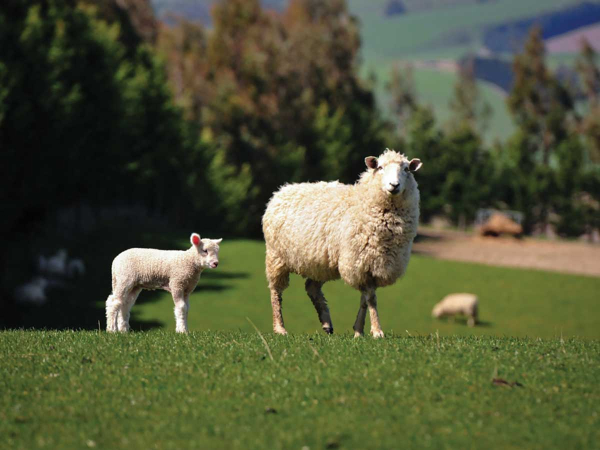 Wean at least a proportion of lamb crop early to benefit both lambs and ewes.
Farmers with high-quality feed available in late spring could consider weaning at least a proportion of their lamb crop early to benefit both lambs and ewes.
Partitioning high-quality feed into lambs in the late spring, early summer period means more lambs can be sold prime before the height of summer- making more feed available for capital stock – and ewe lambs can be grown out to heavier weights early. This means there is flexibility to hold them back later if feed resources are limited.
Early weaning also means ewes can either be sold early on a strong schedule or given more time to regain body condition.
Trials run at Massey University found lambs over 20kgLW coped best with early weaning (minimum weaning weight was 16kg LW), but it was the quality of the forages on offer that was the greatest determinant of how well lambs grew post-weaning.
Professor Paul Kenyon, who led the early-weaning trials, says early-weaned lambs should be given unrestricted access to legume-based forages such as a herb clover mix at a minimum cover of seven centimetres in height.
If lambs are weaned onto the crop, they should be given time to adjust to a change in feed. Running the ewe and lambs onto the crop a few days before weaning, then running the lambs back onto the crop after weaning will help minimise the weaning check.
He says in late lactation all lambs, but especially multiples, are receiving very little nutrition from the ewe, so when grass-growth is limited, the ewes are competing with their lambs for feed, compromising the performance of both.
Early weaning can also be particularly useful in hoggets as it will give them more time to recover body condition between lambing and mating again as a two-tooth.
Worms are present on every farm; it’s ensuring there are enough worms that are susceptible to drench within your farm system, through the use of refugia, that is a key tool in slowing the rise of drench resistance.
A dairy industry leader believes eradicating the common and costly disease, Bovine Viral Diarrhoea (BVD) is within reach.
The first major update to the Dairy Cattle Code of Welfare in more than a decade has been released, marking what DairyNZ describes as an important step in ensuring animal welfare standards continue to evolve alongside scientific evidence and on-farm realities.
Drench Options are become increasingly limited for sheep farmers, highlighting the importance of proactive parasite management planning within the wider farm system to stretch the longevity of drench as a tool.
Bovine Viral Diarrhoea (BVD) is sometimes viewed as a dairy industry issue, but the reality is that the disease can have serious consequences for beef breeding herds as well.


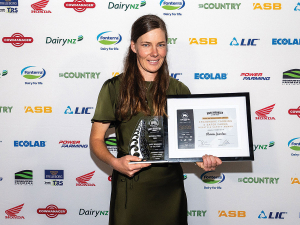
When dairy manager Miriam Lauridsen learned the farm, she was joining held weekly health and safety meetings, she initially thought that was “a bit over the top”. Experiencing that culture changed her mind.

Nominations are open for the 2027 Fonterra Dairy Woman of the Year Award.
Keeping up with pasture moisture demands is likely to be the key challenge for dairy farmers during this season’s El Niño weather pattern, says Blue Skies Weather & Climate Services meteorologist Tony Trewinnard.
Farmers have until the end of this week to help shape DairyNZ’s future focus.
Wayne McNee, chief executive of AgriZeroNZ, has resigned and will leave the organisation on 15 January 2027.
The New Zealand dairy sector set a record in the 2025/26 season, producing more than two billion kilograms of milksolids for the first time.




OPINION: The same mainstream media muppets that brought you Jacindamania in 2017 have been flat out pimping for the Opportunities…
OPINION: Your old mate reckons the atrocious way farmers in the UK are treated by their lords and masters in…




