Aimer Farming Raises $3M to Launch AI Beef Pasture Tool
Hamilton-based agritech company Aimer Farming has completed a $3 million capital raise to support its next stage of growth, including a beef farming product due to launch in 2027.




 increase font size
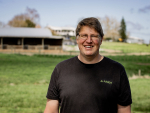
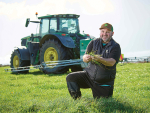
 Aimer founder Jeremy Bryant.
Farmers can now get a more reliable view of pasture covers across their farm, thanks to a combination of three data sources.
The new pasture monitoring capability, launched by Aimer Farming, taps into live modelling, satellite data and AI-powered smartphones.
Aimer Satellite automates pasture monitoring and continues delivering reliable pasture when satellite imagery is limited by cloud or when on-farm measurement isn't practical, such as during busy periods.
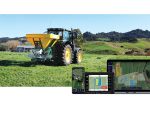
The system uniquely combines three sources of data: satellite imagery, highly accurate smartphone pasture measurement, and Aimer's live paddock modelling (digital twin of each farm).
Together, these inputs deliver more reliable pasture estimates than satellite-only approaches, while reducing the need for full farm walks or manual data entry, including recording grazing events.
Aimer Farming founder Jeremy Bryant says satellite technology has huge potential for pasture management, but the real value comes when it is connected with accurate on-farm measurement.
"Satellite imagery is incredibly powerful because it gives farmers visibility across the whole farm," Jeremy says.
"But farmers make pasture decisions every day, not just when a satellite passes over. AIMER Satellite helps farmers keep a better handle on pasture across the farm, even when time, weather or workload make regular measurement difficult.
"That's what makes this technology different from satellite-only pasture technology. Aimer Satellite combines satellite data with smartphone measurement and what AIMER learns about paddock growth over time."
Using Aimer's AI-powered smartphone technology, farmers scan part of their farm, and Aimer estimates the rest, saving hours of farm walks while generating forecast feed wedges and automated grazing plans.
The satellite extends this by incorporating satellite observations into Aimer’s live paddock models, improving how the system understands individual paddock performance and increasing the reliability of pasture estimates over time.
Aimer’s smartphone measurement delivers more than 90% accuracy when pasture is measured directly. The Satellite is designed to maintain around 80% daily accuracy by combining satellite data, smartphone measurement and paddock learning.
Bryant says reducing admin for farmers and making the technology practical for them to use day-to-day has also been a major focus.
“We know many systems rely on manual data entry, particularly recording grazing movements, to maintain accuracy,” he says.
“AIMER Satellite is designed to deliver reliable pasture intelligence, without requiring farmers to record grazing events, making it far more practical during busy periods or difficult conditions.”
Bryant says the launch is another step towards making pasture management easier and less manual for farmers.
“Pasture remains one of the biggest drivers of farm performance, but it is also one of the hardest things to consistently monitor well,” he says.
“Our goal is to give farmers a clearer, more reliable view of what is happening in their paddocks, so they can make good decisions earlier and with less effort.
“We see satellite technology playing a major role in the future of pasture management, particularly when it is combined with other sources of on-farm intelligence.”
Hamilton-based agritech company Aimer Farming has completed a $3 million capital raise to support its next stage of growth, including a beef farming product due to launch in 2027.
A long way from when AI meant plunging a plastic-covered arm armpit deep up a cow’s rear, John Deere has shown off its new artificial intelligence (AI) assistant, aptly called JD, which aims to simplify data processing on farms.
In Dacre, near Invercargill in New Zealand’s South Island, Bruce Dinnington is running a dairy operation unlike any other.
OPINION: One of the privileges of judging the Ballance Farm Environment Awards for more than a decade is the opportunity to spend time on farms and orchards across New Zealand and hear from people constantly looking for ways to improve their businesses.
The agricultural aviation industry has reacted angrily to government plans to cut regulations to make it easier for farmers to buy drones and use them on their farms.



During the nesting season, from September to December, industrious starlings can quickly build nests in the darker areas behind tractor and vehicle, usually close to hot engines, typically resulting in localised damage or in some cases complete write-offs.
The meat processing industry is much more collegial than it was in the past and is now more focused on common goals.
With the last couple of months having seen some potential tractor purchases put on hold with the impending election and continued input cost rises, year-to-date figures, ending September, has seen deliveries up around 5% over the same period in 2025, with a total of 2026 units.
Beef+Lamb New Zealand is calling for nominations for director roles in the Northern South Island and Northern North Island electoral districts.
Fonterra chief executive, Richard Allen says being resilient has helped the dairy industry overcome extreme volatility in recent years.
The head of the Ministry for Primary Industries (MPI) trade and international relations group says New Zealand is well-positioned to secure trade access and compete internationally as the world becomes more complicated, demanding and uncertain.

OPINION: It seems Canterbury processor Synlait is still in the doldrums.
OPINION: Get offside with New Zealand First leader Winston Peters at your own peril.




