OPINION: For as long as MMP has existed, we in the provinces have played along to our detriment.
Having returned from overseas in 1992, I plunged myself into working life and raising a family over the last 28 years.
I’ve personally found it very difficult to look much past the front gate. Perhaps I haven’t wanted to look up much on purpose as the last 30 years have crucified provinces from the mighty economic and social hubs they once were.
Primary industry export revenue in 2019 was in the vicinity of a record $46.4 billion and yet our provincial towns, villages and surrounding areas paint a very different picture.
Our local schools are closing and school bus runs cut in the name of efficiency. Our banks are leaving towns, so too our stores, supermarkets, garages and service entities. Our local hospitals and rural GPs are under pressure and so is our existence.
In the far reaches it is most obvious, with pine trees pervading our pastoral landscape, where once animals and communities existed in harmony. This is despite our protein being of highest quality and most efficiently produced anywhere in the world.
Those of us who have been around a while know that despite the heightened awareness around this issue currently, this is not a new issue. There was plenty of pine afforestation when there was an alternate hand on the political tiller. So too with our councils, our schools and our healthcare. Many of the knock-on effects of central government are much more far reaching and subtle than we care to investigate and our lives seem too busy to rebel against.
No one has told us directly we need to leave, for that would cause us to drop tools and bunch our fists. Government policy is just making it more and more difficult to exist—like a noose that slowly tightens around one’s neck. The neck of provincial NZ.
Who’s benefiting from this? The large urban areas where the majority vote is held. Where ideological agendas can easily create misplaced perceptions of what we in provincial NZ do and how we do it.
This noose sometimes has a blue hand on it, sometimes red. Despite the rhetoric you have heard in the past, and will hear leading into the election, neither truly have provincial NZ at heart. Their track record is testament to that! You might argue that one is better than another and you could be right – that is not my argument.
Our provincial diversity is a local strength, but our political weakness. If we vote mainstream blue or red we are lumped in with the same colour in the urban centres, but their numbers and their philosophy will override our needs. That is the bias of the system as it stands, and for as long as MMP has existed, we in the provinces have played along to our detriment. As voting individuals in the provinces, we are on a hiding to nothing.
Collectively we could have some clout. To make a difference, provincial NZ needs its own party. One that is centrist and could be part of any government. One to moderate or enhance policy from within, with provincial interest in mind.
That might take some convincing to the staunchest of whatever your political colour, but I would argue, what have you got to lose? No colour has your interest at heart.
I believe we need more options purely because the choices we have had to date, the status quo, have been of no benefit to the provinces.
Have we still some fight in Provincial NZ – before that noose is drawn tight, or are we already out of oxygen?
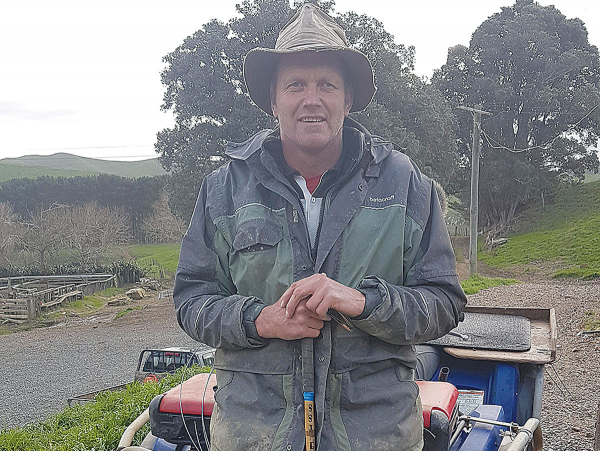
• John Jackson completed a Bachelor of Agricultural commerce at Lincoln University and read Social Studies at Oxford (Philosophy, Politics, Economics). He farms sheep and beef at Te Akau, North Waikato.