New Reviva Forage Rape Wins Over Dryland Farmers in First Year
It's only just hit the market, but a new forage rape bred for dryland farms has already won the approval of lambs and young cattle both north and south.




 increase font size
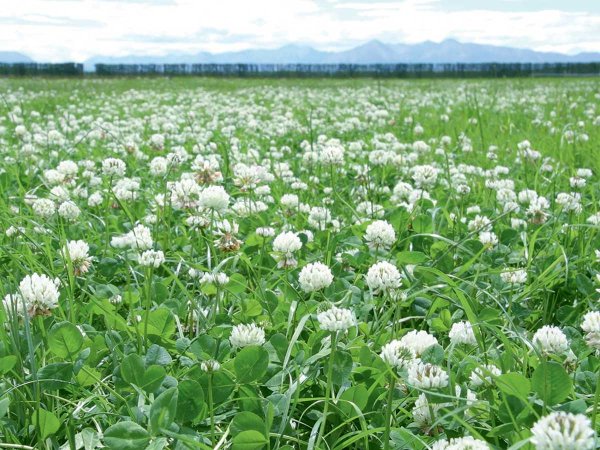 With urea fertiliser prices up, farmer interest in white clover is skyrocketing.
Growing great pasture this season doesn’t have to break the bank.
In fact, it could have the opposite effect, according to a veteran agronomist.
“Look after your white clover, and you’ll not only harvest free nitrogen from the air, but improve feed quality,” says Barenbrug pasture specialist Graham Kerr.
With urea fertiliser prices up to 50% higher than this time last year, and no sign of certainty returning to the market, farmer interest in white clover is skyrocketing, he says.
“Every tonne of clover dry matter grown fixes 25kg of nitrogen per hectare. It’s free, natural. sustainable and continual.”
The recommended target for white clover is 30% of the total DM yield of a ryegrass pasture, but Kerr says few farms have this much.
“Most have 10-20%. Some have less. There’s no shortage of opportunity for improvement.”
Which is why Barenbrug is increasingly being asked how existing clover populations can be improved, he says.
Herbage testing is the most important first step. Clover is much more vulnerable to nutrient deficiencies than ryegrass and has specific pH requirements.
“This is a practical, efficient way to find out if existing clover is getting what it needs to thrive. If it’s not, you can improve it straight away by correcting any nutrient or pH issues.”
Next, for new pastures farmers need to follow two key rules at sowing to get it nice and thick.
First, clover seed is tiny, and must be sown at shallower depth than ryegrass.
“A lot of clover seed never stands a chance, as it’s sown at more than 20mm deep, and it’s likely half of it will never come up.”
Second, while it often germinates faster than ryegrass, clover then grows much slower because it spends its early life forming a taproot.
So that means it also needs to be sown away from ryegrass, instead of the common method of drilling both seeds into the same row, at the same depth.
“Clover needs its own space, otherwise ryegrass swamps it,” Kerr says.
“We need to get smarter in the drills we use for sowing. And I have seen great modifications to drills to improve clover.
“Just think, if you drill your clover with 20 kg/ha of ryegrass seed in 15cm rows, you are in effect drilling 60 kg/ha of ryegrass within that drill row, and you expect clover to thrive? It will be smothered.”
A Barenbrug trial comparing different sowing methods for perennial ryegrass and white clover showed that in the 12 months after sowing, broadcasting clover seed gave twice the clover yield than that produced by drilling it in the same row as the ryegrass.
“The value of the extra clover grown over the year is equivalent to $50/ha of urea, plus another 2-3 times that in extra lamb growth or milksolids production.”
It's only just hit the market, but a new forage rape bred for dryland farms has already won the approval of lambs and young cattle both north and south.
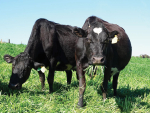
Keeping cows happy and well fed at home this winter just got easier with the launch of a prolific new annual ryegrass bred to jump out of the ground even faster than its popular predecessor.
New industry trials confirm what matters most for perennial ryegrass seed this autumn: Cool, dry storage keeps endophyte viability above the 70% commercial threshold, according to pasture specialist Barenbrug.
Pasture specialist Graham Kerr claims that one hybrid ryegrass in New Zealand continues to dominate industry yield trials, as it has done every year since it was launched in 2021.
It may still be under the radar for many, but one new pasture has been making waves for three different farmers lately.


Alliance is calling for final applications for its 2027 Graduate Programme, with applications closing on Sunday 25 October.
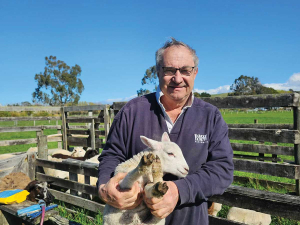
Decades piloting planes has ensured vet and farmer David Hayes is focused on safety. So, after a serious accident while welding on farm, he is sharing his experience so others can learn from it.
Canterbury milk processor, Synlait Milk has confirmed Leon Fung as its chief executive officer.
OPINION: Making it easier to collect rainwater and use it to grow crops and livestock is a no brainer.
As part of its Election 2026 coverage, Rural News asked political parties how they would help pull the arable sector out of the doldrums. Here's what they said:
Farmers are being encouraged to rethink how they manage waste on farm with the launch of ruralwastesorted.co.nz, a new website bringing together practical tips, real farmer experiences and resources.


OPINION: The same mainstream media muppets that brought you Jacindamania in 2017 have been flat out pimping for the Opportunities…
OPINION: Your old mate reckons the atrocious way farmers in the UK are treated by their lords and masters in…