Farmers welcome Govt action on freshwater plans, SNAs
Red meat farmers have hailed the Government for passing the Resource Management Act Amendment Bill.




 increase font size
 David Parker says exempting some vegetable growers from the Government's freshwater reforms wasn't easy.
Environment Minister David Parker says exempting some vegetable growers from the Government's freshwater reforms wasn't easy.
He told the recent HortNZ conference in Hamilton that not everyone supported exempting vegetable growers in Horowhenua and Pukekohe.
"It was important to me that we do that," Parker said. "It took some compromise from people who sat on the other side of the transaction, but that's our job as politicians to make the sort of decisions that we did."
Parker says he personally pushed for exemptions to those nutrient rules once there was an understanding about how hard they were to achieve. He added that fresh vegetable producers play an extremely important role in the health of New Zealanders.
"We expect the next generation of plans to give due recognition to the benefits and importance of horticulture, but that doesn't mean to say everything today will stay as it is."
Parker claims that by exempting these two regions, the Government "displayed our understanding of the importance of vegetable growers".
It found that in Horowhenua, even with a 40% reduction in dairy and horticulture farming, nutrient bottom lines wouldn't be met.
A report published in 2019 found that over 19 months, 37 tonnes of sediment per hectare was being lost from sloping land used for vegetable production in Pukekohe.
Parker says this is unsustainable for both growers and the environment.
He says a six-year study report released this year found that nitrogen leaching rates were up as high as 193kg N/ha in Pukekohe. He says a great deal of work needs to still be done at Pukekohe and Horowhenua, but that it's "fantastic to see the sector standing up".
On farm environment plans, Parker says the Government is happy to expand HortNZ's New Zealand Good Agricultural Practice (NZGAP) to cover farm plans.
"The NZGAP programme was developed as a food safety tool. It's a very good system and we are working with that as a basis for farm plans for the hort sector.
"It may require some modifications, but we see that as a vehicle to deliver farm plans with much change to your processes."
Red meat farmers have hailed the Government for passing the Resource Management Act Amendment Bill.
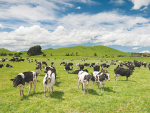
Meeting the Government’s new freshwater reform targets would be more challenging than what farmers have already been working towards in the Canterbury Land & Water Regional Plan, according to a new report.


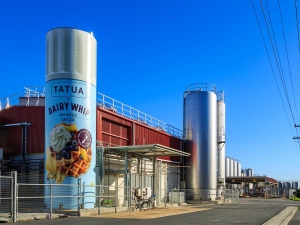
Waikato milk processor Tatua has again declared a record milk payout to farmer shareholders, leaving other processors in the dust.

A Labour-led Government won’t be bringing back the controversial freshwater rules of 2020.
National’s much-touted free trade deal with India featured in the Rural Issues Debate at Mystery Creek, Hamilton on Wednesday night.
New Zealand's 2026-27 freshwater fishing season has opened, with anglers encouraged to head to rivers and lakes over the coming days as conditions look favourable across much of the country.
Central Otago District Council (CODC) has voted against a plan to spread treated sewage sludge from Cromwell and Alexandra on farmland near Lauder, a decision Federated Farmers says reflects strong opposition from rural residents.
Pāmu has released its FY26 Integrated Annual Report, reporting a Net Operating Profit of $113 million, more than double the $49 million recorded in FY25.





OPINION: The same mainstream media muppets that brought you Jacindamania in 2017 have been flat out pimping for the Opportunities…
OPINION: Your old mate reckons the atrocious way farmers in the UK are treated by their lords and masters in…