Editorial: No Small Challenge
OPINION: There could hardly be a more appropriate theme for a conference than the one chosen by the red meat sector - Navigating Volatility.




 increase font size
 Meat Industry Association chief executive Sirma Karapeeva
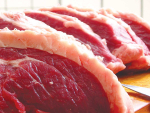
New Zealand exported red meat and co-products worth just over $1 billion during March 2021, according to the latest analysis from the Meat Industry Association (MIA).
MIA Chief Executive Sirma Karapeeva said it was only the second time that monthly red meat exports had topped the billion dollar mark.
“The first time our monthly exports hit the billion dollar mark was in March 2020 at the start of the global pandemic. The March 2021 month’s $1.04b export earnings confirm the strong global demand for safe, quality red meat. It also suggests that some of the initial COVID-19-related disruptions are starting to resolve as countries get on top of the virus.”
China was the major destination for New Zealand red meat in March, taking 45% of total exports worth $464 million. This was 35% higher than the same period last year.
New Zealand sheepmeat exports to China also increased to a record monthly volume of 36,434 tonnes.
Overall, China imported 294,410 tonnes of red meat from all countries in March 2021, with sheepmeat imports increasing by 106 per cent, Beef imports were steady. New Zealand’s share of sheepmeat and beef imports was around 19%.
“Despite supply chain issues, China is largely back to normal with strong consumption and demand and this is great news for our sector,” says Karapeeva.
“Chinese consumers are seeking attributes such as high food safety standards, wellness and nutrition from the food they buy. New Zealand’s excellent reputation means we are in a strong position to respond to this demand.”
The strong demand from China has been driven by the ongoing impact of Asian Swine Fever on Chinese pig herds which saw domestic pork supply reduce by at least 20 million tonnes in 2020.
Exports to China over the last 12 months remained the same at $3.6 billion while exports to the United States, the second largest market, increased by eight per cent to $1.8 billion. Exports to the next two largest markets, the UK and Japan, decreased to $406 million and $374 million respectively.
While exports to most other markets were down year-on-year, this was largely due to current Chinese demand and a return to more typical export destinations. In March 2020, the COVID-19 disruptions saw exports, which would normally have been destined for China, diverted to other international markets.
Red meat exports for the first quarter of 2021 were worth $2.7 billion.
“Although there are some significant logistical and other ongoing global challenges, the red meat sector continues to deliver for New Zealand farmers and the economy,” says Karapeeva.
OPINION: There could hardly be a more appropriate theme for a conference than the one chosen by the red meat sector - Navigating Volatility.
New Zealand's red meat and fifth-quarter exports reached $867 million in August, up 23% on the same month last year, as stronger returns lifted earnings across all major markets.
Meat Industry Association data, released alongside the Red Meat Sector conference in Wellington, shows export value climbing across the US, China, UK and Canada.
OPINION: The stats speak for themselves.



Mark Hooper has been appointed the new chair of NZPork, the industry organisation representing New Zealand pig farmers.

As the India-New Zealand free trade agreement enters into force, New Zealand’s apple industry has reaffirmed its commitment to the long-term development of India’s apple sector.
Fonterra shareholders can begin voting on Tuesday 20 October in the 2026 Board of Directors’ election, a Co-operative Council election in one Ward, and seven Annual Meeting resolutions.
National’s pledge to introduce 19 new national standards shows the party is serious about getting Wellington out of farming, Federated Farmers says.
The National Party’s policies to make it easier to grow fresh vegetables, secure reliable water and energy and simplify farm planning are practical changes that will give growers the confidence to invest, according to Horticulture New Zealand (HortNZ).
Fonterra Co-operative Group chief financial officer Andrew Murray has resigned to take up a role outside the dairy giant.



OPINION: The same mainstream media muppets that brought you Jacindamania in 2017 have been flat out pimping for the Opportunities…
OPINION: Your old mate reckons the atrocious way farmers in the UK are treated by their lords and masters in…