Dairy Effluent Management: Right Amount at the Right Time
Good effluent management on a dairy farm combines a well-designed system with proper processes to ensure the right amount of effluent gets applied to pasture at the right time.




 increase font size
 Environment Minister David Parker.
Environment Minister David Parker is ruling out giving farmers any longer to make submissions on freshwater reforms.
He told Rural News that two months is enough for farmers to make submissions.
“We think people can submit within that time. Two months is not too much of a rush,” he said.
Earlier this month, the Government agreed to extra time for submissions -- two weeks beyond the October 17 closing date first set for the consultation period.
This followed requests from DairyNZ and Federated Farmers, whose president Katie Milne also wrote to the Prime Minister seeking a three-month extension.
Parker says a six-week consultation is the normal period for parliamentary select committees. He says feedback from his officials suggests the NZ-wide meetings are “progressing well”.
People have been “polite” but some were wound up by Federated Farmers’ claims that the freshwater reforms could signal the end of pastoral farming, Parker claims.
“It’s not surprising that those incendiary comments had some people worried, but discussions have been polite,” he said. “It’s just not correct. Federated Farmers are wrong.”
The reforms include interim controls on land intensification and dairy conversions, until councils have plans in place by 2025 through a new National Environmental Standard.
Parker doesn’t expect too much pushback against this as “it’s in no one’s interest that this problem gets worse before it gets better”.
“Because if it’s allowed to get worse through increased intensification that puts more burden on all the incumbents to clean up in the future. My sense is there isn’t much controversy over holding the line.”
He believes there will be greater concerns about nitrogen attributes. “We haven’t quite landed on the nitrogen attribute yet.”
Parker says he plans to attend a public consultation but he hasn’t decided which one.
Opening the WaterNZ Conference in Hamilton last week, he expressed confidence that NZ will meet the challenges of improving its waterways.
And he said the work should begin without delay.
“We need to start taking action now. We really can’t sit on our hands while water quality continues to deteriorate in many rivers and lakes.
“The longer we wait, the higher the cost of fixing it will be.”
Good effluent management on a dairy farm combines a well-designed system with proper processes to ensure the right amount of effluent gets applied to pasture at the right time.
For years, IrrigationNZ has called for a coordinated national approach to water security, backed by enabling regulation, strategic infrastructure investment and sound technical practice. As the 2026 general election approaches, many of these priorities are now reflected in political commitments and legislative reforms. That represents significant progress, but the real measure of success will be turning policy into practical outcomes, says IrrigationNZ principal technical officer Stephen McNally.
There's been widespread support from the primary sector for the Government's announcement on changes to freshwater farm plans that come under the Natural Environment Bill, which is now set to replace the existing RMA.
Today marks the first day of operations for Waikato Waters, a new council-controlled organisation established by six district councils to deliver water and wastewater services for their communities.
OPINION: New economic modelling confirms what many of us in Hawke's Bay have long understood - getting water security right for this region is one of the most important decisions we face as a community. Not just for farmers, but for everyone who lives, works and builds a future here.


During the nesting season, from September to December, industrious starlings can quickly build nests in the darker areas behind tractor and vehicle, usually close to hot engines, typically resulting in localised damage or in some cases complete write-offs.
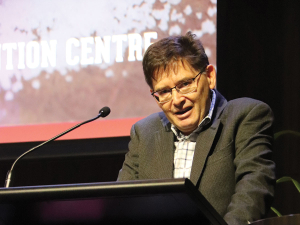
The meat processing industry is much more collegial than it was in the past and is now more focused on common goals.
With the last couple of months having seen some potential tractor purchases put on hold with the impending election and continued input cost rises, year-to-date figures, ending September, has seen deliveries up around 5% over the same period in 2025, with a total of 2026 units.
Beef+Lamb New Zealand is calling for nominations for director roles in the Northern South Island and Northern North Island electoral districts.
Fonterra chief executive, Richard Allen says being resilient has helped the dairy industry overcome extreme volatility in recent years.
The head of the Ministry for Primary Industries (MPI) trade and international relations group says New Zealand is well-positioned to secure trade access and compete internationally as the world becomes more complicated, demanding and uncertain.




OPINION: The same mainstream media muppets that brought you Jacindamania in 2017 have been flat out pimping for the Opportunities…
OPINION: Your old mate reckons the atrocious way farmers in the UK are treated by their lords and masters in…