
DairyNZ Sets Out Election Priorities for Dairy Farmers
Election years are always a concerning time for farmers, according to DairyNZ chair Tracy Brown.




 increase font size
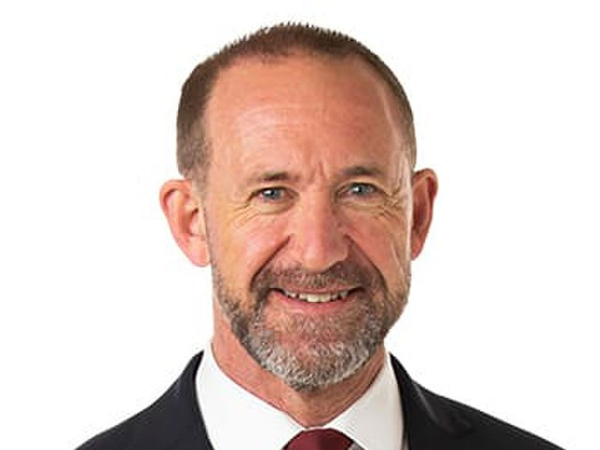 Health Minister Andrew Little. Photo Credit: NZ Labour Party.
The Government has launched a plan to manage hospital waiting lists on a national scale, says Health Minister Andrew Little.
“Covid-19 has been hugely disruptive to hospital systems all over the world,” Little told health users, providers and unions in Auckland this morning.
“In England, for example, there was a 200-fold increase in the number of people waiting for planned care for more than a year, from just over 1,600 in February 2020, to more than 300,000 in Novembr 2021.”
Little says New Zealand has done better in its elimination strategy than other countries which, he claims, has prevented the health system from being overrun.
“In fact, for most of the past two years, our hospitals have been free of Covid-19 and were able to keep functioning normally for long periods of time.”
However, he says the Delta and Omicron variants have put pressure on hospitals.
The number of people waiting longer than four months for their first appointments with hospital specialists had doubled because of the pandemic, and the number of people waiting longer than four months for treatment has more than trebled.
“For people who need these procedures and appointments, having to wait is distressing,” Little says.
“Now, with the benefit of having one of the most highly vaccinated populations in the world, and with a suite of new medicines available to treat Covid-19 patients and keep them out of hospital, we can start managing on a more business-as-usual basis.”
The Government’s waiting list response is being led by interim Health New Zealand and the interim Māori Health Authority. The two organisations will become permanent entities when the Government’s health reforms come into effect July 1.
“We have an opportunity right up-front to harness one of the principal benefits of the reforms – a truly nationwide approach to the health problems that affect us all,” Little says.
The work will be overseen by a taskforce headed by Counties Manukau chief medical officer Andrew Connolly.
The taskforce is designed to help hospitals take necessary short-term measures to reduce wait times, and will be responsible for delivering a national plan by September.
“I have been told that if we try to approach this problem in the ways we have before, it could take between three to five years to clear the planned-care backlog,” Little says.
“It is my expectation that we can clear the backlog in considerably less time than that.”
Election years are always a concerning time for farmers, according to DairyNZ chair Tracy Brown.

OPINION: It really is getting harder to lampoon government bureaucrats when they do such a good job of it themselves.
Anyone in the primary sector will know about the clowns covering the countryside in the red tape we all have to wade through.
Spare a thought then for media outfit Stuff who were threatened with fines up to $200,000 by a snivelling civil servant from the MoH for illustrating a quiz question with a photo of part of the cover of a 45-year-old copy Playboy.
As Stuff notes, “It wasn’t the Playboy cover which caused offence. No, it was the back page which… featured an advert for a cigarette brand”.
As Regulations Minister David Seymour notes, “The real scandal here is, well, no wonder we’ve got problems in healthcare when they’re doing the Stuff quiz during work time.”
OPINION: To a chorus of crying greenies, and not a minute too soon, the Government has moved to put the courts back in their place through proposed amendments to the Climate Change Response Act 2002, intending to limit climate litigation claims such as Smith v Fonterra, in the interests of providing greater certainty for vital industry.
OPINION: The coalition Government’s plan to make about 9000 public servants redundant looms as a major election issue
Rural Women New Zealand this month submitted on the Draft Mental Health and a Wellbeing Strategy 2026-2036, because a person's postcode should not determine the quality of their mental health support.


New Zealand's citrus growers were challenged to build their future on the value embedded in their fruit rather than the volume they produce, at Citrus New Zealand's annual gathering in Gisborne on 17 September.

Leading John Deere technicians and apprentices from New Zealand and Australians were recognised at the recent sixth annual JD Technician of the Year Awards, held in Brisbane.
In Dacre, near Invercargill in New Zealand’s South Island, Bruce Dinnington is running a dairy operation unlike any other.
A free online platform aggregating governance vacancies across rural and regional New Zealand has been launched.
Environment Minister Nicola Grigg has announced details of a new rural plastics recycling scheme.
Agricultural drone operators say that a government decision to allow lower-risk drone work without certification won’t lower standards but drive innovation and efficiency.




OPINION: The same mainstream media muppets that brought you Jacindamania in 2017 have been flat out pimping for the Opportunities…
OPINION: Your old mate reckons the atrocious way farmers in the UK are treated by their lords and masters in…