
True Reflection?
A fair question has been raised about how member-funded organisations should conduct themselves when taking a public position on any given issue.




 increase font size
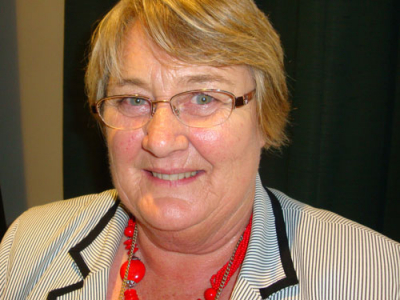 Rural Women national president, Wendy McGowan.
Rural Women NZ is concerned private online charter schools could undermine already struggling schools
Rural Women New Zealand (RWNZ) has issued a submission to the Government expressing concerns about the impact of the Education (Update) Amendment Bill for rural schools.
The Bill proposes some significant changes to the Act, including allowing for the accreditation of private online charter schools.
Under this proposal children as young as five years old will have the ability to elect to receive some or all of their education online.
“The risk of online charter schools diverting both students and much needed government funding away from rural schools is something we are concerned about.” Says Rural Women national president, Wendy McGowan.
“Rural schools perform a vital role in their communities, yet many are struggling to cope with the unique challenges of providing education in isolated areas. The Government’s first priority should be in further supporting these schools, rather than seeking out alternative providers, which could challenge their viability.”
In its submission RWNZ says that it doesn’t think that online schools are an acceptable substitute to traditional schools.
“In general, we think most children benefit from being able to learn within a traditional school setting where they have the opportunity to socialize and interact with their peers. This is particularly true in rural communities where isolation is a major concern” says McGowan.
“A further limiting factor of online schools is their reliance on a decent level of internet connectivity, something that is lacking in many remote parts of the country.”
RWNZ’s submission also outlines concerns that taking children out of the school environment could increase their vulnerability to abuse, neglect in the home and missing out on important primary health interventions, like vaccinations.
Research from the United States showing that the academic performance of students at online charter schools is lagging behind those in traditional schools is also referenced in its submission.
RWNZ’S submission also addresses the Bill’s proposal to shift Career Services into the Tertiary Education Commission.
“We support the Government in wanting to improve career services to students, but we’re not sure how creating another unit within government will achieve this”, says McGowan.
Changes which RWNZ do support include the introduction of a Statement of National Education and Learning Priorities and changes in the Bill to clarify government expectations around boards of trustees.
“These changes will hopefully provide more certainty for schools, as well as consistency for students,” says McGowan.
A fair question has been raised about how member-funded organisations should conduct themselves when taking a public position on any given issue.

Rural Women New Zealand (RWNZ) says it is delighted by the Government’s announcement that it would invest $250,000 in the organisation.
OPINION: About as productive as a politician's taxpayer-funded trip to Hawaii, as cost-effective as an OSPRI IT project, and as smart as the power-company pylon worker, the Hound gives you the NZ Post business strategy:
OPINION: Rural services such as banks, health and postal services have been declining for years, so this mutt was tickled pink to hear Rural Women NZ on national TV slamming the impact of post office closures in rural areas.
Rural Women New Zealand (RWNZ) and Massey University are joining forces to help raise awareness and funds to combat leptospirosis.


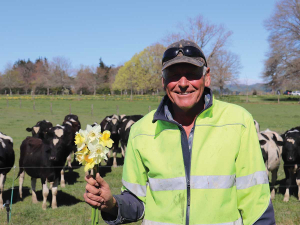
South of the central Hawke’s Bay town of Waipukurau is Taniwha Station – a highly successful 550ha bull beef farming operation.
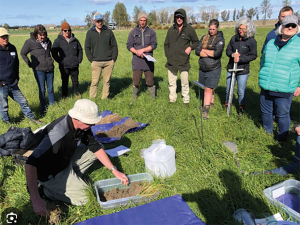
Beef + Lamb NZ funded research has shown that some simple changes to pasture management could help farmers make better use of rainfall and build resilience before dry conditions hit.
OPINION: There could hardly be a more appropriate theme for a conference than the one chosen by the red meat sector - Navigating Volatility.
When Northland leather worker Vernon Suckling started making horse saddles 50 years ago, quad bikes and side-by-side vehicles were unheard of.
Alliance Group has confirmed that eligible farmer-shareholders who supply and continue to back the business will receive up to $20 million later this year, following the strategic investment partnership with Dawn Meats.
With a general election under five weeks away, Rural News is asking major political parties about their policies and positions on key issues facing the primary sector. We will run their responses to each question over the next four weeks. The ACT Party and the Greens didn't respond in time.





OPINION: The same mainstream media muppets that brought you Jacindamania in 2017 have been flat out pimping for the Opportunities…
OPINION: Your old mate reckons the atrocious way farmers in the UK are treated by their lords and masters in…




