Cyclone Gabrielle: Hawke's Bay Orchardists Still Recovering
Three and a half years on from when Cyclone Gabrielle hit Hawke's Bay, some orchardists in the region are still receiving counselling to help them deal with the trauma they suffered.




 increase font size
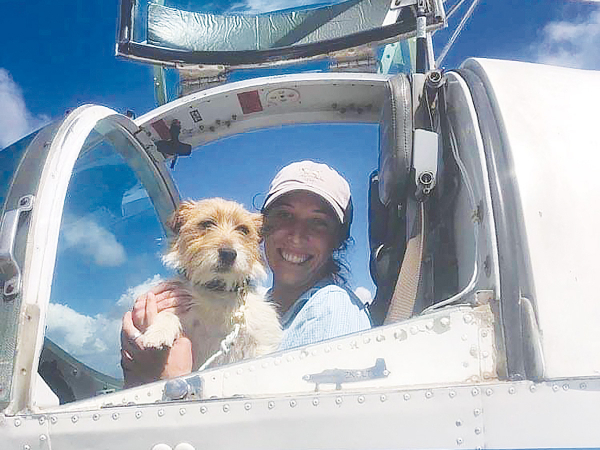 Aerospread pilot Jess McNeil and canine friend get set for another mission to help out struggling farmers in Tolaga Bay.
Aerospread/Super Air pilots are usually busy at this time of the year flying superphosphate onto farms along the east coast of the North Island.
But Cyclone Gabrielle changed all that.
Aerospread, based out of the Napier airport serving customers from Tairawhiti down to the Wairarapa and into the Manawatu, is now part of the Super Air team. The companies had joined forces right before Cyclone Gabrielle unleashed its savage heavy rain and wind on the east coast and the spreading of fertiliser abruptly stopped.
Bruce Peterson says the last CAA statistics in 2022 showed that fertiliser spread from aircraft dropped back 66% on the previous year and it is still dropping.
"We had a farmer who normally puts on about 600 tonnes of fertiliser, but he dropped back to 300 due to the economic climate and when Gabrielle came along he decided to abandon the deal," he told Rural News.
According to Peterson, farmers only have so much cash and as a result of Gabrielle they are re-prioritising what they do with that. He says clearly re-instating fences, tracks, culvers, bridges, sheds and other farm infrastructure has to be their priority.
Peterson says getting back to anything that resembles normal has been hard for people living in isolated communities where power, roads and communications have been down. This is where Aerospread/Super Air and other air operators have swung into action and provided a lifeline to these people.
"We worked together providing relief to farmers in need with the newly formed team coming together as one - something we are proud of," he told Rural News. "We took out the hopper of our aircraft creating a floor that enabled us to carry all sorts of things ranging from blankets, essential medication, electric fence standards, generators and fuel which was in 20 litre jerry cans."
Peterson says fuel was vital to farmers, to run generators for their freezers and fuel their side by sides and utes so they could at least get around their properties and assess the damage.
He adds that the company's pilots were also flying in much needed supplies and other staff and their families pitched in to package goods so they could fit in the aircraft easily.
"It was a great team effort."
Peterson says the cost of flying in the much-needed supplies was picked up by the company owners Super Air and at no cost to farmers.
"We value our rural communities and clients, this was our chance to help them in a time of need," he says.
Flying Jerry Cans
For the pilots, the so-called 'jerry can flights' were a challenge.
Peterson says normally aircraft take off from an airstrip with a full load of fertiliser and land when the aircraft is empty. But he says having to land a heavily laden aircraft on a farm airstrip called for good and careful planning and flying skills. The entire operation went off without a hitch.
Peterson says one clear message to come out of this emergency was the value of having good quality, all-weather airstrips with good length and access. These are a real asset to rural communities.
Three and a half years on from when Cyclone Gabrielle hit Hawke's Bay, some orchardists in the region are still receiving counselling to help them deal with the trauma they suffered.
The chief executive of Apples and Pears New Zealand, Danielle Adsett, says fruit quality this year is phenomenal and the sector is hitting crop estimates, which is great for growers.
Nearly three years on from Cyclone Gabrielle, Hawke's Bay apple orchardist Paul Paynter says they are still doing remedial work around their orchards and facing financial challenges.
If there was a silver lining in the tragedy that was Cyclone Gabrielle, for New Zealand Young Grower of the Year, Grace Fulford, it was the tremendous sense of community and seeing first-hand what good leadership looks like.
Listed carpet manufacturer, Bremworth is undertaking a $6 million expansion at its Napier plant more than two years after the site was heavily damaged by Cyclone Gabrielle.


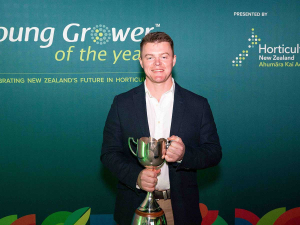
The potato industry is celebrating the success of two rising stars - James Blair, the 2026 Young Grower of the Year and runner-up and innovation award winner, Amber Davy.
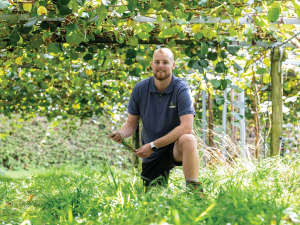
Twenty-eight emerging leaders from across the horticulture sector spent two days last month learning valuable skills and connecting with industry experts.
There are five entrants in this year’s Young Horticulturist of the Year, competing in a series of technical, practical, business and leadership challenges.
A seasoned horticulturist has been appointed to deliver the Apple Action Plan, a key initiative of the India-New Zealand Free Trade Agreement.
New Zealand's citrus growers have been told to compete on the value built into their fruit rather than the volume they grow.
Hawke's Bay fruit growers are being reminded of the need to prepare for whatever the El Niño weather system may bring in the coming months.





OPINION: The same mainstream media muppets that brought you Jacindamania in 2017 have been flat out pimping for the Opportunities…
OPINION: Your old mate reckons the atrocious way farmers in the UK are treated by their lords and masters in…