
Four Candidates Confirmed for Fonterra Board Election
Four candidates have been confirmed for two director positions on Fonterra’s board.




 increase font size
 Fonterra chief executive Miles Hurrell says the co-operative is confident about international prices remaining strong.
Fonterra farmers will start the new season with strong cashflow, thanks to an opening forecast with a record midpoint of $8/kgMS.
The co-op will pay its farmers 60% of the forecast midpoint as advance payments each month for milk.
If the payout remains at the forecast midpoint of $8 until the end of the season, Fonterra and its farmers will pump$12 billion into the New Zealand economy.
Federated Farmers dairy chair Wayne Langford says farmers are happy with "a very strong start" to the new season.
"This will see farming businesses in a much better cashflow position through the first half of the season when the majority of expenses occur," Langford told Rural News.
"The value a payout like this will bring to all New Zealand is huge, especially as we work out way out of the Covid-19 crisis."
Fonterra has passed the $8 mark only once in its 21-year history: in 2013-14 farmers received a final milk price of $8.40/kgMS plus a 10c dividend.
Fonterra chief executive Miles Hurrell says the co-operative is confident about international prices remaining strong.
"The $8 midpoint is great news for farmers; the forecast farmgate milk price is a key marker that farmers look for.
"This is the biggest opening forecast we have come out with and farmers will be rapped."
However, there are an number of risks and this explains Fonterra's $1.50 forecast milk price range - $7.25 to $8.75/kgMS announced last week.
Hurrell points out that Covid is far from over. The impacts of governments winding back their economic stimulus packages, foreign exchange volatility and changes in the supply and demand patterns that can enter dairy markets when prices are high could be dampener.
And as always, potential impacts of any geopolitical issues around the world could also trigger a sudden drop in dairy prices.
ASB economist Nat Keall says the wide opener is appropriate given the season has just begun and the remaining uncertainty continuing to impact global dairy markets.
ASB's own forecast is towards the upper end of the range - at the $8.20 mark.
Keall notes that even if the milk price ends up being near the bottom of the range - which he thinks is unlikely - it would still represent a strong result for farmers.
Over the past ten years the farmgate milk price has averaged around the $6.25/kgMS, so a $7.25 result would still be well above average.
"Still, we think that's an unlikely scenario. For the season to finish near the bottom of Fonterra's range, prices would need to start trending substantially lower far earlier than we expect, or drop away more sharply when they do.
"With global dairy supply still relatively constrained and demand from China likely to remain high, we continue to think the odds are against a swift or a sharp correction."
Hurrell agrees that global demand for dairy, especially New Zealand dairy, is continuing to grow. China is leading the charge as its economy continues to recover strongly.
Four candidates have been confirmed for two director positions on Fonterra’s board.
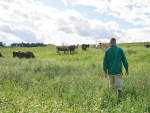
A record farmgate milk price and strong global demand is laying the foundation for continued growth of organic dairy farming in New Zealand.
Waikato milk processor Tatua has again declared a record milk payout to farmer shareholders, leaving other processors in the dust.
Fonterra has unveiled its annual results for the 2026 financial year, posting $27 billion in revenue and close to $20 billion returned to New Zealand farmer owners and unit holders.
Fonterra Co-operative Group has confirmed the independently assessed candidates standing for election to its board in 2026.


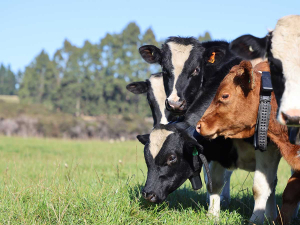
High country stations, mixed sheep and beef farms, Māori-owned farms, corporates and family operations are among the nine commercial farms taking part in the Livestock Innovation Farming Transformation programme, known as LIFT.
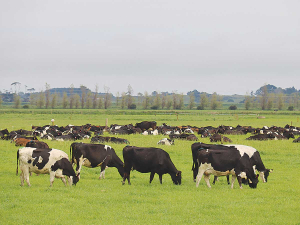
OPINION: New health and safety guidance unveiled by the Government recently provides farmers greater certainty about what is expected of them when managing risks on farm.
The National Animal Welfare Advisory Committee (NAWAC) is seeking public feedback on proposed changes to the Code of Welfare for Rodeos.
A New Zealand initiative supporting farmers to restore the health of grazing landscapes has received international backing through the Regenerative Fund for Nature, a global collaborative fund supporting regenerative agriculture and the communities that produce natural fibres for the fashion industry.
Combine premium New Zealand products, blend in a family ritual and what do you get? A world-class functional drink.
Entries are now open across eleven regions for the 2027 New Zealand Dairy Industry Awards (NZDIA).




OPINION: The same mainstream media muppets that brought you Jacindamania in 2017 have been flat out pimping for the Opportunities…
OPINION: Your old mate reckons the atrocious way farmers in the UK are treated by their lords and masters in…




