
China No Longer Just A Commodity Story - Luxon
China remains New Zealand’s biggest market, taking $23 billion of our exports, but it’s no longer a commodity story, says Prime Minister Christopher Luxon.




 increase font size
 China market expert Jane Li.
A new era of growth is unfolding in New Zealand’s biggest market and we are in the box seat to cash in, according to China market expert Jane Li.
She says China’s infant formula market is on the decline and a new market, with hundreds of millions of more potential customers, is emerging.
A growing aging population in China means demand for milk nutritional products is increasing.
This creates the potential of New Zealand farmers creating the “Tesla of Milk” in the coming years.
Li says New Zealand dairy farmers seeking better returns from the Chinese market must act now.
To help convey the situation on the ground in China, Li and her partner Simon Page are organising a series of online presentations.
Li and Page opened 100 retail stores in their last China venture.
She says they are keen to tell farmers why milk nutrition in China is the most exciting opportunity for NZ dairy and how farmers can be part of it.
“It is a presentation to farmers, open to all, but specifically for dairy farmers, whether cow, goat or sheep,” says Li.
“It is about what we see as a new era of growth emerging in the China market and the opportunity that we see for NZ to really capitalise if we act now.”
China’s birth rate is dropping and the Chinese Government has been pushing breastfeeding.
Li says breastfeeding rates in China have tripled in recent years. This is also signalling an end to the infant formula boom of the last two decades.
At the same time Chinese, aged over 50, are seeking better milk nutritional products to stay healthy and live longer.
Li thinks it is past due to move beyond discussions around “value-added” because it tends to lead us to focus solely on products, and instead start talking more about the types of companies that we need to build in order to compete in China and the world.
“Tesla is often cited as a model for disruption, some might say too often, but I think it is a great company to use in discussions around how to be more competitive because much of what they have done can be applied to almost any industry, including even NZ dairy.
“For instance, they make premium, highly innovative products, but they have also innovated their business model across the entire supply chain as the only direct-to-consumer car manufacturer.
“They represent the ultimate in “value-chain thinking” and we believe it is that type of thinking that can help NZ dairy win in highly competitive but highly valuable markets like China.”
Li says while there have been government initiatives around fostering productivity and unlocking “added-value”, from a commercial standpoint, it doesn’t often make sense.
“Instead of more discussion on cooperation across the industry we need more action and we think that now is the time to take action to start building those “Tesla of Milk” type companies.
“So, if you are a NZ dairy farmer and you agree with any of this and are interested in how to be a part of it, then please register for our presentation at RoadmapToChina.co.nz. We would love to hear from you.”
For free registration, go to RoadmapToChina.co.nz.
China remains New Zealand’s biggest market, taking $23 billion of our exports, but it’s no longer a commodity story, says Prime Minister Christopher Luxon.
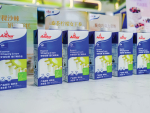
Fonterra is strengthening its foodservice presence in China with the launch of a new cream for professional bakeries at Bakery China 2026 in Shanghai.
OPINION: What does the birth rate in China have to do with stock trading? Just ask a2 Milk Company.
Additional tariffs introduced by the Chinese Government last month on beef imports should favour New Zealand farmers and exporters.
One of the most galling aspects of the tariffs whacked on our farm exports to the US is the fact that, now more than ever, US farmers are being propped up by government welfare – a direct result of Trump’s hardline on its trading partners.


National’s pledge to introduce 19 new national standards shows the party is serious about getting Wellington out of farming, Federated Farmers says.
The National Party’s policies to make it easier to grow fresh vegetables, secure reliable water and energy and simplify farm planning are practical changes that will give growers the confidence to invest, according to Horticulture New Zealand (HortNZ).
Fonterra Co-operative Group chief financial officer Andrew Murray has resigned to take up a role outside the dairy giant.
A major move is about to get underway to improve the quality and viability of dairy beef and cattle in NZ.
Veterinarians say changes to the code of welfare for dairy cattle provides a positive foundation for improved cattle welfare across the country.
Today, 15 October, is the International Day of Rural Women, which recognises rural women’s contribution to farming, communities and the environment.



OPINION: The same mainstream media muppets that brought you Jacindamania in 2017 have been flat out pimping for the Opportunities…
OPINION: Your old mate reckons the atrocious way farmers in the UK are treated by their lords and masters in…




