
Confidence in long-term market-led strategy
Farmers should have confidence in the long term value of Silver Fern Farms market-led strategy.




 increase font size
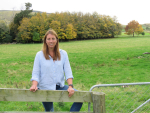
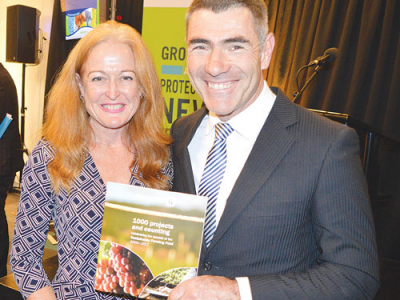 Nathan Guy with Avocado NZ chief executive Jen Scoular.
One of the first projects approved under the Government’s Sustainable Farming Fund (SFF) in 2000 targeted avocado orchard management.
While the SFF project did not translate into instant success, the groundwork done many years ago is now bearing fruit for the industry.
In 2000 the avocado industry was valued at $48 million with 2800 growers relying heavily on exports to the US. Today the industry is valued at $200m.
SFF cash paid for the industry to hold discussion groups -- 1400 field days in 2001 and since.
But Avocado NZ chief executive Jen Scoular says there were lots of discussions but “not much agreement because there was so much difference in best practice on orchards”.
Speaking at a recent function to mark SFF’s 1000th project, Scoular acknowledged that the “very ambitious” goals set under the first SFF project were not met on time. “But 16 years later we are successfully implementing similar programmes under PGP.”
She notes that the industry was correctly cautioned about the need to share knowledge among a network of growers, scientists and industry leaders.
“The avocado industry, perhaps, was slow to take up the advice but I can proudly say that like everyone’s favourite -- avocado on toast -- those goals set in 2001 are being smashed right now.”
Scoular points to “a lot of growing up of our industry”.
“[We realise] collaboration drives results; the avocado pie is huge… we don’t need to compete for someone else’s slice; we can just make the slice bigger.”
Scoular says the mentality among avocado growers has changed. After the first round of SFF-funded field days and discussion groups in 2001, in a survey 18 months later growers were asked if they had changed their orchard management practices; growers had not.
“There was regional variation in orchard management; some growers thought they had the secret to successfully growing avocados and did not want to share them,” says Scoular.
But the mindset started changing when the industry faced trouble; the NZ dollar jumped to US70c and export receipts from the US slumped. After another 10 years of “ups and downs”, the industry’s value hovered at $60m in 2013.
Ministry for Primary Industry Nathan Guy says the SFF has paid $150m to date to the 1000 SFF projects.
“The SFF supports the primary sector’s forward thinking and Kiwi ingenuity, which in turn helps keeps NZ ahead of the game.
“1000 projects have now been funded since the fund was initiated in 2000 -- about $150m in government funding and significant sector support.
“The fund has supported projects as diverse as reducing nutrient run-off from lowland farms, reducing use of antimicrobials when managing mastitis, and increasing the market share for NZ olive oil.”
SFF pie
- Dairy- $32m
- Arable- $22m
- Water- $8.5m
- Pests and diseases- $6.5m
- Meat and fibre - $16m
- Horticulture- $19m
Farmers should have confidence in the long term value of Silver Fern Farms market-led strategy.

Outgoing chief executive of New Zealand Avocado, Jen Scoular believes the sector is well set up despite a challenging environment for growers around the globe.
OPINION: The genie is well and truly out of the bottle.
Meat company Silver Fern Farms (SFF) says it is back in the international market in a big way and aiming for bigger and better returns for its farmers.
New Zealand’s avocado industry will take the spotlight in April 2023 when New Zealand hosts the World Avocado Congress next year.


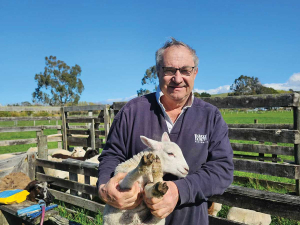
Decades piloting planes has ensured vet and farmer David Hayes is focused on safety. So, after a serious accident while welding on farm, he is sharing his experience so others can learn from it.
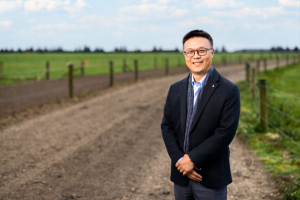
Canterbury milk processor, Synlait Milk has confirmed Leon Fung as its chief executive officer.
OPINION: Making it easier to collect rainwater and use it to grow crops and livestock is a no brainer.
As part of its Election 2026 coverage, Rural News asked political parties how they would help pull the arable sector out of the doldrums. Here's what they said:
Farmers are being encouraged to rethink how they manage waste on farm with the launch of ruralwastesorted.co.nz, a new website bringing together practical tips, real farmer experiences and resources.
New Zealand Winegrowers (NZW) is celebrating the India-New Zealand Free Trade Agreement (FTA) coming into force today, bringing New Zealand wine improved access to one of the world’s fastest-growing economies.


OPINION: The same mainstream media muppets that brought you Jacindamania in 2017 have been flat out pimping for the Opportunities…
OPINION: Your old mate reckons the atrocious way farmers in the UK are treated by their lords and masters in…




