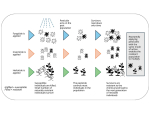
Campaign Urges Growers to Plan Ahead on Resistance
Growers and farmers are being encouraged to have an important conversation before the coming season starts: how to prolong the effectiveness of the crop protection tools they rely on.




 increase font size

RURAL CONTRACTORS New Zealand has endorsed the warnings made recently by Waikato Regional Council that agrichemical contractors operating without certification are breaching regulations.
Chief executive Roger Parton (pictured) says Rural Contractors New Zealand (RCNZ) shares the concerns the Waikato Regional Council – and other regional councils – have about unqualified and/or unregistered chemical applicators not been properly trained or qualified to spray agrichemicals.
"RCNZ has a chemical applicator accreditation programme to meet the needs of both our members and the industry."
Parton says the application of agrichemicals has to be carried out in a competent and professional manner to ensure the enhancement of the crop and the safety of the operator, the environment and the public.
He says there are two levels of agrichemical applicator accreditation available through Rural Contractors New Zealand:
- Basic Chemical Applicator
- Registered Chemical Applicator
These are personal accreditation held by the individual.
"Rural Contractors New Zealand has a strict policy in regards to any person applying agrichemicals in a public place or on private property for hire and reward," Parton explains.
"He or she has either got to be the holder of a Registered Chemical Applicator accreditation or have a Basic Chemical Applicator (or equivalent) accreditation and be operating under the immediate and direct supervision of the holder of a Registered Chemical Applicator accreditation."
Parton adds that all agrichemical contractors accredited through RCNZ carry wallet cards to prove their accreditation.
RCNZ also supports the council's reminder about rules requiring neighbours to be notified before any spraying takes place.
"However, spraying can only take place when weather conditions are suitable and sometimes this does not permit the notification timeframes required in the rules," he explains.
Meanwhile, Parton says contractors wanting information about correct agrichemical application procedures, training, certification and safety will find all the necessary information under the chemical applicator section of the RCNZ website: www.ruralcontractors.org.nz .
Growers and farmers are being encouraged to have an important conversation before the coming season starts: how to prolong the effectiveness of the crop protection tools they rely on.

Following a recent overweight incursion that saw a Mid-Canterbury contractor cop a $12,150 fine, the rural contracting industry is calling time on what they consider to be outdated and unworkable regulations regarding weight and dimensions that they say are impeding their businesses.
Last season was a mixed bag for Waikato contractors, with early planted forage maize, planted on the dry soils around Cambridge, doing badly after germination and failing to meet potential, says Jeremy Rothery, Jackson Contracting.
A new partnership to try and help solve the labour shortage gap for rural contractors in both NZ and the UK has recently been established.
A recent round of countrywide roadshows, organised by the Rural Contractors of New Zealand (RCNZ), set out to brief members on the challenges that lie ahead in these volatile times – as well as discuss strategies to deal with these issues.


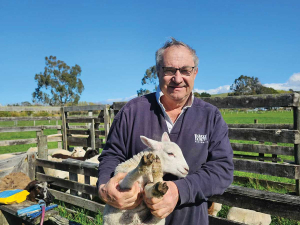
Decades piloting planes has ensured vet and farmer David Hayes is focused on safety. So, after a serious accident while welding on farm, he is sharing his experience so others can learn from it.

Canterbury milk processor, Synlait Milk has confirmed Leon Fung as its chief executive officer.
OPINION: Making it easier to collect rainwater and use it to grow crops and livestock is a no brainer.
As part of its Election 2026 coverage, Rural News asked political parties how they would help pull the arable sector out of the doldrums. Here's what they said:
Farmers are being encouraged to rethink how they manage waste on farm with the launch of ruralwastesorted.co.nz, a new website bringing together practical tips, real farmer experiences and resources.
New Zealand Winegrowers (NZW) is celebrating the India-New Zealand Free Trade Agreement (FTA) coming into force today, bringing New Zealand wine improved access to one of the world’s fastest-growing economies.




OPINION: The same mainstream media muppets that brought you Jacindamania in 2017 have been flat out pimping for the Opportunities…
OPINION: Your old mate reckons the atrocious way farmers in the UK are treated by their lords and masters in…




