Rabobank Launches HortPathways for Emerging Hort Leaders
Twenty-eight emerging leaders from across the horticulture sector spent two days last month learning valuable skills and connecting with industry experts.




 increase font size
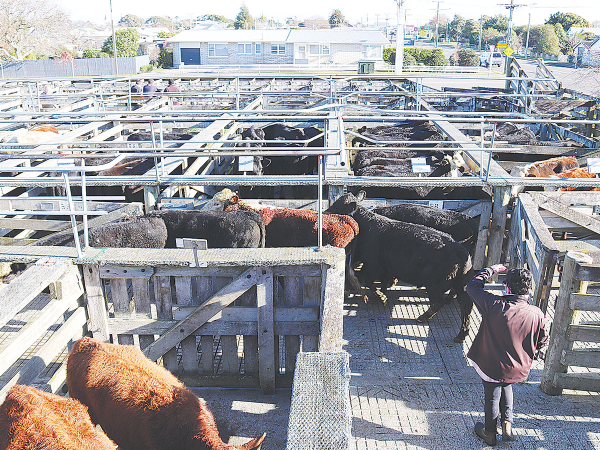 Much of the heat has come off the global beef market and returns have eased considerably.
The latest beef market report by Rabobank shows a trend that will be of concern to NZ cattle farmers.
Lead author of the report, senior animal protein analyst Angus Gidley- Baird, says Fonterra’s drop in the predicted farm gate milk price is likely to see an increase in dairy cow culling. He says the number of cows processed in the second quarter of 2023 is up 4.8% compared to last year. On top of this, Fonterra has mandated that all calves must enter a value stream from this season onwards.
“This could result in several hundred thousand additional calves being sent to processors within a six-week window that is already stretched.”
Gidley-Baird says although much of the heat has come off the global beef market and returns have eased considerably, NZ beef export volumes in the second quarter of 2023 increased 14% year-on-year. He says this increase has been underpinned by a 7% lift in beef production year-on- year.
While volumes are higher, weaker economic settings in China have negatively impacted prices and export earnings were back 13% year-on- year for the quarter.
“Export volumes to Japan have also been impacted by softer demand, with volumes back 49 per cent year-on-year for quarter two,” he adds.
The report also points out that increasing volumes of Australian beef exports are creating competition for NZ beef in the global market, which has led to North Island bull prices dropping 4% in July. However, it adds the slowing of the US cow kill is expected to lead to a reduction in US-produced lean trimmings, which in turn is expected to provide price support for the global lean trimmings market.
Global Issues
In terms of the global market, Gidley-Baird says beef markets around the world, other than the USA, are seeing a softening of consumer demand.
He says declining supply and strong consumer demand in the US is driving cattle prices higher, while lower domestic beef supply has also held up beef prices in Canada and Europe. But Angus Gidley-Baird says in most other regions the opposite applies, with increased supply and lower demand that is making prices softer.
US cattle prices have increased almost 30% over the last 12 months, whereas Australian cattle prices have dropped by more than 30%.
“This price split is the largest we have seen in the past 10 years,” he says. “Such a separation in prices will have consequences for beef exporters’ competitiveness and we expect to see some shift in trade volumes as a result.”
Gidley-Baird adds that – other than the US – there is softer consumer demand and full supply chains. In a number of regions, particularly in Asian countries, beef purchases made through 2022 and into 2023 in anticipation of recovery from Covid have not been consumed.
“These are now part of growing stock levels that also include other proteins,” he explains. “Softer consumer demand is making it harder to move these volumes through the system.”
Twenty-eight emerging leaders from across the horticulture sector spent two days last month learning valuable skills and connecting with industry experts.

A 'tsunami' of milk from key exporting countries is winding down and this may be good news for New Zealand dairy farmers.
Chinese beef trade quotas and a looming suspension of Brazilian beef imports into the European Union are expected to reshape global beef trade flows over the remainder of 2026, with implications for New Zealand exporters, according to Rabobank's Q3 Global Beef Quarterly report.
New Zealand consumers are paying more for beef mince than ever before, with the average retail price now sitting above $24 per kilogram, according to Rabobank.
Bovine Viral Diarrhoea (BVD) is sometimes viewed as a dairy industry issue, but the reality is that the disease can have serious consequences for beef breeding herds as well.


Decades piloting planes has ensured vet and farmer David Hayes is focused on safety. So, after a serious accident while welding on farm, he is sharing his experience so others can learn from it.

Canterbury milk processor, Synlait Milk has confirmed Leon Fung as its chief executive officer.
OPINION: Making it easier to collect rainwater and use it to grow crops and livestock is a no brainer.
As part of its Election 2026 coverage, Rural News asked political parties how they would help pull the arable sector out of the doldrums. Here's what they said:
Farmers are being encouraged to rethink how they manage waste on farm with the launch of ruralwastesorted.co.nz, a new website bringing together practical tips, real farmer experiences and resources.
New Zealand Winegrowers (NZW) is celebrating the India-New Zealand Free Trade Agreement (FTA) coming into force today, bringing New Zealand wine improved access to one of the world’s fastest-growing economies.



OPINION: The same mainstream media muppets that brought you Jacindamania in 2017 have been flat out pimping for the Opportunities…
OPINION: Your old mate reckons the atrocious way farmers in the UK are treated by their lords and masters in…




