Drench resistance already impacting NZ farm profits
Drench resistance is already hitting farm profits; it's not just a future problem.




 increase font size
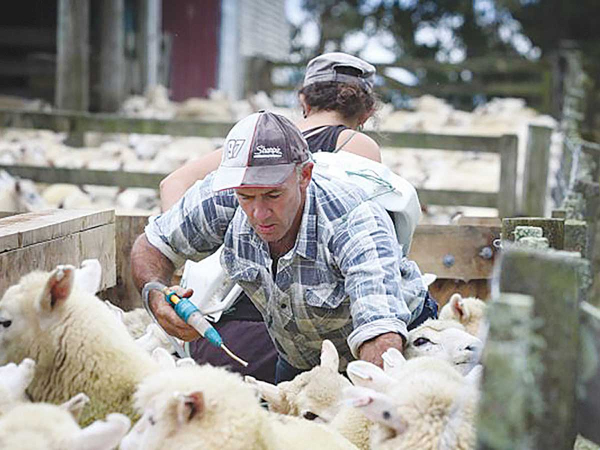 Ineffective drenching costs money in lost production and time.
Early results from a study investigating ways of managing triple drench resistance in an intensive lamb finishing system reinforces the importance of regular FECRT for both breeders and finishers.
The study was initiated by the Wairarapa Producer Group, which included breeders and finishers working together in a lamb trading arrangement. It was led by Renee Hogg from Inside New Zealand - with technical expertise from PGG Wrightson vet Andrew Dowling, AgResearch's Dr Dave Leathwick and Aiden Smith from South Wairarapa Vets.
Dowling says the information generated from the FECRT test informs the breeder about which drenches are working on their farm and is valuable information to a finisher.
"Ineffective drenching costs money in lost production and time."
Recognising the value of working together to address the issue of drench resistance, the group found there was little practical advice on introducing refugia into a lamb finishing system and the impact this would have on drench efficacy. They also wanted to understand any negative outcomes from introucing refugia.
Before the study started, and before the lambs left the breeders, a FECRT was carried out on all breeder farms and the finishing farm (study farm) to know the drench resistance status.
Two areas of the study farm, diagnosed with triple drench resistance, were used to try different parasite management practices so that lamb finishing would still be a feasible option.
On one area of the study farm, a percentage of lambs (ranging from 5 to 25%) sourced from a farm with drench susceptible parasites (source of refugia) were left undrenched for a full grazing rotation while the remainder received their quarantine drench.
On another areas of the study farm, all lambs were quarantine drenched with a novel active drench as has been farm practice for many years.
Subsequent drenching was with a triple combination or a novel active depending on the results of the drench check (a faecal egg count (FEC) was carried out 10 days after drenching to confirm drench and drench protocol is working).
Faecal Egg Counts and larval identification were also carried out on the lambs that were the source of refugia to reduce the risk of introducing more harmful parasite species and then every 28 days to monitor parasite burden.
Dowling says results to date show an improvement of the drench status with both approaches, as well as a reduction in overall drench use.
"However, as it takes time to improve the drench status on farms, the study is being carried out for three years to ensure these results are reliable."
The next FECRT to assess the drench status of the study farm will be carried out in Autumn 2022.
Based on these early results, Dowling recommends finishers know the drench efficacy status (FECRT) of the worms on their farm and the worm challenge (FEC).
He says using highly effective drenches, maintaining refugia and reducing the number of drenches each lamb receives will slow the development of drench resistance.
"You can only identify drench susceptible parasites from a recent FECRT on the farm supplying the lambs," Dowling explains. "Know the parasites you are purchasing and if you're selling animals, having drench susceptible parasites could be valuable."
Effective quarantine drenching is also an important part of drench resistance management to prevent any new parasites or resistance arriving on farm via new stock.
Dowling believes that maintaining a population of drench susceptible parasites is vital to the continued preservation of drench efficacy in any farm system.
"Drench resistant parasites cost you money in lower growth rates and wasted investment on ineffective drench. Build good relationships with people you trade livestock with and keep up the dialogue on your resistance status," he explains. "If you have a good FECRT then your parasites could be a valuable source of new refugia for a finisher."
Drench resistance on finishing farms is a serious risk to those selling store lambs, however, even farms with a good FECRT result can make improvements in their drench resistance management practices.
The study was funded by B+LNZ and Silver Fern Farms.
Drench resistance is already hitting farm profits; it's not just a future problem.
At least one in three Kiwi sheep farms has triple drench resistance, according to the latest drench efficacy testing undertaken by Techion.
Beef + Lamb New Zealand is seeking global partnerships as it works to revolutionise internal parasite management in the face of increasingly widespread drench resistance.
A key factor in the dramatic failure of commonly used triple drenches is that these are not effective on 27% of New Zealand sheep farms.
Drench resistance is common.


Tickets are now available for the 2026 Arable Awards, set to be held in Christchurch on 20th August.

Environment Southland is calling on residents to be vigilant and check their properties after a new Old Man's Beard site was discovered near Dipton.
Amelia Marsden has secured the 2026 Nelson Young Grower title for the second year running, earning another opportunity to represent the region at the national Young Grower of the Year competition later this year.
Federated Farmers is urging the Government to put a halt to Waikato Regional Council's controversial Plan Change 1 (PC1), warning the regulations will impose significant costs, complexity and duplication on thousands of farmers while major national reforms remain unresolved.
Joshua Irving has been named the 2026 Ormond Nurseries North Canterbury Young Viticulturist of the Year.
Vets say they support the responsible use of virtual fencing and virtual herding technology for cattle and wants to work with farmers, manufacturers and government to help shape standards for future use backed by ongoing research to strengthen animal welfare outcomes.





OPINION: Central Hawke's Bay farmer Mark Warren recently told the Hawke's Bay Times it's time for a conversation about allowing…
OPINION: A nation that relies as heavily as NZ does on functional global shipping lanes will have to do its…