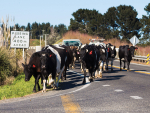
Ospri Urges Farmers To Prepare NAIT Records Before Moving Day
Moving Day (June 1) is just around the corner and farmers who are moving farms with the herd are being urged by Ospri to start preparations now.




 increase font size
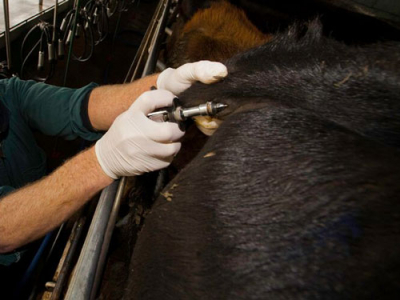 Cattle being tested for TB.
The science underpinning New Zealand’s TBfree programme has earned an award for its researchers.
Science New Zealand, which represents the country’s seven Crown Research Institutes (CRIs), hosted its inaugural national awards at Parliament earlier in the summer.
The TBfree team at Landcare Research/Manaaki Whenua was recognised for having refined aerial 1080.
Most of the research recognised was funded and directed by OSPRI and its predecessor the Animal Health Board.
The research has clarified the role of various pest species as TB vectors; developed strategies for local elimination of pests and for declaring areas free of TB; and substantially reduced the environmental, non-target and animal welfare risks of pest destruction. The projects included low-cost aerial 1080, TB surveillance, population monitoring, mitigating non-target impacts, the role of deer, pigs and ferrets in TB maintenance, possum spatial model for TB freedom prediction and deer repellents for 1080 baits.
These projects have helped OSPRI shift from a focus on achieving TB-freedom status to a focus on full TB eradication, and helped develop the competitive contracting industry and performance contracts.
Research areas included Waikato, West Coast, Southland, Marlborough, Canterbury and Hawke’s Bay.
In 2013, the Landcare Research team leaders were awarded the Shorland Medal by the New Zealand Association of Scientists for applied science excellence, which recognises the contribution the group has made to the cost-effectiveness and success of mammal pest destruction, especially possums, in the past 20 years.
Moving Day (June 1) is just around the corner and farmers who are moving farms with the herd are being urged by Ospri to start preparations now.

Ospri is reducing TB testing frequencies and movement control measures as the disease risk subsidies in parts of the country.
New Zealand is closer to eradicating bovine TB than ever before, but possums remain a threat, says Beef + Lamb New Zealand.
From 1 October, new livestock movement restrictions will be introduced in parts of Central Otago dealing with infected possums spreading bovine TB to livestock.
As an independent review of the National Pest Management Plan for TB finds the goal of complete eradication by 2055 is still valide, feedback is being sought on how to finish the job.


Federated Farmers has welcomed new rural policies released by ACT, saying they align closely with its own election priorities.

Rural Contractors NZ says proposed changes to land transport rules for agricultural vehicles are a welcome response by the Government to out of date regulations which have seen members hit with huge fines.
Alliance is calling for final applications for its 2027 Graduate Programme, with applications closing on Sunday 25 October.
Decades piloting planes has ensured vet and farmer David Hayes is focused on safety. So, after a serious accident while welding on farm, he is sharing his experience so others can learn from it.
Canterbury milk processor, Synlait Milk has confirmed Leon Fung as its chief executive officer.
OPINION: Making it easier to collect rainwater and use it to grow crops and livestock is a no brainer.





OPINION: The same mainstream media muppets that brought you Jacindamania in 2017 have been flat out pimping for the Opportunities…
OPINION: Your old mate reckons the atrocious way farmers in the UK are treated by their lords and masters in…




