
Bird Flu: Keep Distance, Wash Hands, Report It
OPINION: It's a tough pill to swallow that bird flu (avian influenza) has finally arrived in New Zealand. This is a moment many of us have hoped would never come.



 increase font size
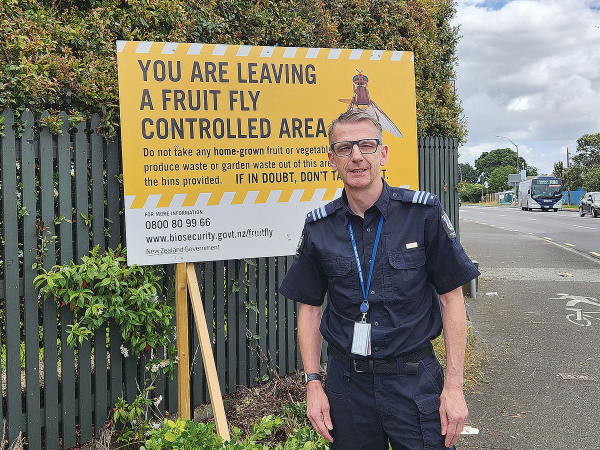 Mike Inglis, Biosecurity New Zealand Commissioner North.
Controls on the movement of fruit and vegetables in the Auckland suburb of Mt Roskill have been lifted.
Biosecurity New Zealand Commissioner North, Mike Inglis says that no further evidence of Queensland fruit fly in the area.
The decision to end the operation follows six weeks of intensive fruit fly trapping and the inspection of more than 230 kilograms of fruit.
Inglis says he thanks residents and businesses in the affected area for their support of the response.
“It wouldn’t have been possible to get to this point without the support of the local community. Every person who has kept an eye out for fruit flies, complied with movement controls, and safely disposed of their fruit waste, has played an important role in protecting our horticultural sector," he says.
"We are satisfied that with no further detections, the Controlled Area Notice restrictions can be lifted, and response operations closed.”
Biosecurity wheelie bins that have dotted the neighbourhood will be removed and road signs will be dismantled.
While response operations are ending, Biosecurity New Zealand’s routine nationwide surveillance continues, with a system of nearly 8,000 fruit fly traps spread across the country. More than 4,600 of these are in the Auckland area.
“The surveillance traps target three exotic fruit fly species of concern: the Queensland fruit fly, Mediterranean fruit fly and Oriental fruit fly. This successful response is a great example of how surveillance traps help alert us to the presence of unwelcome pests and enable us to stamp them out quickly,” says Inglis.
Biosecurity New Zealand staff will be out in the community today handing out flyers about the response closure and personally thanking residents and business owners for their contribution to the effort.
“I’d also like to acknowledge the good work of our people and our partners across the horticulture sector. By working together, and responding quickly, we have managed this situation well,” he says.
OPINION: It's a tough pill to swallow that bird flu (avian influenza) has finally arrived in New Zealand. This is a moment many of us have hoped would never come.

Blueberry growers are warning that fresh imports could pose a huge biosecurity risk for NZ’s horticulture sector.
Legal controls on the movement of fruits and vegetables are now in place in Auckland’s Mt Roskill suburb, says Biosecurity New Zealand Commissioner North Mike Inglis.
The quick response to the discovery of another fruit fly in Auckland is being praised by fruit and vegetable growers.
Biosecurity New Zealand Commissioner, North, Mike Inglis says the $2.4 million cost of a recent biosecurity operation in South Auckland is small compared to the potential economic impact of an incursion.


Federated Farmers has welcomed new rural policies released by ACT, saying they align closely with its own election priorities.

Rural Contractors NZ says proposed changes to land transport rules for agricultural vehicles are a welcome response by the Government to out of date regulations which have seen members hit with huge fines.
Alliance is calling for final applications for its 2027 Graduate Programme, with applications closing on Sunday 25 October.
Decades piloting planes has ensured vet and farmer David Hayes is focused on safety. So, after a serious accident while welding on farm, he is sharing his experience so others can learn from it.
Canterbury milk processor, Synlait Milk has confirmed Leon Fung as its chief executive officer.
OPINION: Making it easier to collect rainwater and use it to grow crops and livestock is a no brainer.


OPINION: The same mainstream media muppets that brought you Jacindamania in 2017 have been flat out pimping for the Opportunities…
OPINION: Your old mate reckons the atrocious way farmers in the UK are treated by their lords and masters in…




