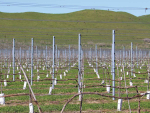
Hawke's Bay Fruit Growers Urged to Prepare for El Niño
Hawke's Bay fruit growers are being reminded of the need to prepare for whatever the El Niño weather system may bring in the coming months.




 increase font size
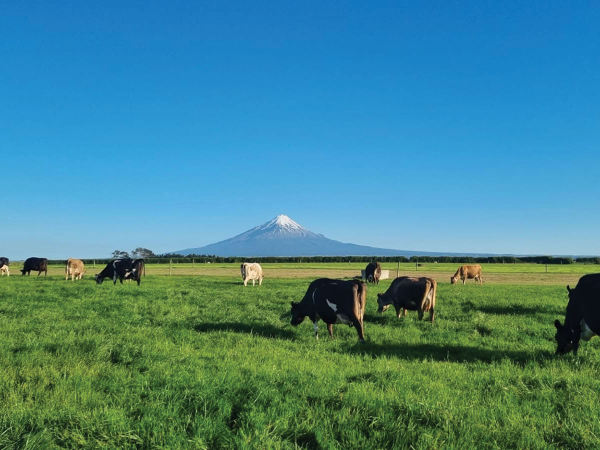 Milk production in Taranaki is now about on a par with other seasons.
A spate of southerly winds bringing cold temperatures has presented challenges for Taranaki dairy farmers.
Ag First’s Lauren McEldowney, based in Stratford, says there’s been below average rainfall in July and August. As a result, overall it’s been drier across the region. She says colder than normal temperatures and more frosts, combined with the southerly winds, have resulted
in below average pasture growth rates.
McEldowney says for certain parts of Taranaki in late July and early August, pasture growth rates were a lot lower than long term averages and what had been experienced in the last couple of seasons. In those years it was a lot wetter and while more grass was grown, it wasn’t all utilised because the ground was so wet.
“But what we have seen in the last two weeks is that it’s got a lot better, with soil temperatures rising and pasture growth picking up,” she told Dairy News.
The other point of note in Taranaki is that there are normal climatic variations. In the coastal areas of the region there is greater exposure to wind and recently they got hit a lot harder than the central and northern parts. For example, in Stratford, which is sheltered by Mt Taranaki.
Latest reports say that milk production in Taranaki is now about on a par with other seasons, although it was a bit behind for the month
of August.
Calving is said to be going well, noting of course that some parts of the region calve earlier than other parts.
In terms of animal health, McEldowney says there have been some well publicised issues with salmonella, but vets are helping farmers with this.
Also, she says there appears to be a few more instances of mastitis, but nothing major and the cause may be related to management practices.
According to Lauren McEldowney, the potential impacts of El Nino are in the back of farmers’ minds. But she points out that dry conditions are not unusual in the region, and in the case of El Nino, it’s a case of just how dry it might get.
She says, as rule, South Taranaki can get very dry.
“Interestingly, that central area around Stratford, twenty or thirty years ago you would have said we were summer safe, but not so much now,” she says.
McEldowney says farmers now need to get set up for summer in terms of feed and make sure that they have reserves, and know where they can get feed from, and at what price. She says they may need to look at reducing cow numbers before Christmas and follow the best management practices.
Overall, farmers in the region are generally in a positive frame of mind. McEldowney says Fonterra suppliers are benefiting from the capital payout, and many have used this to reduce debt. But she says with the threat of El Nino and the uncertainty of the election, farmers are cautious about what steps to take in the future and potentially what the outlook for them might be if there were to be a change of government.
Hawke's Bay fruit growers are being reminded of the need to prepare for whatever the El Niño weather system may bring in the coming months.

Westpac NZ is calling on farmers and growers to start preparing now for the possibility of a dry summer, as likely El Niño conditions raise the risk of drought across parts of the country.
OPINION: Have a plan in place now!
Have a plan in place for your cows and staff.
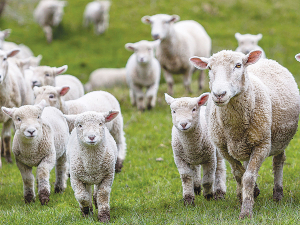
Drench Options are become increasingly limited for sheep farmers, highlighting the importance of proactive parasite management planning within the wider farm system to stretch the longevity of drench as a tool.

A New Zealand initiative supporting farmers to restore the health of grazing landscapes has received international backing through the Regenerative Fund for Nature, a global collaborative fund supporting regenerative agriculture and the communities that produce natural fibres for the fashion industry.
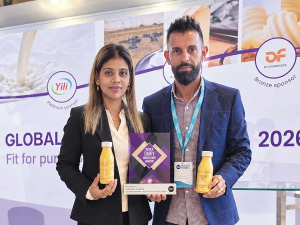
Combine premium New Zealand products, blend in a family ritual and what do you get? A world-class functional drink.
Entries are now open across eleven regions for the 2027 New Zealand Dairy Industry Awards (NZDIA).
Safer Farms is urging farmers to make sure everyone working on farm has safe, suitable footwear for the job.
The Government is backing work on a community-led water storage scheme that could irrigate up to 11,000 more hectares of the Poverty Bay flats, Agriculture Minister Todd McClay says.
Agri-tech company Herd-i has become a new all-region sponsor of the New Zealand Dairy Industry Awards (NZDIA), the largest nationwide celebration of excellence in the dairy sector.

OPINION: It seems Canterbury processor Synlait is still in the doldrums.
OPINION: Get offside with New Zealand First leader Winston Peters at your own peril.




