DairyBase and MINDA Link Up to Cut Farmer Paperwork
Farmers can spend less time on paperwork, thanks to a new data sharing agreement between DairyNZ’s DairyBase and LIC’s MINDA software.
 increase font size

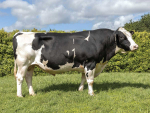
IT’S A day-on, day-off working week for New Zealand’s best ever artificial breeding bull Howies Checkpoint. Farmers are lining up to use the ‘once-in-a-lifetime’ bull in the upcoming dairy mating season, but LIC says it has to make sure he doesn’t get worn out.
LIC’s general manager genetics, Peter Gatley, says the KiwiCross bull will mate more than a quarter of a million cows this spring.
“That’s a big workload for any bull but it’s made possible by using our fresh semen technology which delivers 10 times the number of straws as conventional frozen,” Gatley says.
“We are doing our best to ensure that every farmer who signs up for the KiwiCross team gets a fair share of him.”
Through the spring mating period, Checkpoint will be collected every second morning on LIC’s Newstead bull farm, creating up to 5000 straws of fresh semen to be inseminated into cows all over the country the following morning.
A bull as good as Checkpoint only comes along once in a lifetime, but we have to balance the temptation to overuse him, says Gatley.
“One of the challenges we have is to provide a variety of different bloodlines needed for genetic diversity. It’s been 40 years since the country has had a sire [like Checkpoint].”
The bull has a breeding worth (BW) of 327 (83% reliability), 60 BW ahead of the second placed sire Fairmont Mint Edition, also from LIC.
The average BW of the KiwiCross Daughter Proven team is 241 – 20 higher than the Holstein Friesian and Jersey teams.
Gatley says Checkpoint is 9/16 Holstein Friesian and is strong across all traits. He is a result of an LIC contract mating with a past top bull, Shalendy Amorous, and one of the best cows in New Zealand, the product of the GeneRate embryo programme.
When he was born, DNA analysis identified his elite status, but it was his daughters who proved just how good he really is when they came into milk in 2011.
“Sometimes an offspring will end up with an extraordinary selection of the best genes, surpassing both parents, and that is what’s happened here,” Gatley says.
Farmers can spend less time on paperwork, thanks to a new data sharing agreement between DairyNZ’s DairyBase and LIC’s MINDA software.
An LIC bull, Tronnoco AR Sadio-ET S3F, bred by Tony and Keri O'Connor of Tronnoco Farming Co Ltd near Timaru, has won the 2026 Mahoe Trophy.
Bovine Viral Diarrhoea (BVD) is estimated to cost New Zealand's dairy and beef industries more than $150 million every year, yet many of the tools needed to control it are already well understood. After more than 25 years in veterinary practice, Andrew Weir, animal health technical specialist at LIC, has seen firsthand the impact BVD can have on herd performance. We asked him about the role of persistently infected (PI) animals and the practical steps farmers can take to reduce their risk.
In the past, a bull could sit comfortably in a breeding team for several years with little change, but today, that’s no longer the case.
Paynes Titus Excelsior ET, an LIC bull bred by Brad Payne and Claire Brodie in the Waikato, has won the JT Thwaites Sire of the Season 2026 Award.


An Auckland gelato shop and an established New Zealand ice cream maker have both been named Supreme Champions at the NZ Ice Cream & Gelato Awards 2026.

As the cost-of-living crisis continues to put pressure on household grocery budgets, new figures show pork remains one of the most affordable fresh meat options for New Zealand families.
OPINION: In politics, credibility is and should be big. It must surely rank higher than charisma, which is quite trite and superficial. Yet, voters nowadays are often wooed and influenced by how someone looks or talks at a superficial level. TV plays a huge role in this.
Farmers can spend less time on paperwork, thanks to a new data sharing agreement between DairyNZ’s DairyBase and LIC’s MINDA software.
Kaikōura families affected by July's severe storm have found a practical solution to a problem that's kept some children away from regular schooling for weeks: a washed-out section of Inland Kaikōura Road, which has stopped the local school bus from running its usual route.
Rural New Zealand is welcoming the Government’s recent package of rural healthcare initiatives.