NZ Food Brands Back New Zealand Grown Grains Campaign
Some of New Zealand’s best-loved food brands have been quick to sign up for a new campaign which reinforces their home-grown status.
 increase font size
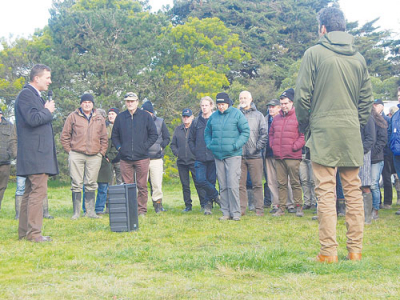 Foundation for Arable Research chairman David Birkett addresses attendees on a field trip to Lake Ellesmere during FAR’s Growing Sustainable Futures Conference at Lincoln University.
Big changes are coming in world food supply, says Foundation for Arable Research (FAR) chairman David Birkett.
With growing interest in synthetic foods replacing traditional protein sources, the arable industry is well-placed because most of the opportunities are plant-based material, he said.
“Plant-based material [is good in respect of] environmental losses and I think that’s where a lot of the drive will come from – the public’s demand for sustainable and efficient food production.
“The question for us is how does the New Zealand arable farmer fit into that, because a lot of the production will come from the big commodity growers around the world. We can’t compete with them so we’ve got to find the point of difference NZ has in that area.”
FAR recently held its two-day national conference at Lincoln University, on the theme ‘Growing Sustainable Futures’.
Birkett said that over its 20-year history FAR had moved as an organisation from its beginnings concerned with simple crop agronomy.
About five years ago it had started to look at the whole farm system, rotations and how they interlinked. Looking at that big picture had brought big gains, he said, and the strategy for the next few years would be to look wider still.
“We’re now starting to shift to the next area of the whole farm business, because there are components outside the farmgate that are having a big influence on how we operate. We need to integrate those issues into the farming business and address them.”
Opening the conference, Birkett said FAR’s front-footing of the issues would put arable farmers in a position to answer questions asked of them and have the proof at hand.
The issues facing the industry have become far broader, he says.
“As we’ve seen over the last 10 years, climate seems to be changing whether you believe in climate change or not. The fact is the distribution of rainfall is changing.
“We need to understand what those changes mean, how we manage them and whether those changes give us opportunity – perhaps new crops that may be grown in areas where they previously weren’t. And how do we maximise those crops to get the most out of them?
“Markets are changing as well. We’ve got to understand the demands of the markets we’re selling into.
“If we don’t we’re not going to hit those markets correctly.
“There’s a lot of talk now about proteins replacing meat and milk in the marketplace. What is our role there?”
Birkett said protein replacement is a “really interesting” development because of arable farming’s environmental footprint.
“It’s important that we try to understand what those advantages are and that we front-foot wherever we can. Our international collaborations allow us to do that, and through FAR Australia we are able to get access to research we would never get done here because of the scale of our industry.”
He predicted further gains from agronomy improvements of 1-2% but 5-10% gains from market opportunities.
Birkett, a Leeston cropping farmer with a recent but unofficial world record wheat yield to his name, also addressed conference goers during a field trip to the nearby shore of Lake Ellesmere/Te Waihora.
He recommended farmers form community groups to deal with issues in their areas, explaining how he and his neighbours formed a group to liaise with ECan.
Among other achievements, their lobbying had helped simplify Ecan’s environmental compliance paperwork.
Meanwhile, the country’s 2500 arable farmers were being urged to vote ‘yes’ in the upcoming referendum to confirm FAR’s mandate to levy its members for the next few years.
Birkett expected the referendum to pass but said it wasn’t just a rubber stamp. "lt's always good to check the pulse.”
Some of New Zealand’s best-loved food brands have been quick to sign up for a new campaign which reinforces their home-grown status.
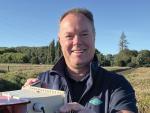
With arable farmers heading into the busy planting season, increasing fuel and fertiliser prices, driven by the Iranian conflict, are a daily and ongoing concern.
Some arable farmers are getting out of arable and converting to dairy in the faced of soaring fuel and fertiliser prices on top of a very poor growing season.
With the forage maize harvest started in Northland and the Waikato, the Foundation for Arable Research (FAR) is telling growers of later crops, or those further south, to start checking their maize crop maturity about three weeks prior to when they think they will start silage harvesting.
Canterbury arable farmers are down by tens of millions of dollars after a rollercoaster of wild changeable January weather saw harvests delayed and some crops destroyed by violent hailstorms.


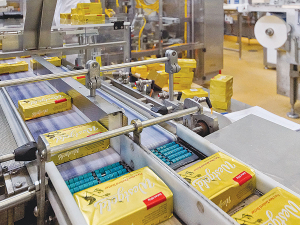
Westgold butter has been named New Zealand's tastiest in a blind tasting conducted by Consumer New Zealand.
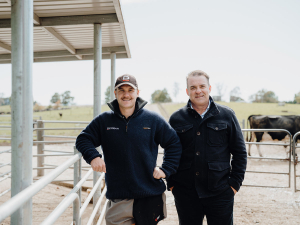
A New Zealand agritech and dairy services group has big plans as it expands its dairy services footprint across dairy hygiene, data, and milk cooling with the purchase of nationwide refrigeration business Dairy Technology Services (DTS).
The 2026 Holstein Friesian sales season has already delivered outstanding results across New Zealand and Australia - including a new Australasian record.
OPINION: At a time when farmers are advocating for less government spending and no new taxes, the dairy sector is rightly concerned by ACT's new immigration policy.
Feilding Agricultural High School isn't alone in offering agricultural or horticultural subjects as part of its curriculum, but the location of one of its farms on the northern edge of the urban fringe makes for some interesting considerations.
Analysis of decades of research has revealed the good farming pracrtice plays a critical role in reducing nutrient losses to improve freshwater outcomes.