Federated Farmers Backs Year 11 Agricultural Science
Federated Farmers is backing Feilding High School’s call to keep Agriculture and Horticultural Science as a standalone subject in Year 11.
 increase font size
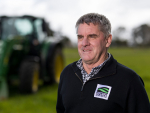
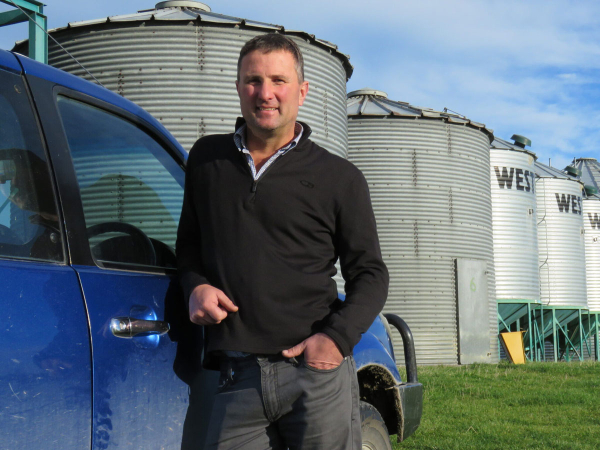 Federated Farmers arable chair David Birkett.
Federated Farmers says climate protest group Greenpeace is manufacturing outrage and attempting to scare New Zealanders with headlines that have no basis in science.
David Birkett, Federated Farmers arable chair, says that Greenpeace has turned its attention to controversial weedkiller glyphosate.
Last year, the Environmental Protection Authority ruled there were no grounds to review the approval of glyphosate-based weedkillers.
It followed claims that the chemical had a significant impact on human and environmental welfare.
Now, Greenpeace is calling for people to sign an open letter to Food Safety Minister Andrew Hoggard and Ministry for Primary Industries (MPI) director-general, Ray Smith, claiming there is no justification for a proposed increase to New Zealand’s glyphosate levels.
They argue that the updated regulations would allow industry to self-assess their chemicals and establish a new fast-track process for pesticide approvals.
“These changes are reckless and they benefit powerful agribusiness corporations, not the people of Aotearoa or our environment,” Greenpeace argues.
“New Zealanders care deeply about the safety of our food and the health of our environment. We expect our leaders and regulators to uphold strong protections, not get rid of them so that agrichemical corporations… can increase their profits,” the letter states.
Birkett says Greenpeace’s claims are “complete and utter nonsense”.
“Our food system is one of the safest in the world,” Birkett says. “Greenpeace knows that, but fear is more useful to them than facts.”
“For decades, Greenpeace has spread misinformation about dairy farmers – now they’ve shifted their attention to arable farmers.”
“This is not a food safety issue – it’s a publicity stunt,” he says.
Birkett says that were the proposed updates to the regulations to go ahead, it would not affect what goes on to Kiwi tables.
“Let me be very clear: New Zealand-grown grain for human food – like bread and breakfast cereal – is not treated with glyphosate,” he says.
“Under strict contracts with local mills, our farmers aren’t allowed to use it on those crops,” he adds. “That’s not changing.”
He says that because the contracts will remain in place, if the bread and cereal purchased by New Zealanders is made from New Zealand grain, it will still be free from glyphosate.
He says it is insulting that Greenpeace is opting to paint a false picture of how New Zealand food is produced, damaging public trust.
“It makes me wonder what the folks at Greenpeace have been putting in their porridge.
“Our growers are following the rules, and our food is safe, but Greenpeace would rather stoke fear than deal honestly in facts.”
Birkett says that – like with all food safety standards – the Ministry for Primary Industries sets the rules for glyphosate-use based on science and risk assessments.
"These decisions are made by scientists, experts who dedicate their careers to keeping our food safe.
"They would never approve anything that posed a real risk to human health," Birkett says.
"We trust MPI, we follow the science, and if MPI changes the rules, farmers will comply - just like we always have."
He says that Greenpeace has, on the other hand, remained silent on imported grain.
"Up to 70% of the wheat products eaten in New Zealand, like bread and biscuits, are made from imported milling wheat," he says.
"Those imports are allowed to contain glyphosate residues at levels three times higher than what MPI is proposing for New Zealand grain.
"So, where’s the outrage about that?
"It’s not there - because it doesn’t fit Greenpeace’s narrative. They’d rather go after hardworking Kiwi farmers who are already doing the right thing."
Birkett says this campaign from Greenpeace is further proof as to why the group should have its charitable status revoked.
"This is not a charity acting in the public good. It’s an extreme activist group waging a vicious misinformation campaign to score cheap political points and raise money," Birkett says.
"That campaign is incredibly dangerous. It’s undermining confidence in the food system, scaring families, and they just don’t seem to care - as long as donations keep flowing." He says it’s time to hold the group accountable and strip them of their charitable status.
"Greenpeace has crossed a line. If they want to campaign, fine - but do it honestly. Don’t spread misinformation about the hard-working farming families who feed this country.
"In the meantime, Kiwis can trust that our grains are safe, our farmers are doing the right thing, and the real food safety experts, not political activists, are making the rules."
Federated Farmers is backing Feilding High School’s call to keep Agriculture and Horticultural Science as a standalone subject in Year 11.
National’s pledge to introduce 19 new national standards shows the party is serious about getting Wellington out of farming, Federated Farmers says.
Mobile phone coverage and reliability are deteriorating in rural areas, and farming families are bearing the cost, according to a Federated Farmers survey.
Central Otago District Council (CODC) has voted against a plan to spread treated sewage sludge from Cromwell and Alexandra on farmland near Lauder, a decision Federated Farmers says reflects strong opposition from rural residents.
Federated Farmers has called on Central Otago District Council (CODC) to drop or vote down a plan to truck sludge from Alexandra and Cromwell to farmland near Lauder, warning it would compound an "outrageous" situation created by a separate council's decision weeks earlier.



Alliance is calling for final applications for its 2027 Graduate Programme, with applications closing on Sunday 25 October.
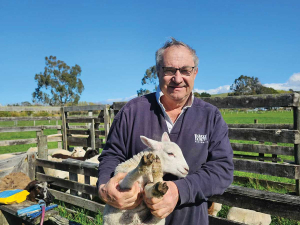
Decades piloting planes has ensured vet and farmer David Hayes is focused on safety. So, after a serious accident while welding on farm, he is sharing his experience so others can learn from it.
Canterbury milk processor, Synlait Milk has confirmed Leon Fung as its chief executive officer.
OPINION: Making it easier to collect rainwater and use it to grow crops and livestock is a no brainer.
As part of its Election 2026 coverage, Rural News asked political parties how they would help pull the arable sector out of the doldrums. Here's what they said:
Farmers are being encouraged to rethink how they manage waste on farm with the launch of ruralwastesorted.co.nz, a new website bringing together practical tips, real farmer experiences and resources.