NZ Apple Sector Pushes for Japan & Korea Market Access
The apple sector is working with the Government to unlock access to two key markets that could bring millions in revenue for apple growers.
 increase font size
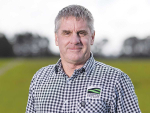
 NZ Apples & Pears business development manager Gary Jones. SUPPLIED/Simon Cartwright Photography
New Zealand Apples & Pears is positioning itself as a global leader in social practices and in eliminating exploitation of workers on supply chains, its business development manager Gary Jones says.
NZ A&P has recently introduced the GRASP (GlobalGAP Risk Assessment on Social Practices) framework, implemented by the Europe based farm assurance organisation GlobalGAP.
He says the issues of modern slavery and worker exploitation were major themes of the recent Apples & Pears annual conference. The speakers were overseas experts David Camp, chief executive of the Association of Labour Providers, and former GlobalGAP vice-chair Jim Jefcoate.
Jones was recently elected to the GlobalGAP board and will attend his first board meeting when his term officially begins in November. Half the board represents retailers and half producers.
Of the producer representatives, Jones is one of only two from outside Europe and the only one from the southern hemisphere.
He says an example of how GRASP standards could impact NZ was the case of a grower who had hoped to export apples to Europe last season. But because his orchard had no seasonal workers at the time he filled in a GRASP risk assessment, he scored a zero for one particular element.
A German retailer who saw that said, “Well there are people with better risk assessment than [the New Zealander]. I don’t want any of his apples”.
“That was a short sharp commercial reality check for everyone,” Jones told Rural News. “I can assure you I don’t know anyone who’s failed to meet that standard since. But it was an example, just as we were introducing GRASP, that it really means something.”
Jones says big challenges facing the industry include increased digitisation and automation and big data. Integrated systems will ensure growers do not have to put in data many times, and allow them to share it with appropriate people, whether customers or regulators.
The other big area is worker exploitation, the UK having enacted modern slavery legislation in 2015 and Australia doing so last year.
Businesses will have to report what they’re doing within the supply chain to eliminate suspicion of slavery and exploitation.
“That’s a newish area for us, but over the last two or three years we’ve been working hard to make sure we are reactive in that space.”
Jones believes the NZ primary industry – and certainly horticulture – has to take a lead in this.
“Because if we continue to get 14,000, 15,000 or 16,000-plus RSE (recognised seasonal employer) workers from the Pacific we’re going to have to be squeaky clean.”
Jones says the International Labour Organization (ILO) recognises the RSE as the best scheme of its kind in the world and it is very unlikely anyone is “misbehaving”.
But there are wider connotations for supply chains.
“You might be a large business that brings people in from the Pacific and you’re growing some of your own fruit but you’re also packing someone else’s fruit in your branded box,” he said.
“We have to make sure everyone, not just RSE employers but everyone in that whole ecosystem or sector [has very high quality employment practices].”
The apple sector is working with the Government to unlock access to two key markets that could bring millions in revenue for apple growers.
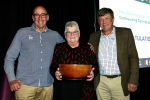
For over 50 years Mel Ewers has been supporting the apple sector navigate through compliance and quality assurance issues.
New Zealand apple and pear industry stakeholders are out in force for the annual conference in Queenstown.
As we move into the late-summer and autumn period, much of the country’s fruit growing regions are entering operationally critical windows of the horticultural calendar. The question on grower’s minds is ‘what is the outlook for the March-April harvest?’
Hawke's Bay apple grower Taylor Corporation says a standout 2026 season, coming after a few difficult years, is boosting optimism among growers.



The Royal New Zealand College of General Practitioners (the College) and Hauora Taiwhenua Rural Health Network are calling for investment in a proposed new training pathway for rural GPs, warning that many rural practices are struggling to recruit while a large share of the existing workforce nears retirement.
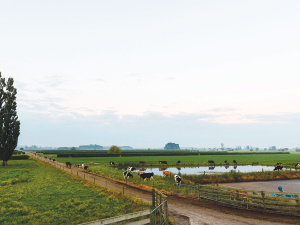
Federated Farmers has called on Central Otago District Council (CODC) to drop or vote down a plan to truck sludge from Alexandra and Cromwell to farmland near Lauder, warning it would compound an "outrageous" situation created by a separate council's decision weeks earlier.
Synlait has swung to second-half profit as operations stabilise, but the dairy processor still posted a $75.4m annual loss.
LIC shareholders have elected a new North Island representative to the co-operative's Board, along with five representatives to its Shareholder Reference Group (SRG), following the company's Annual Meeting held in Invercargill.
Farmers across parts of Southland and South Otago are continuing to deal with difficult conditions after a prolonged run of wet weather, with pressure building around feed supply, stock management, pasture damage, farm infrastructure and everyday workloads.
Federated Farmers says it welcomes Labour's commitment to reviewing the Sharemilking Agreements Act, calling on other major parties to do the same.