Friday, 10 September 2021 09:25

Now the 'Force' can really be with you in the orchard

Written by 
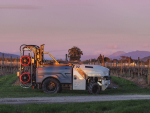
The Trimax Force mower/mulcher can leave a quality finish on grass, as well as deal with prunings in vineyards and orchards. The Trimax Force mower/mulcher can leave a quality finish on grass, as well as deal with prunings in vineyards and orchards.

The recently introduced Trimax Force mower/mulcher is a multi-functional machine that can leave a quality finish on grass or deal with prunings in vineyards and orchards.

Offered in working widths from 1.15 to 2.3 metres, the Force is designed to be operated with tractors from as little as 30hp right up to tractors of 90hp, which are typically found in horticultural situations.

Weighing in between 590 and 900kg, the units feature a heavy-duty construction, including 50% thicker endplates compared to the Warlord S3 machine from which the Force originates.

Offering a 0 to 60mm cutting height using heavy-duty flails. The cutting height is controlled with a heavy-duty skid and roller system that can be adjusted independently, with the latter using sealed bearing units to minimise service downtime.

At the heart of the machine is a replaceable internal liner used to protect the main impact zones of the cutting chamber.

This move is said to offer around three times better durability than a more standard unprotected layout.

Also, in the area of the rotor, new rotor bearing assemblies have resulted in a 35% increase in static and a 50% increase in dynamic load capacities. Improved pruning guides funnel debris into the chopping rotor, resulting in a major reduction in post-mulching debris collection.

A reversible headstock with Cat1, Cat2 and Cat2n compatibility, allows the unit to be front or rear-mounted. Meanwhile, smoother exterior profiles greatly reduce the likelihood of getting snagged on vines or branches.

Available as centre-mounted, or with left or right-hand offset capability, there is also a hydraulic offset available on selected models. The manufacturer also points out that a reduced distance from the edge of the cutting rotor to the overall extremity means it is easier to get closer to plants.

Maintenance has been addressed by incorporating automated belt tensioning, easy access to grease nipples – without the need to remove guards – and the already mentioned sealed roller bearing units.

A range of options include heavy duty liners for the chopping rotor, roller scrapers to remove clippings during mowing, and mulching counter blades to produce ultra-fine mulch.

More options include pruning rakes to collect and move material into the cutting area, while the LED road lights and triangle help improve safety.

www.trimaxmowers.co.nz 

More like this

New CLAAS Swath Turner Fixes Twin-Rotor's Blind Spot

Twin rotor swathers have become the ‘go-to’ for forming swaths to feed hungry harvesters and balers, however, the design layout often means that crop located between the two rotors is not picked up, turned over or incorporated into the swath formed for subsequent harvesting.

Motueka Farm Machinery Sold as Sturgeons Retire After 44 Years

Close to the Abel Tasman and Kahurangi National Parks, Motueka is known for apples, pear and kiwifruit orchards, alongside specialised crops such as hops. Indeed, that specialisation, saw the area being the New Zealand centre of the tobacco growing, until the early 1980s.

Can-Am Unveils 2027 SSV, ATV Range With New Defender HD10

Can-Am has introduced its 2027 range of side-by-side vehicles (SSV) and all-terrain vehicles (ATV), including the industry leading Defender, the Maverick R and the hugely capable Outlander ATV, incorporating a host of advancements designed to deliver an exceptional riding experience.

Featured

Southland Farmers Face Wet Weather Toll, Support Available

Farmers across parts of Southland and South Otago are continuing to deal with difficult conditions after a prolonged run of wet weather, with pressure building around feed supply, stock management, pasture damage, farm infrastructure and everyday workloads.

How Wearable Tech Powers This 1,850-Cow Dairy Farm

For Canterbury dairy farmers Sian Meijer and Rick Wobben, wearable technology has become one of their most valuable on-farm tools - helping manage 1850 cows across an expansive, high-performing dairy operation while improving efficiency, mating outcomes and day-to-day decision making.

New Dairy Welfare Code Released, Takes Effect 2027

The first major update to the Dairy Cattle Code of Welfare in more than a decade has been released, marking what DairyNZ describes as an important step in ensuring animal welfare standards continue to evolve alongside scientific evidence and on-farm realities.

National

Machinery & Products

» Latest Print Issues Online

The Hound

'LinkedIn Greens'

OPINION: The same mainstream media muppets that brought you Jacindamania in 2017 have been flat out pimping for the Opportunities…

UK Warning

OPINION: Your old mate reckons the atrocious way farmers in the UK are treated by their lords and masters in…

» eNewsletter

Subscribe to our weekly newsletter