New Zealand Apple Industry Enjoys Second Strong Season In A Row
The chief executive of Apples and Pears New Zealand, Danielle Adsett, says fruit quality this year is phenomenal and the sector is hitting crop estimates, which is great for growers.



 increase font size
 A shipping container - carried by floodwaters - standing starkly amongst the damaged apple trees in a Yummy Fruit orchard in the Hawke's Bay.
The Yummy Fruit Company is one of Hawke's Bay's most established orchards, owned by the Paynter family, who came to the region in 1904, after initially running their operation in Nelson.
In a sense, Yummy is lucky that it is a large operation with orchards in a number of places. For a smaller family operation, with just one orchard hit badly by Cyclone Gabrielle, the future is bleak.
Paul Paynter now heads the operation. He estimates his company has lost about 25% of its crop and thinks they will permanently lose about 20% of their orchards.
At one of the orchards, you can see a shipping container - carried by floodwaters - standing starkly amongst the damaged apple trees.
Nearby is a tractor, also dumped there, and Paynter has no idea where it came from. But while this is bad, it's by no means the worst.
"The worst location is in the Esk Valley, where it's unrecognisable. It's just match sticks," he told Hort News.
It's obvious that some areas of land will never be replanted in apples again. Either all the soil has been washed away or the land is covered metres deep in silt.
For those trying to re-establish their orchards, the task is formidable, and they face bills of upwards of $15 million to do this.
"It will take at least three years to get some trees to re-plant, another four years to get cashflow positive and it's probably another five years to get it investment positive," Paynter explains. "So, we won't be in the investment black probably until 2040."
Paynter believes it's imperative that Government steps in financially quickly, as grower cashflows disappear, and it could become hard for growers to retain staff.
"There needs to be something like a Gabrielle bond, where the taxpayer picks up the interest for 3 or 4 years and then the growers and farmers in Hawke's Bay pay the interest and amortise the loan over perhaps 20 years," he says.
 |
|---|
|
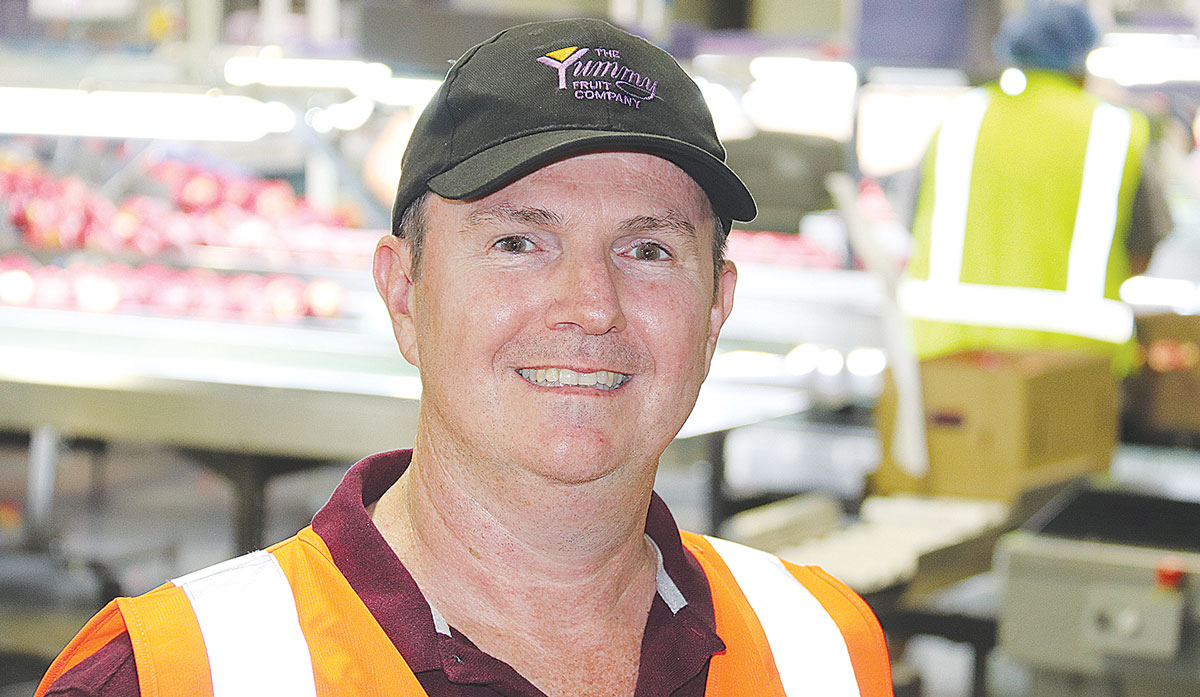
Paul Paynter |
"Whatever, there needs to be some pathway to re-establish the economic engine in Hawke's Bay."
Paynter is also worried that while people are still suffering, the problems in Hawke's Bay are not attracting media attention.
While he's sure that industry groups are working hard behind the scenes, he says this is not enough.
Paynter believes that horticulture industry organisations should be doing more to get the media to keep the story front and centre of the news. He says if it loses traction in the media, it gives the Government and other authorities a chance to pull back.
"This is probably the biggest rural disaster this country has ever seen yet it has disappeared off the radar and become yesterday's news," he says.
"Many growers here feel absolutely abandoned by what's happening."
The chief executive of Apples and Pears New Zealand, Danielle Adsett, says fruit quality this year is phenomenal and the sector is hitting crop estimates, which is great for growers.

A Hawke's Bay apple orchardist supports the Government's objective of doubling exports but says this won't happen in the horticulture sector unless there's a change in the process for bringing new plant material into the country.
Nearly three years on from Cyclone Gabrielle, Hawke's Bay apple orchardist Paul Paynter says they are still doing remedial work around their orchards and facing financial challenges.
A Hawke's Bay apple grower says it's no longer profitable for him to export apples to the US because of the 15% tariff imposed on them by Donald Trump.
If there was a silver lining in the tragedy that was Cyclone Gabrielle, for New Zealand Young Grower of the Year, Grace Fulford, it was the tremendous sense of community and seeing first-hand what good leadership looks like.


Waikato milk processor Tatua has again declared a record milk payout to farmer shareholders, leaving other processors in the dust.
A Labour-led Government won’t be bringing back the controversial freshwater rules of 2020.
National’s much-touted free trade deal with India featured in the Rural Issues Debate at Mystery Creek, Hamilton on Wednesday night.
New Zealand's 2026-27 freshwater fishing season has opened, with anglers encouraged to head to rivers and lakes over the coming days as conditions look favourable across much of the country.
Central Otago District Council (CODC) has voted against a plan to spread treated sewage sludge from Cromwell and Alexandra on farmland near Lauder, a decision Federated Farmers says reflects strong opposition from rural residents.
Pāmu has released its FY26 Integrated Annual Report, reporting a Net Operating Profit of $113 million, more than double the $49 million recorded in FY25.


OPINION: The same mainstream media muppets that brought you Jacindamania in 2017 have been flat out pimping for the Opportunities…
OPINION: Your old mate reckons the atrocious way farmers in the UK are treated by their lords and masters in…