It's The Margins That Matter
OPINION: It appears to be difficult for people who haven’t tried to run a business to understand the difference between assets and cash.
 increase font size
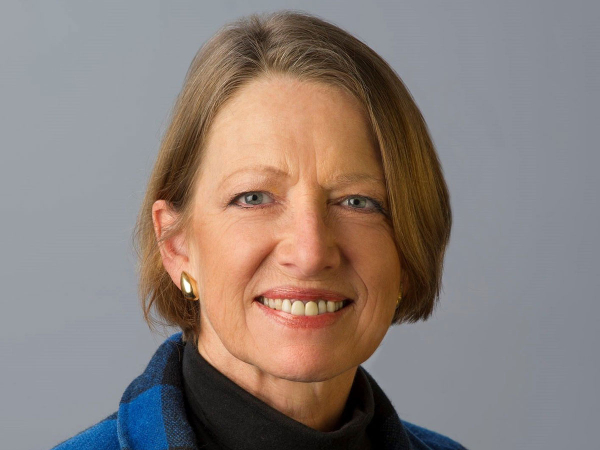 Dr Jacqueline Rowarth
OPINION: Is New Zealand ‘Godzown’ or the ‘Last bus stop on the planet’?
Godzown (or Godzone, short for God’s Own Country) was the term used by Richard John Seddon, New Zealand’s longest serving prime minister, over a century ago. Godzown is the kiwi homeland.
In contrast is the description of New Zealand as ‘the last bus stop’.
In a keynote address to the Royal Society Academy Conference in 1999, Minster Upton stated that as the last bus stop on the planet we should not be comparing ourselves to Finland or Ireland. “Both sit on the edge of a continent which is home to 300 million of the richest people on the face of the earth.”
In 2022 the last bus stop description was used in a Treasury paper prepared for the Productivity Commission by Dr David Skilling, Landfall Strategy Group. Dr Skilling warned that “New Zealand’s economic geography and institutional context means that New Zealand has one of the most exposed supply chain positions across advanced economies”.
The issues are playing out through the Straits of Hormuz.
New Zealand relies heavily on “imports across a range of categories (machinery, vehicles, and energy) and multiple areas of specific import reliance,” wrote Dr Skilling. He also pointed to a lengthening of New Zealand’s supply chains in recent times and consequent geopolitical risk.
These exposures were evident through the pandemic, with delays and higher costs.
They are now being exposed through the Hormuz battle.
Dr Skilling did highlight that supply chain resilience was supported by New Zealand’s well-developed network of FTAs and other international agreements, its flexible economy, and its ability to respond quickly to shocks.
He didn’t, however, mention the role of co-operatives in enabling the 5.3 million people living on the last bus stop to have a voice in world trade.
It is the co-operatives that have been keeping the supply chains functioning in this era of international trade becoming both more expensive and important. They do this through the relationships they hold with companies overseas.
Certainly, FTAs send good signals and indicate government agreements, but it is the personal interactions that make the difference, with guarantees of product on both sides.
Co-operatives allow farmers to work together and compete in world markets. The co-operatives have built up assets and services in a manner that has not generally been copied by non-co-operative companies. Whether selling or buying, size leads to economies of scale and reliability, and makes the difference.
Co-operatives can find a better price than an individual farmer can achieve. MPI’s 2021 report calculated that “farmers now retain about 26% more of the international price for milk than what would be expected based on the previous (prior to Fonterra) historical relationships between the New Zealand farmgate price and farmgate prices in other countries”.
Research overseas has similar conclusions: dairy prices in the EU were higher in the regions where co-ops had significant market share. Further, where co-ops protected farm-gate prices, farmers benefitted across the sectors and regions concerned, not just the co-op members.
New Zealand has approximately 330 co-operatives. Almost three-quarters are in the primary sector and most farmers are associated with more than one. In contrast, only half of all farmers belong to a co-operative in the UK. They justify the decision not to join on the belief that they can achieve lower prices from independents and entrepreneurs.
Co-ops have also been more resilient through economic recessions.
And war.
As the disruption of the supply chains starts affecting the smaller players it is the strength of the co-operatives and the farmers that belong, that will keep the economy humming. Members of a co-operative do together what no person can do alone. It is the co-operatives that have underpinned the ‘last bus stop on the planet’ allowing it to maintain its description of Godzown.
Dr Jacqueline Rowarth, Adjunct Professor Lincoln University, is a farmer-elected director on Ravensdown and DairyNZ and a member of the Scientific Council of the World Farmers’ Organisation. The farms in which she has invested are shareholders in 6 co-operatives, pay levies to four levy bodies and membership to Federated Farmers of NZ.
OPINION: It appears to be difficult for people who haven’t tried to run a business to understand the difference between assets and cash.
OPINION: In the 1980s, concern was expressed in West Germany about the falling birth rate. Some simple analysis was performed by Professor Helmut Sies, physician and biochemist at Dusseldorf University. His letter ‘A new parameter for sex education’ was published in Nature in 1988:
OPINION: Humans are resilient. We are part of nature and have evolved for survival.
OPINION: "The worst thing that agriculture does is take land from nature."
OPINION: Information is everywhere. So are misinformation and disinformation.

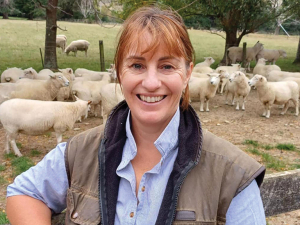
B+LNZ's Wormwise veterinarian Mary Bowron has won the Best Sheep and Beef Vet of the Year Award in recognition of her outstanding contribution to New Zealand’s sheep and beef sector.
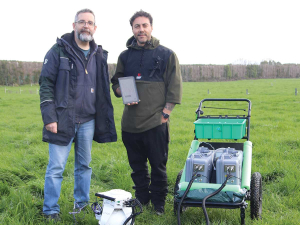
Researchers at Massey University are using a special piece of scientific equipment to improve the measurement of greenhouse gas emissions from pasture soils.
More signs of a booming kiwifruit sector.
OPINION: David Seymour and James Meager's plan to make it easier for farmers and orchardists to operate drones can best be described a 'courageous' move.
New Zealand wool is reaching new heights as air filtration companies move away from synthetic products to biodegradable alternatives.
Opuha Dam's ability to protect South Canterbury communities from major flooding has taken a significant step forward, with Opuha Water Limited (OWL) successfully commissioning a new outlet valve capable of releasing record volumes of water from the dam ahead of a weather event.