
Peter Chrisp Appointed New Director-General of Conservation
Former head of New Zealand Trade and Enterprise Peter Chrisp is the new director-general of the Department of Conservation.
 increase font size
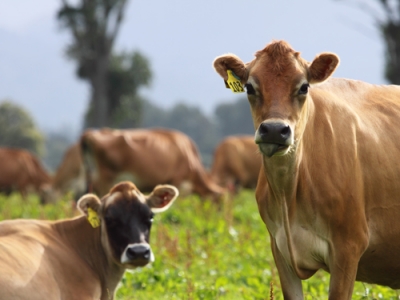
The first stage of Westland Milk Products’ new Farm Excellence (FarmEx) programme is almost complete, with 97% of farms having undergone their first assessment.
Launched in 2014, FarmEx works on the philosophy that what happens behind the farmgate impacts on Westland’s ability to sell in a highly competitive marketplace. The company says the programme aims to set high quality production, environmental, animal welfare and sustainability standards for Westland’s shareholder suppliers.
Chief executive Rod Quin says FarmEx is primarily about future-proofing the dairy industry and Westland Milk Products’ ability to continue to sell into an increasingly demanding international market, where not only is food safety and quality paramount, but also the story behind the milk.
“Customers increasingly want transparency, traceability and accountability in all areas,” Quin says.
“Naturally their focus is on food safety and the quality of our products, but they also want assurances on our performance in such areas as environmental protection and sustainability, animal welfare, employment conditions and even the aesthetic appearance of the farm property itself.”
One of the focus points for the initial rollout of the programme has been the environment, Quin says. “Our staff have been looking at such issues as weed control, fencing off of waterways, effluent disposal, fertiliser use, farm chemical disposal and so on.”
The company has been working closely with the West Coast Regional Council and the Department of Conservation on the environmental aspects of the FarmEx programme.
The move has been welcomed by the Department of Conservation on the West Coast because of the programme’s positive environmental spin-offs.
DOC Conservation partnerships director for the North and Western South Island Region, Jan Hania says, “Water quality is a key foundation to environmental protection. Our native freshwater fish, birdlife, wetland and riverside vegetation and our recreation enjoyment depend on it. The whitebait fishery is a good example of a resource that the community values that thrives where there is good water quality. This programme, successfully rolled out should see a large contribution to this.
“Everything Westland’s shareholders do on their properties to fence off waterways and manage nutrient flows not only enhances their reputation as responsible and sustainable producers, it has a benefit for whitebait too.”
Quin says that everybody benefits from the FarmEx standards, shareholders especially.
“In essence, FarmEx is designed to guarantee our suppliers’ right to continue to supply milk. It also has the goal of maximising shareholder pay-out by supporting Westland’s move into nutritional products where the standards that need to be met are higher, but the potential for improved returns is substantially better.”
Former head of New Zealand Trade and Enterprise Peter Chrisp is the new director-general of the Department of Conservation.
Arguably one of the country's top dairy company's chief executives, Richard Wyeth has abruptly quit Chinese owned Westland Milk Products (WMP)
A critically threatened endemic freshwater fish found only in Canterbury has been discovered at a Craigmore Sustainables farm near Timaru.
OPINION: This old mutt well remembers the wailing, whining and gnashing of teeth by former West Coast MP and Labour Agriculture Minister Damian O’Connor when Chineseowned Yili took over the troubled dairy company Westland Milk a few years back.
Westland Milk has reaffirmed its commitment to pay farmer suppliers 10c above Fonterra farm gate milk price for the following two seasons.


Farmers are being encouraged to rethink how they manage waste on farm with the launch of ruralwastesorted.co.nz, a new website bringing together practical tips, real farmer experiences and resources.

New Zealand Winegrowers (NZW) is celebrating the India-New Zealand Free Trade Agreement (FTA) coming into force today, bringing New Zealand wine improved access to one of the world’s fastest-growing economies.
New Zealand’s red meat sector has welcomed the India-New Zealand Free Trade Agreement taking effect, which removes India’s 33% tariff on New Zealand sheepmeat.
More than 95 per cent of New Zealand’s forestry and wood exports to India can now enter tariff free as the New Zealand-India Free Trade Agreement comes into force today.
Federated Farmers is backing Feilding High School’s call to keep Agriculture and Horticultural Science as a standalone subject in Year 11.
Food and fibre exports have returned a billion- dollar bonus to the country.