Beef + Lamb New Zealand Awards 2026 Winners Announced in Christchurch
Last night saw the winners of the 2026 Beef + Lamb New Zealand (B+LNZ) Awards named at a gala dinner at Te Pae Christchurch Convention Centre.
 increase font size
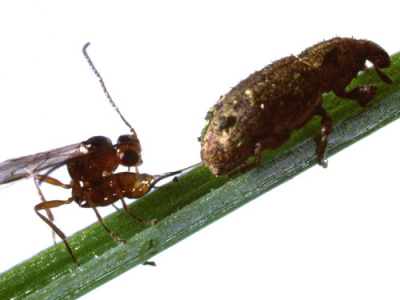 South American wasp and clover root weevil.
AgResearch scientists are looking into how common pests in New Zealand are fighting back against traditional measures to control them – and whether it all comes back to evolution.
Principal Scientist at AgResearch, Professor Stephen Goldson, is working with his colleagues in an area that has serious implications for farming in New Zealand, and an impact of hundreds of millions of dollars for the economy.
“What we are learning is that we can’t take the successful classic biocontrols we have used for granted, as unexpected things can happen,” Professor Goldson says.
“It’s similar to the situation with antibiotic resistance. The more we know about it, the more we know what to look out for and the more clues we have as to what to do about it.”
The leading example is the Argentine stem weevil, the worst pest when it comes to ryegrass - the most common grass on New Zealand farms.
For the last two decades, this pest has been controlled by a tiny South American wasp, which was first introduced as a biocontrol agent in the early 1990s by Professor Goldson and his colleagues.
For about eight years the wasp parasite was highly successful in knocking back the weevil, but since then its effectiveness has been in decline, and researchers have noticed a major resurgence in weevil numbers.
Professor Goldson says a lot of research by AgResearch and its partners, including those at Lincoln’s Bio-Protection Research Centre, is now pointing to the weevil having evolved to successfully evade the wasp.
“Based on the results so far, it seems the parasite has been so successful it has driven the weevil into a place where it has evolved resistance. The issue now is that it could also happen with other pests such as the clover root weevil.”
The research into the loss of effectiveness of the biocontrol agent – possibly through resistance - is continuing.
Last night saw the winners of the 2026 Beef + Lamb New Zealand (B+LNZ) Awards named at a gala dinner at Te Pae Christchurch Convention Centre.

Animal owners can help protect life-saving antibiotics from resistant bacteria by keeping their animals healthy, says the New Zealand Veterinary Association.
A significant breakthrough in understanding facial eczema (FE) in livestock brings New Zealand closer to reducing the disease’s devastating impact on farmers, animals, and rural communities.
A breakthrough in the understanding of Facial Eczema (FE) in livestock could bring New Zealand closer to reducing the disease’s impact.
An innovative idea for transforming mechanically deboned meat (MDM) into a meat flake for seasoning has taken top honours in the Meat Industry Association’s (MIA) first-ever Dragon’s Den competition.


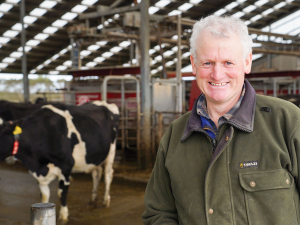
In Dacre, near Invercargill in New Zealand’s South Island, Bruce Dinnington is running a dairy operation unlike any other.

A free online platform aggregating governance vacancies across rural and regional New Zealand has been launched.
Environment Minister Nicola Grigg has announced details of a new rural plastics recycling scheme.
Agricultural drone operators say that a government decision to allow lower-risk drone work without certification won’t lower standards but drive innovation and efficiency.
OPINION: Warning bells are ringing in the arable sector.
Farmgate lamb prices are down by 8%, beef cattle by 4.5% and farm expenditure up by 4.2%.