Faulkner: Take Rural Infrastructure Out of Politics
Federated Farmers' new vice president Sandra Faulkner says the issue of adverse events emergency management and infrastructure needs to be taken out of the three-year political cycle.
 increase font size
 People in rural areas want clarity when their connectivity will improve.
The acceleration of two rural communications initiatives announced by Government last week is good news, but more is needed, says the Telecommunications Users Association of NZ (TUANZ).
Broadcasting, Communications and Digital Media Minister Clare Curran announced last week that the completion schedules for the Rural Broadband Initiative Phase Two (RBI2) and the Mobile Black Spot Fund (MBSF) have been brought forward one year to the end of 2021.
TUANZ welcomes any moves that bring forward initiatives to help fix the gaps in rural connectivity, the organisation’s chief executive Craig Young told Rural News.
“While a year earlier is a positive move it still leaves a number of New Zealanders without quality access for the next few years,” he says.
“We await with real interest the announcement of more concrete plans from the Government and the Rural Connectivity Group (RCG) on the next steps in the roll-out.”
Young says both the Minister for Communications and The RCG will be speaking as part of the 2018 TUANZ Rural Connectivity Symposium on Tuesday June 26 in Wellington.
“We look forward to hearing more from them,” he says.
Curran says the gaps between the digital ‘haves’ and ‘have nots’ need to be closed to ensure people and communities benefit from the jobs, access and participation that a digital future brings.
“We are listening to feedback from businesses and from people who live in and travel to our most rural and remote areas, and they want more clarity on when their connectivity will improve. I want people to know they don’t have to wait until the end of 2022.”
The deployment schedule and coverage information for RBI2 is now available on the National Broadband Map www.broadbandmap.nz.
“An address checker is available on the map where you can type in your address to see if and when you will receive RBI2 broadband coverage. This will show planned and actual coverage and give an indication of the timing for planned coverage,” Curran says.
“The company providing service in your area is listed on the availability report when you search your address.
“Funding for the RBI2/MBSF programme comes mainly from the Telecommunications Development Levy (TDL), a levy paid by telcos, with some of the programme funded privately by the three mobile operators Spark, Vodafone and 2degrees.
“Funding for a $105 million RBI2/MBSF expansion comes from Crown Infrastructure Partners’ funds and announcements will be made in the coming months on the outcome of the RBI2/MBSF expansion process now underway.
“There will be additional resources for rural communities not covered by these programmes to apply for under the $1 billion Provincial Growth Fund.
“Four regions – Tairāwhiti/East Coast, Tai Tokerau/Northland, the West Coast, and Manawatū-Whanganui – were targeted for increased investment through a Provincial Growth Fund ‘surge’ effort and they also overlap with work on delivering faster broadband.
Federated Farmers' new vice president Sandra Faulkner says the issue of adverse events emergency management and infrastructure needs to be taken out of the three-year political cycle.

As the clock ticks towards the 3G mobile network shutdown, farmers are being warned to upgrade or risk losing connection to their supply chain.
OPINION: We may now be into the third decade of the 21st century, but unfortunately much of NZ’s rural broadband and mobile coverage remains at third world levels.
Rural people should be getting the same level of connectivity in terms of broadband and mobile coverage as the people who live in urban areas.
Federated Farmers has released its election manifesto, advising the incoming government on the policies farmers want.


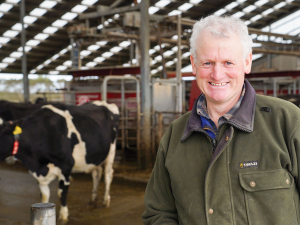
In Dacre, near Invercargill in New Zealand’s South Island, Bruce Dinnington is running a dairy operation unlike any other.

A free online platform aggregating governance vacancies across rural and regional New Zealand has been launched.
Environment Minister Nicola Grigg has announced details of a new rural plastics recycling scheme.
Agricultural drone operators say that a government decision to allow lower-risk drone work without certification won’t lower standards but drive innovation and efficiency.
OPINION: Warning bells are ringing in the arable sector.
Farmgate lamb prices are down by 8%, beef cattle by 4.5% and farm expenditure up by 4.2%.