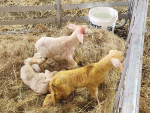
Beef + Lamb NZ's Lambing Kit Checklist for a Tough Season
With lambing underway in many regions, Beef + Lamb New Zealand is encouraging farmers to put together a wellequipped lambing kit to help minimise lamb losses, particularly in bad weather.
 increase font size

Half of New Zealand's sheep and beef farmers are worried about their on-going viability, the latest quarterly 'Rabobank Rural Confidence Survey' has shown.
Conducted since 2003, the survey is administered by independent research agency TNS, interviewing a panel of about 450 farmers each quarter.
It has found while overall farmer confidence has shown some improvement from the lows of last year, 50% of sheep and beef farmers consider their business to be 'just viable' or 'unviable'.
Sheep and beef farmers lagged considerably behind their dairy counterparts in terms of confidence, investment intentions and self-assessed viability. While overall rural confidence showed some improvement this survey – with 28% of the country's farmers expecting the agricultural economy to improve in the next 12months, up from 18% last quarter – this was essentially driven by a lift in dairy farmer confidence.
Rabobank New Zealand CEO Ben Russell believes the survey results accurately reflect the mood of sheep and beef farmers, given the very tough business conditions they have been facing over the past year.
"Sheep and beef farmers are understandably despondent that, after a more positive couple of years, on-farm returns have again fallen sharply," he says.
The survey showed 25% of sheep and beef farmers expected to reduce investment in their farm business over the next 12 months, up from just 7% with that expectation a year ago. Russell says the risk for the meat industry was that, without a sustained improvement in on-farm returns and confidence – farmers would continue to reduce sheep numbers.
"The long-term trend in land use change from the meat industry to the dairy industry, based on stronger on-farm returns and confidence in dairy, looks set to continue in the absence of change," he says.
Dairy farmers remain the most optimistic of all the country's agricultural sectors, according to the survey, with 37% expecting an improvement in the agricultural economy over the next 12 months, up from the 25% who had that view in the previous quarter.
Dairy farmers also have the most confidence in the outlook for their own farm businesses, with 55% expecting an improved performance in the coming year, up from 35% in the previous survey.
"The confidence in this sector reflects the combination of a sharp increase seen in global dairy commodity prices through March and the 30 cents/kg MS increase in the milk price that Fonterra announced during the survey period, along with expectation that drought conditions won't continue in the coming 12 months," Russell says.
In terms of the drought, the survey shows one in three North Island farmers consider that their farm had been severely impacted by drought. A further 40% report a moderate impact.
With lambing underway in many regions, Beef + Lamb New Zealand is encouraging farmers to put together a wellequipped lambing kit to help minimise lamb losses, particularly in bad weather.

Chinese beef trade quotas and a looming suspension of Brazilian beef imports into the European Union are expected to reshape global beef trade flows over the remainder of 2026, with implications for New Zealand exporters, according to Rabobank's Q3 Global Beef Quarterly report.
Will a stronger, more coordinated voice help rebuild confidence and improve returns in the wool sector?
New Zealand consumers are paying more for beef mince than ever before, with the average retail price now sitting above $24 per kilogram, according to Rabobank.
Bovine Viral Diarrhoea (BVD) is sometimes viewed as a dairy industry issue, but the reality is that the disease can have serious consequences for beef breeding herds as well.
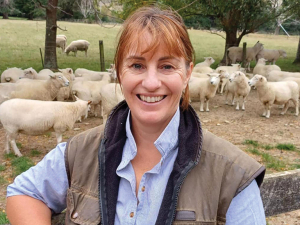
B+LNZ's Wormwise veterinarian Mary Bowron has won the Best Sheep and Beef Vet of the Year Award in recognition of her outstanding contribution to New Zealand’s sheep and beef sector.
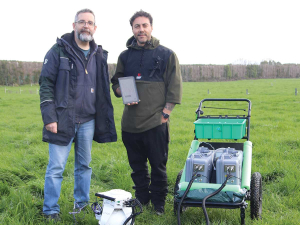
Researchers at Massey University are using a special piece of scientific equipment to improve the measurement of greenhouse gas emissions from pasture soils.
More signs of a booming kiwifruit sector.
OPINION: David Seymour and James Meager's plan to make it easier for farmers and orchardists to operate drones can best be described a 'courageous' move.
New Zealand wool is reaching new heights as air filtration companies move away from synthetic products to biodegradable alternatives.
Opuha Dam's ability to protect South Canterbury communities from major flooding has taken a significant step forward, with Opuha Water Limited (OWL) successfully commissioning a new outlet valve capable of releasing record volumes of water from the dam ahead of a weather event.